A teammate drives from the right wing, and you instinctively run toward them to help. Your defender follows, turning one defender into two. Being available is not the same as being close. Your first off-ball job is to give the possession room, then move when a useful opening appears.
Start outside the same defender's reach
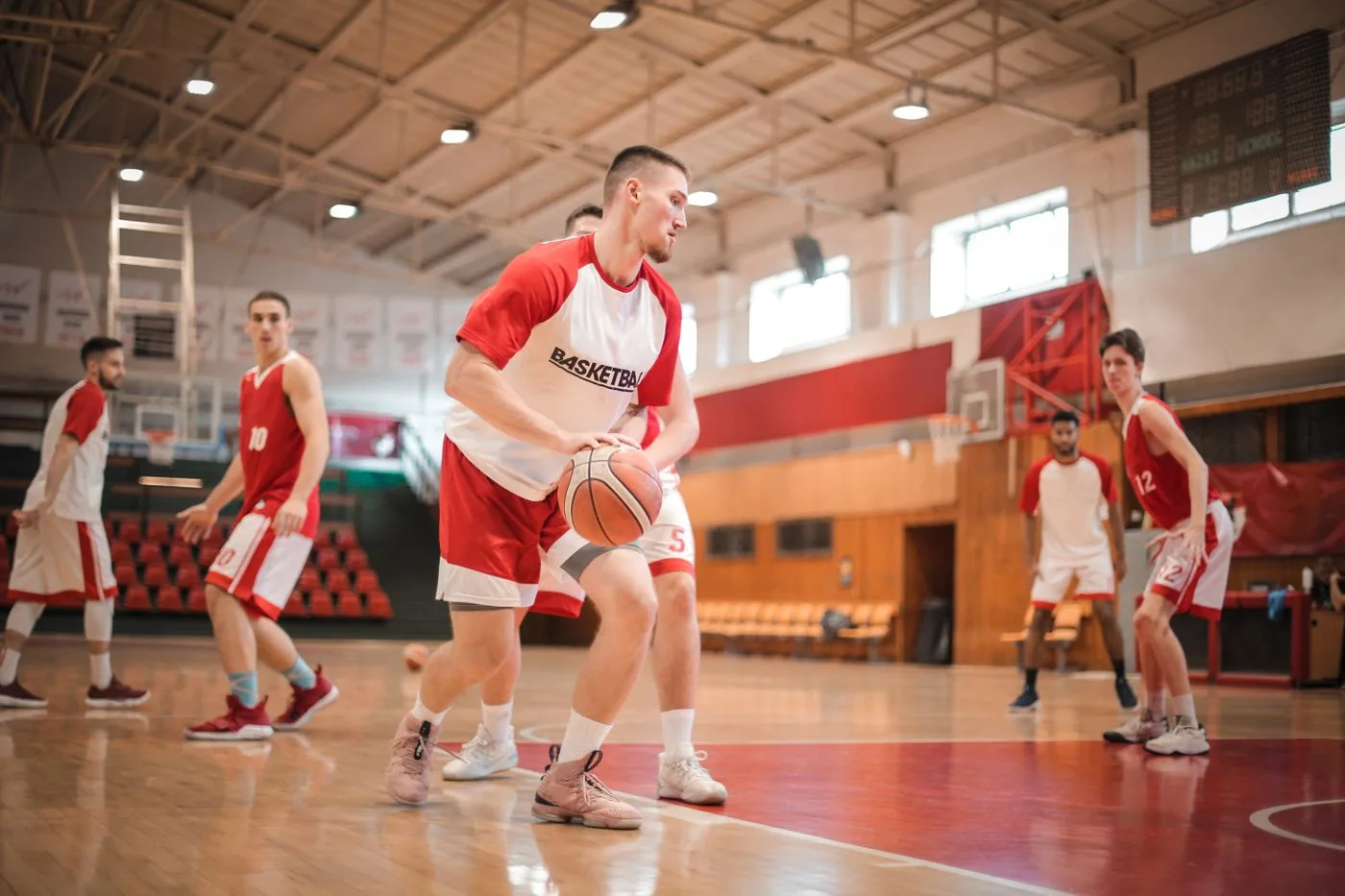
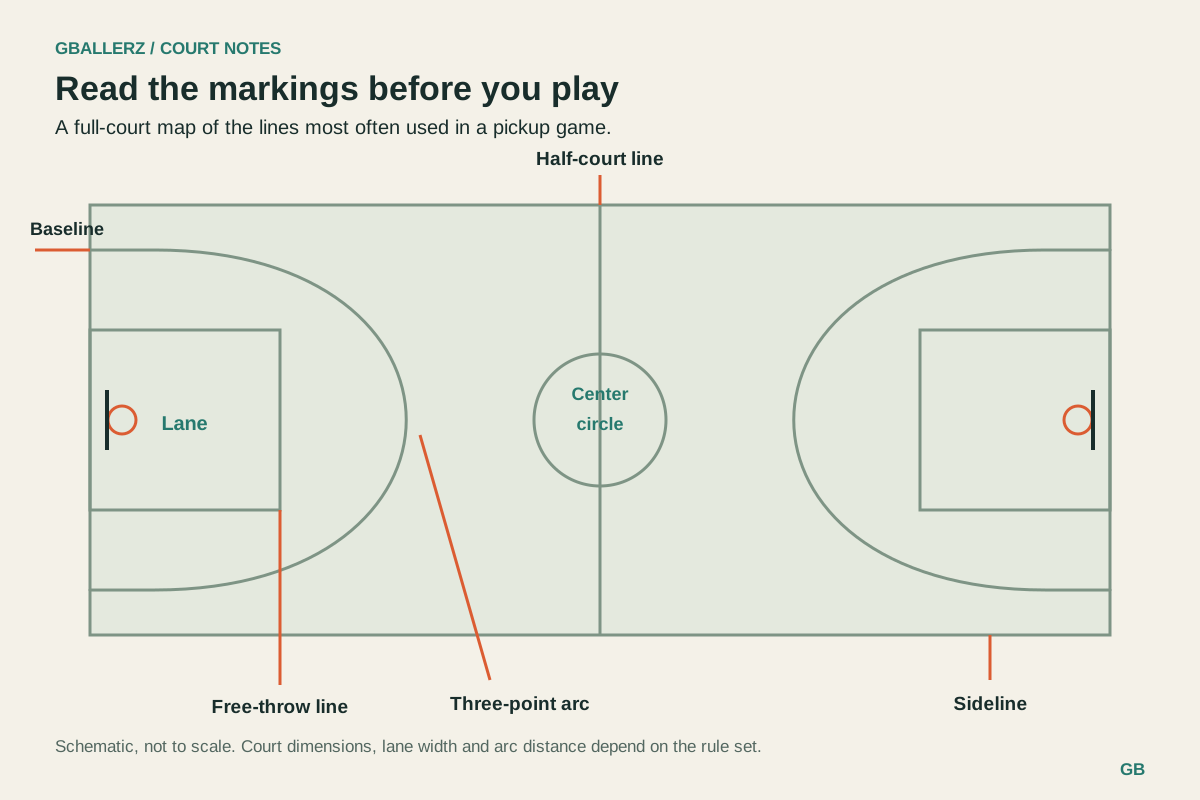
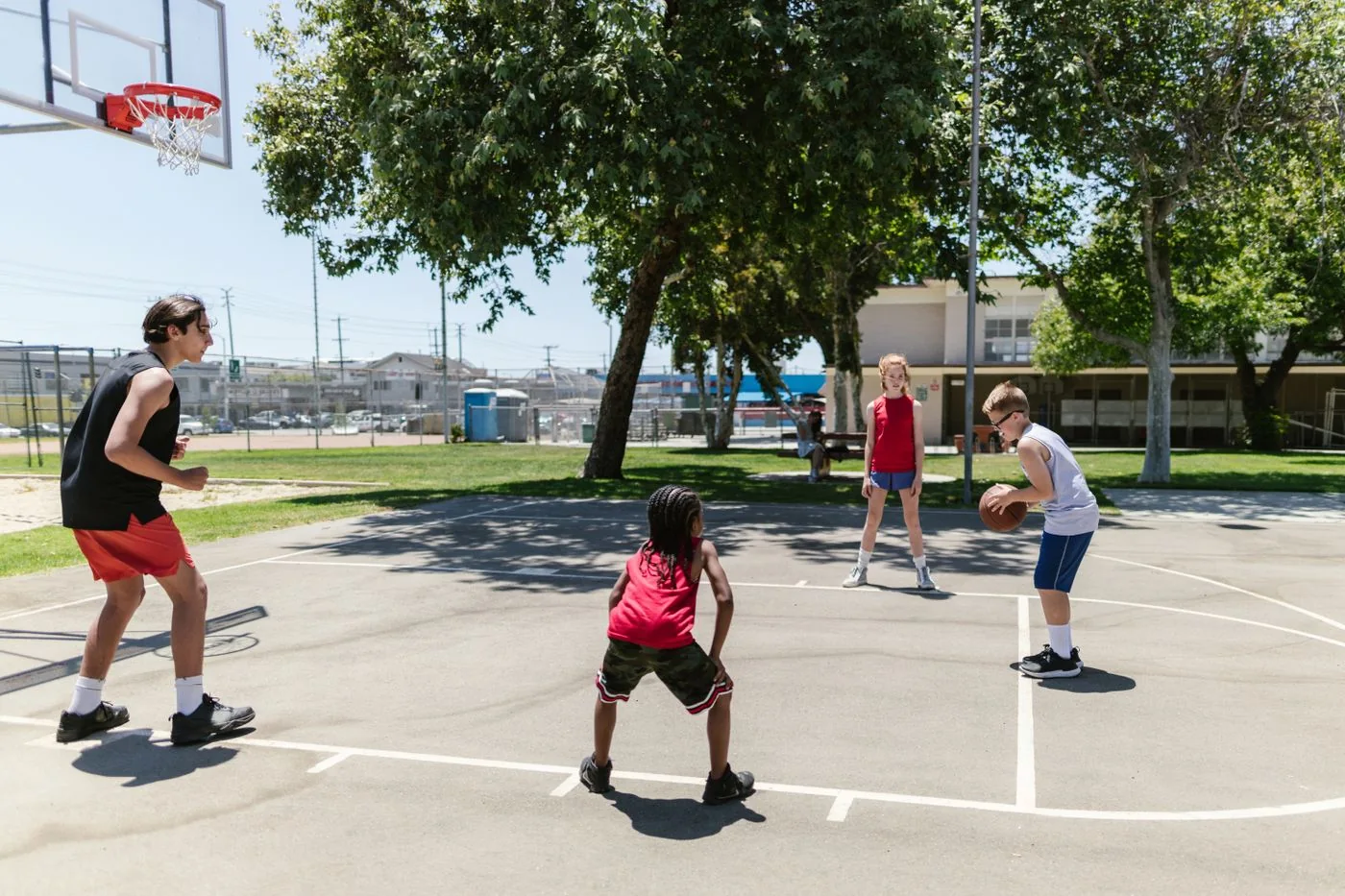
Look at the line between you, your defender and the ball. If the defender can stand in one place and bother both you and the dribbler, you are probably too close. Move to a distinct passing window. In a basic half-court possession, that might mean the opposite wing, a corner, or a spot above the free-throw line rather than another body beside the ball.
Spacing is relative to your shooting range and your teammates. Standing far beyond a distance you can use may stretch the diagram without stretching the defense. Find a place where a catch can lead to a shot, a sensible drive or the next pass.
Keep the lane useful
Do not camp directly under the rim while a teammate attacks it. That position lets your defender wait beside the finish. If you begin near the basket, move out of the driver's route or time a cut behind the defender after they commit to helping.
Two players cutting into the same lane at once usually cancel each other's advantage. Watch the first cutter finish their movement before starting yours. A short pause on the perimeter can make your eventual cut much clearer to the passer.
Move after your pass with a purpose
Passing does not require an automatic sprint toward the basket. First check what the receiver sees. If they have a driving lane, clear it. If your defender turns their head and the lane is open, cut. If neither opening exists, exchange with a teammate or create a new angle a few steps away.
Avoid jogging in a circle because you were told to keep moving. Movement that brings your defender into the ball handler's path is worse than a brief, useful hold in an open spot.
Show a target the passer can reach
Face the ball and have your hands ready without waving constantly. Move around the edge of a defender's body rather than standing directly behind it. If a teammate picks up their dribble, shorten the passing distance and appear in their view quickly.
A rescue position should still preserve separation. Two teammates rushing to the trapped player create a crowded cluster. One can offer the short outlet while another stays available for the next pass across the court.
Check one possession at a time
During your next run, ask whether your defender helped on the ball without having to make a choice. If they did, adjust your starting spot on the next possession. Also notice whether you are facing the ball when a pass becomes possible.
- You can practice with three players and no defense: pass, read the lane, then choose a cut or relocation.
- Add a defender once everyone can maintain different passing windows without standing on predetermined marks.
Stand where you create a real decision for the defense, then move when the possession gives you a reason.
Something unclear? Send a correction or question.