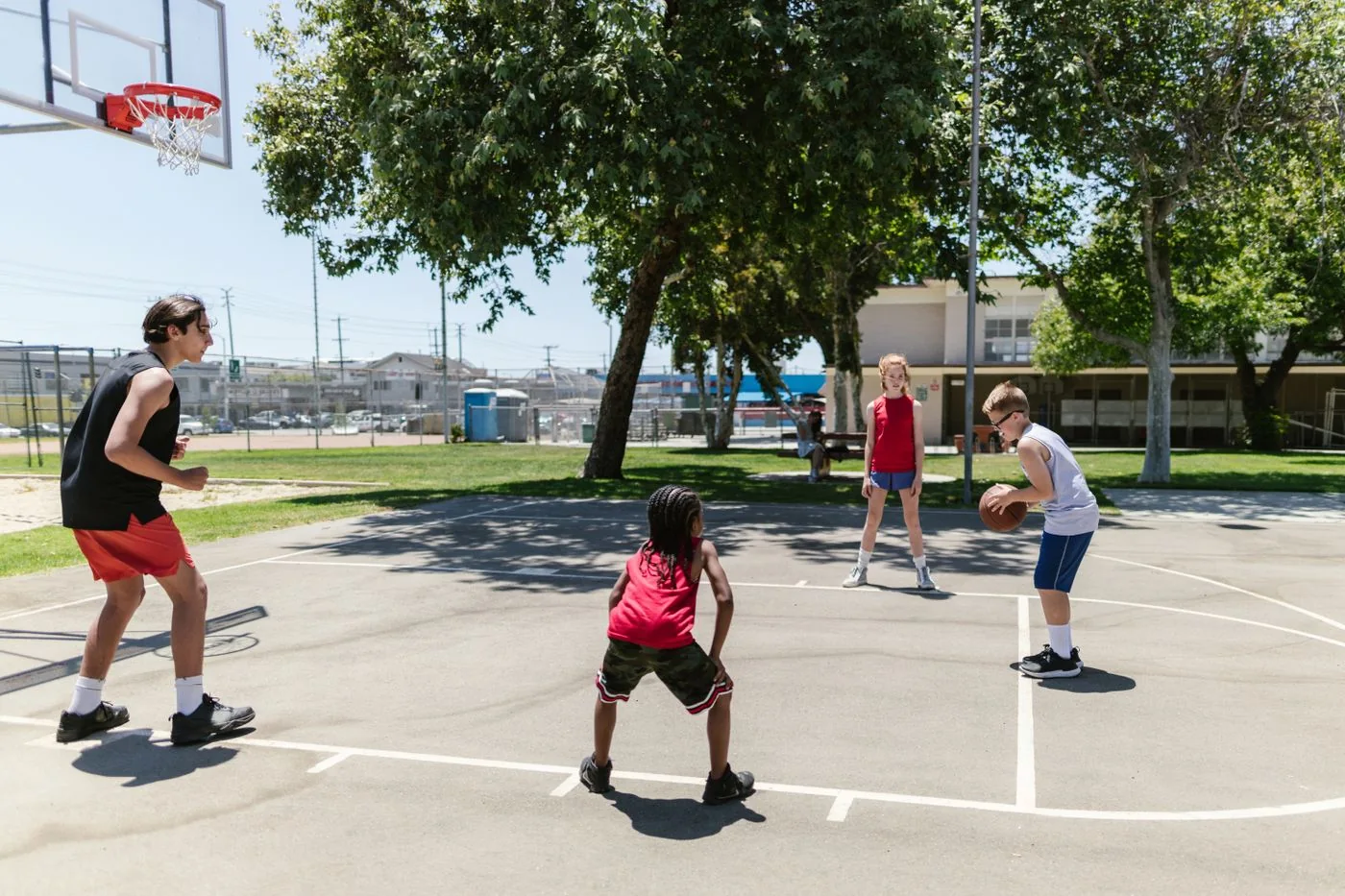
Where to stand when you do not have the ball
Good spacing gives the ball handler an option before you ever touch the ball.
Read the guideFind your feet on the court. Clear explanations of spacing, decisions, defense and the language of the game.
20 GUIDESGood spacing gives the ball handler an option before you ever touch the ball.
Read the guidePosition names describe common responsibilities, but a useful player learns more than one job.
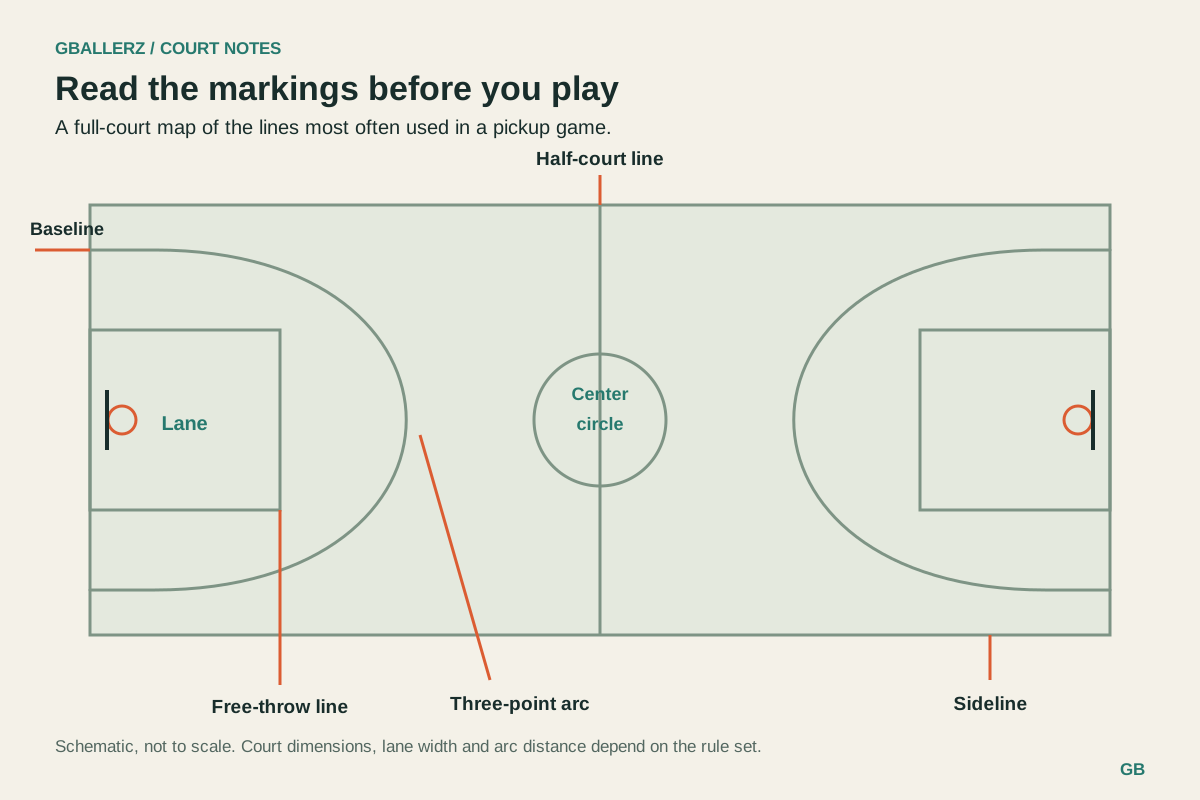
Read the guideLearn which markings define play and which ones simply help you describe a location.
Read the guideA short conversation about scoring and possession keeps local conventions from becoming midgame surprises.
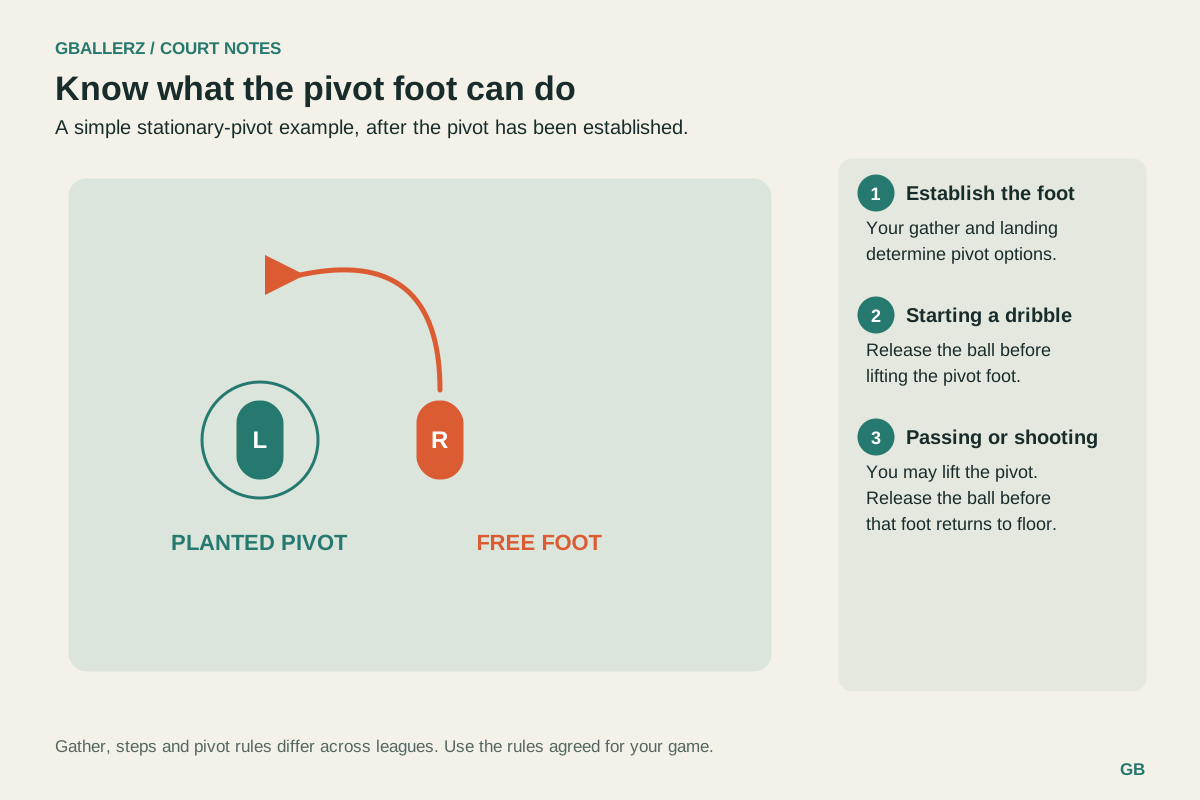
Read the guideLearn the stationary pivot first, then study moving catches under the rules your game actually uses.
Read the guideKeep your dribble continuous and make a clear passing or shooting decision once it ends.
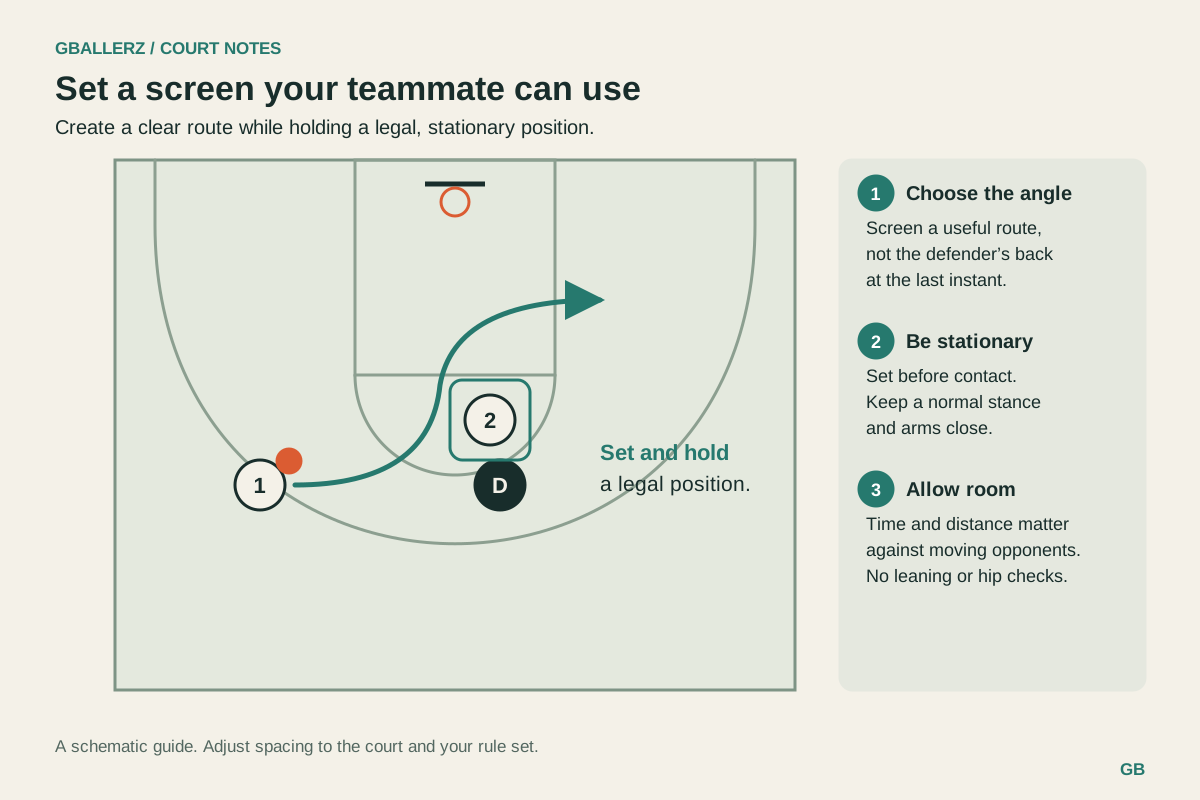
Read the guideA screen creates an angle for a teammate when its timing and position give the defender a fair path.
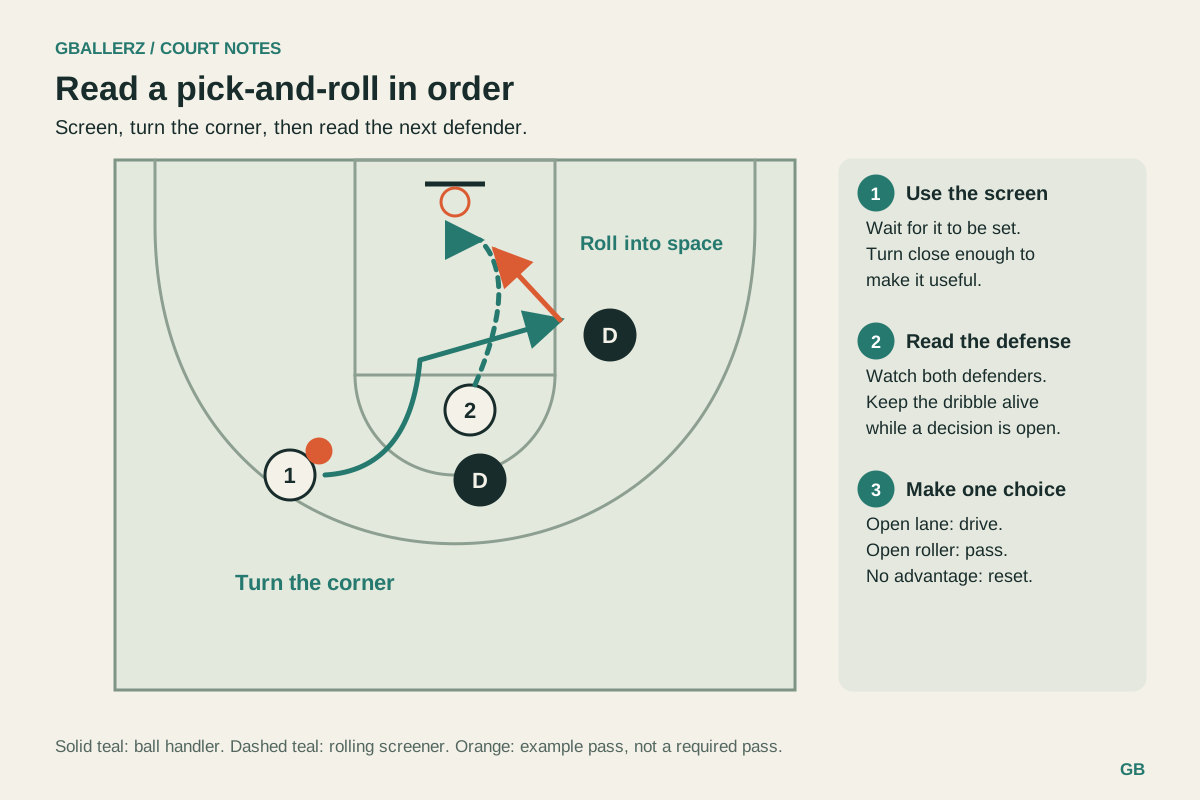
Read the guideUse the screen to reveal a defensive choice instead of deciding on the pass before the play begins.
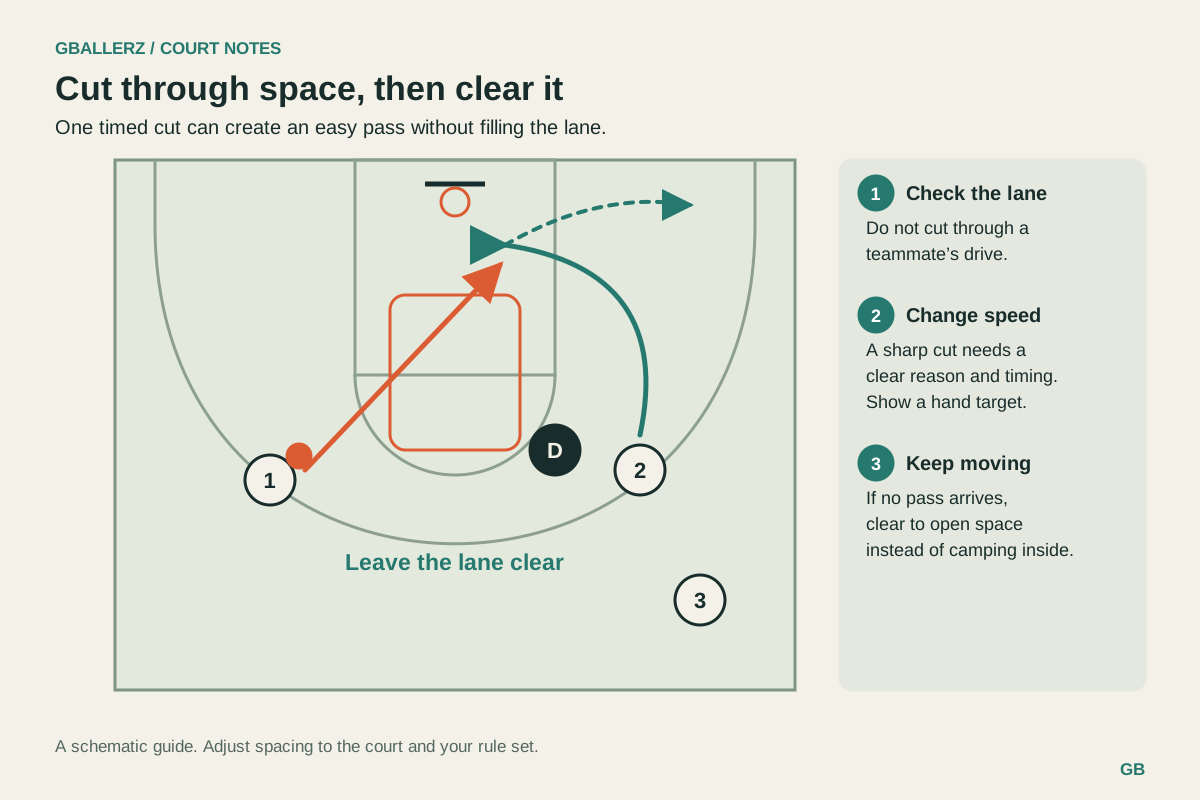
Read the guideA well-timed cut uses a defender's distraction and leaves the lane available when the pass does not come.
Read the guideReact to a drive by opening a passing window instead of following the ball into the lane.
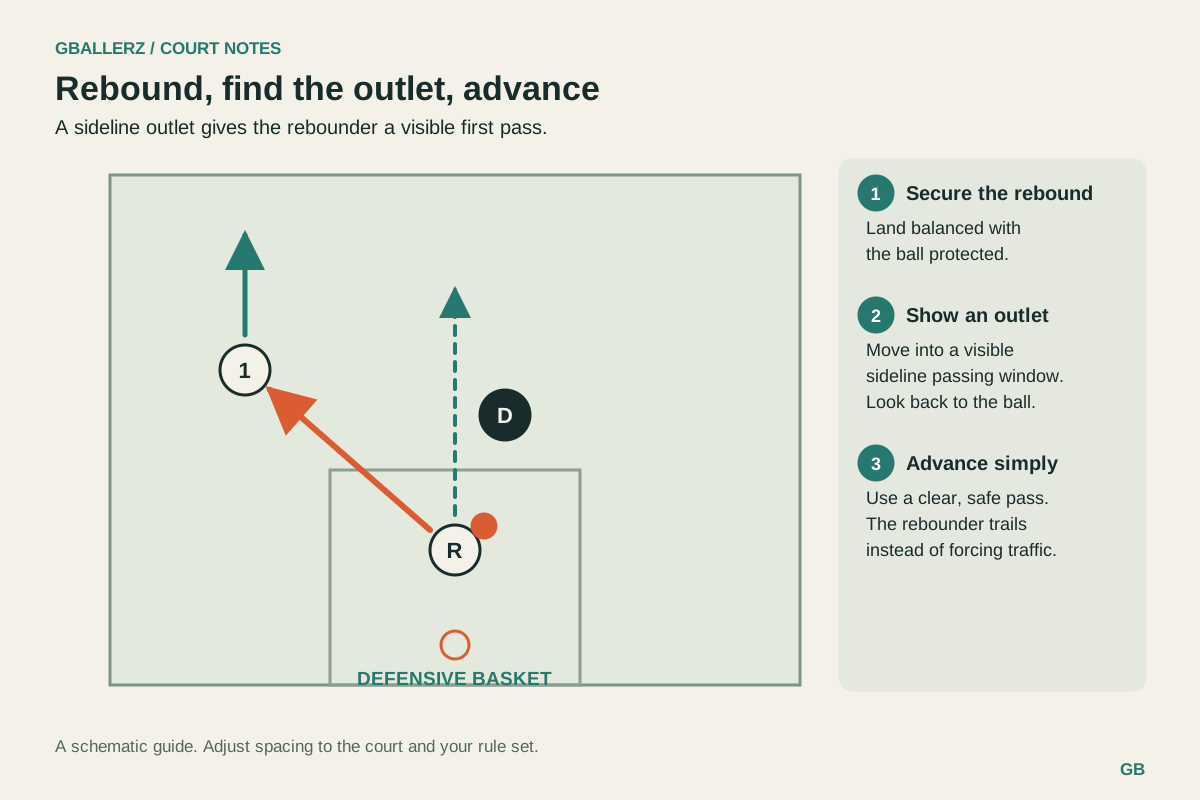
Read the guideSecure the rebound first, then find a receiver who gives the ball a clear route out of traffic.
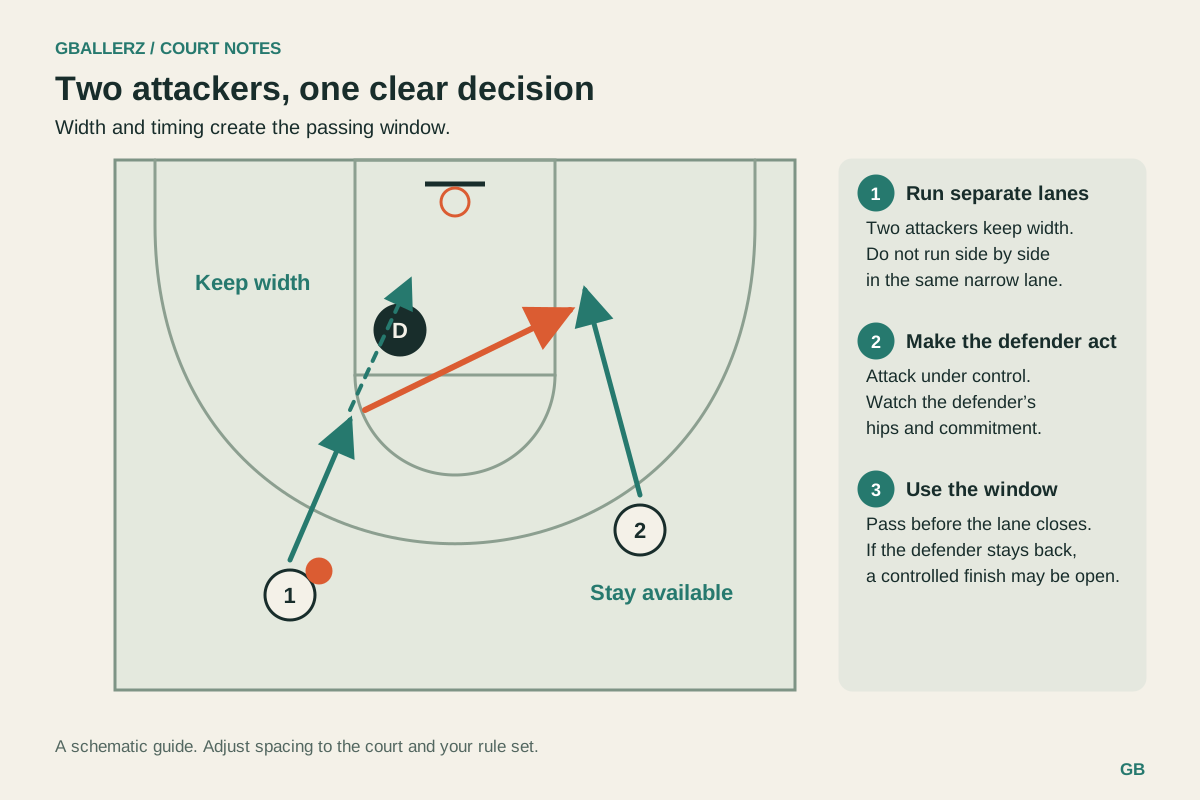
Read the guideSeparate your lanes and make the defender commit before choosing the finish or pass.
Read the guideA useful shot combines your range, balance, defensive pressure and the state of the possession.
Read the guideA useful off-ball stance lets you track the possession without losing the player you are guarding.
Read the guideUseful help stops an immediate threat while leaving a realistic route to the next defensive job.
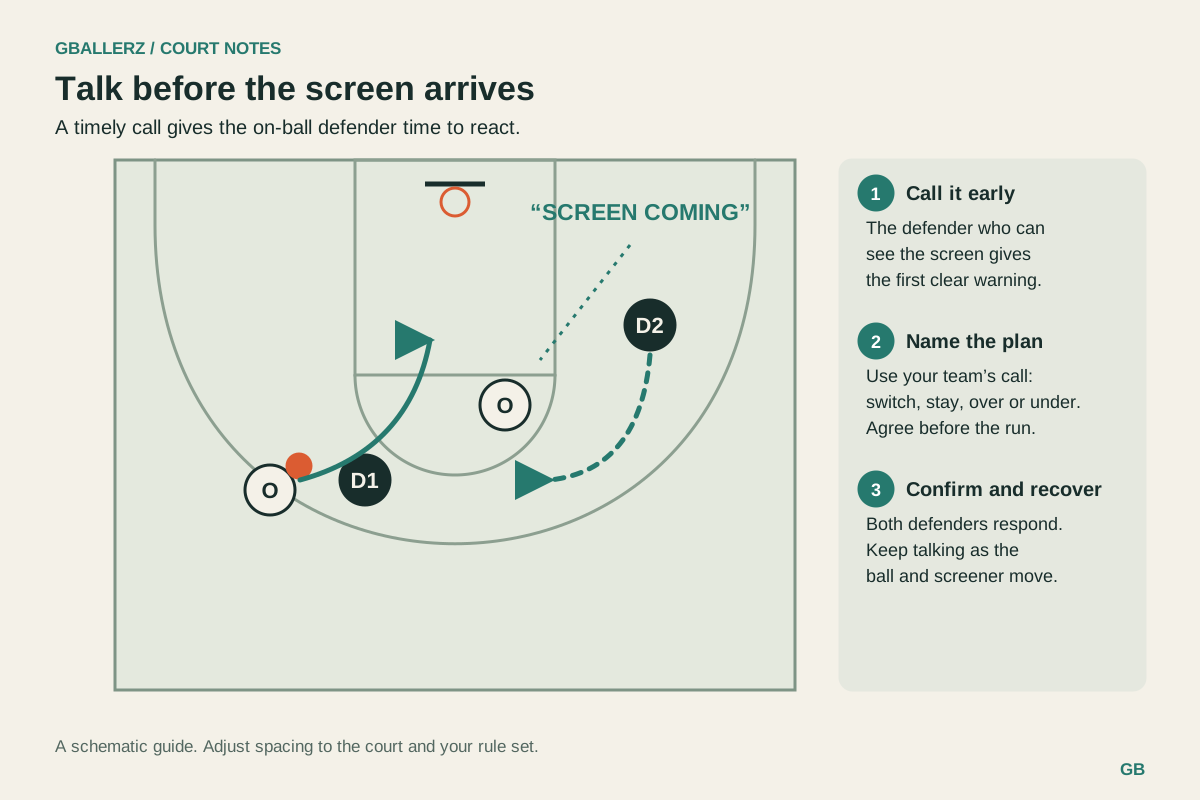
Read the guideEarly, specific screen calls give the defender time to use the coverage the team has agreed on.
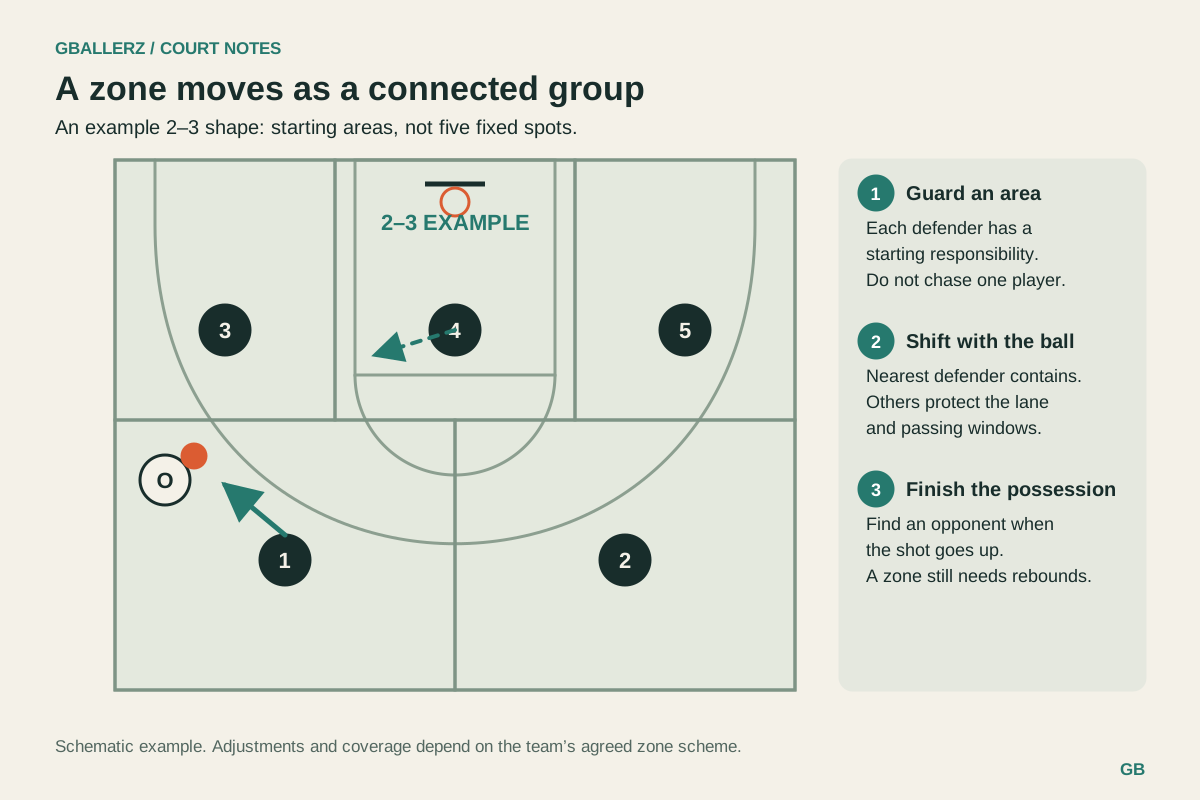
Read the guideA zone works through coordinated coverage of threats, rather than five players standing in fixed patches of floor.
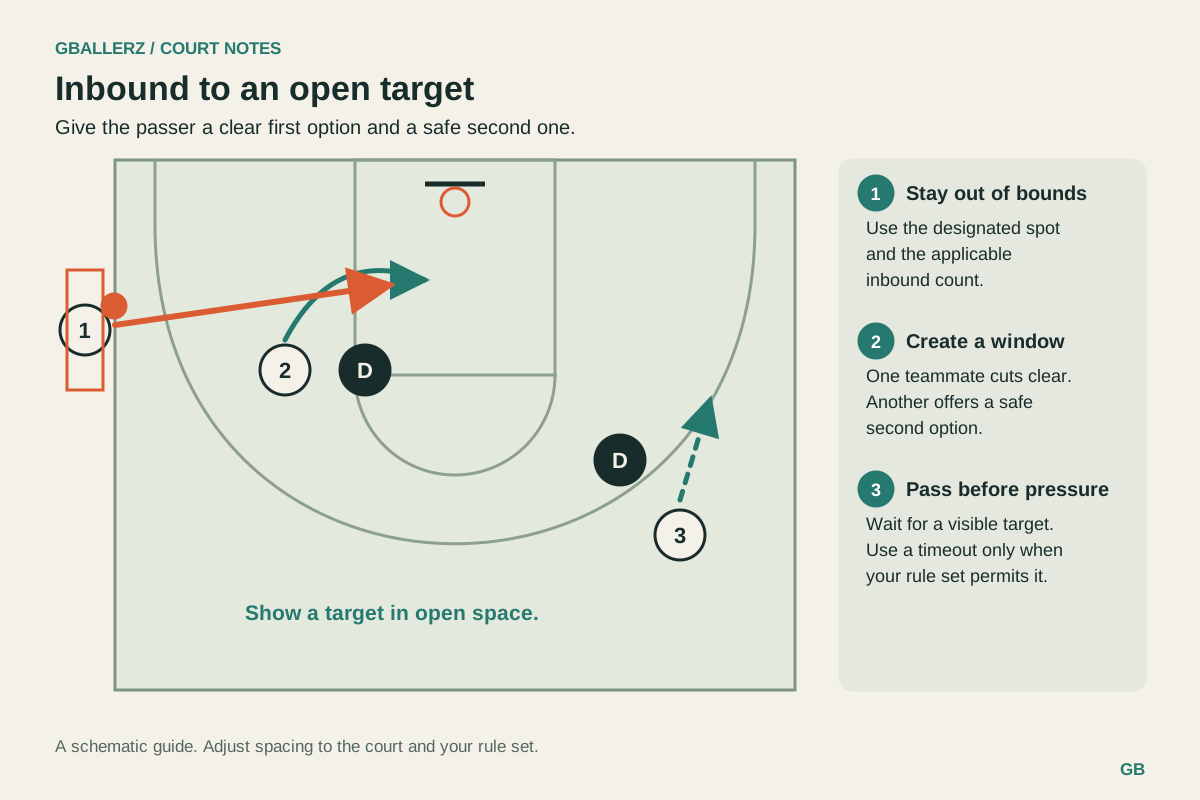
Read the guideA good inbound begins with a legal setup and receivers who offer more than one visible option.
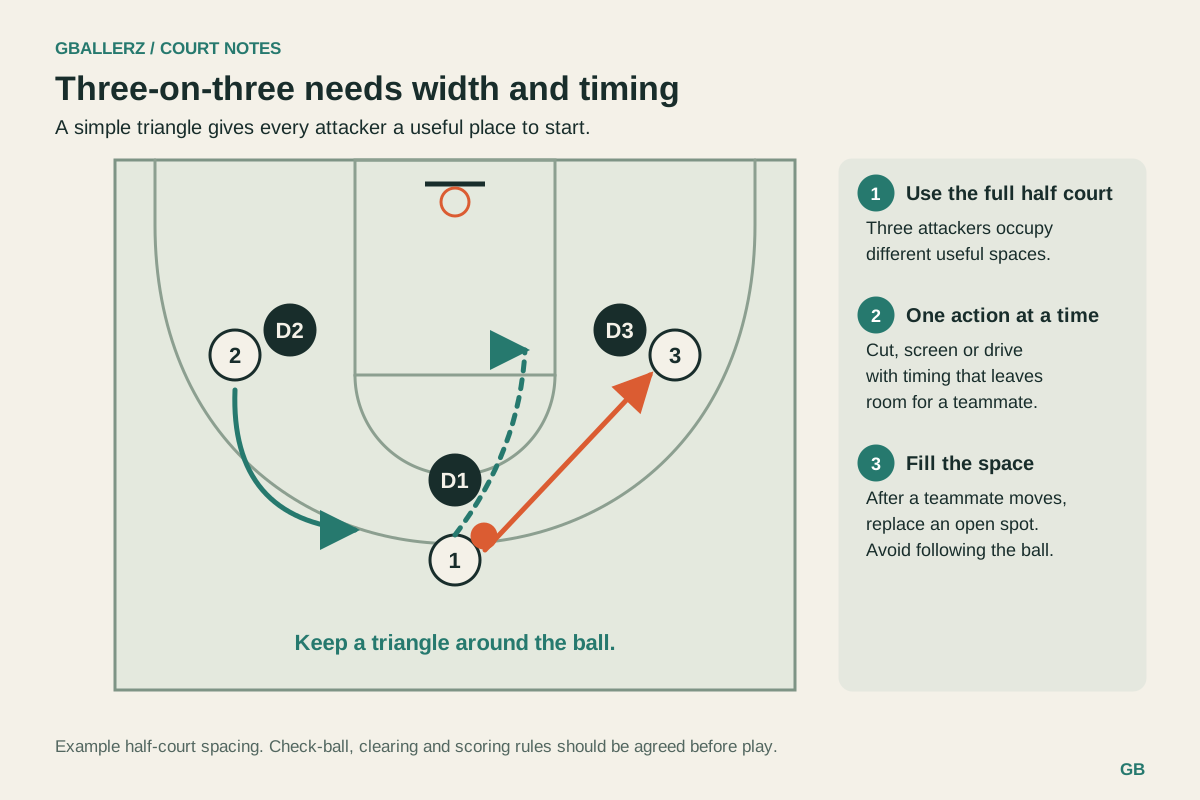
Read the guideThree players can create plenty of options when each action leaves space for the next one.
Read the guideA mistake costs less when you move immediately toward the next useful defensive responsibility.
Read the guide