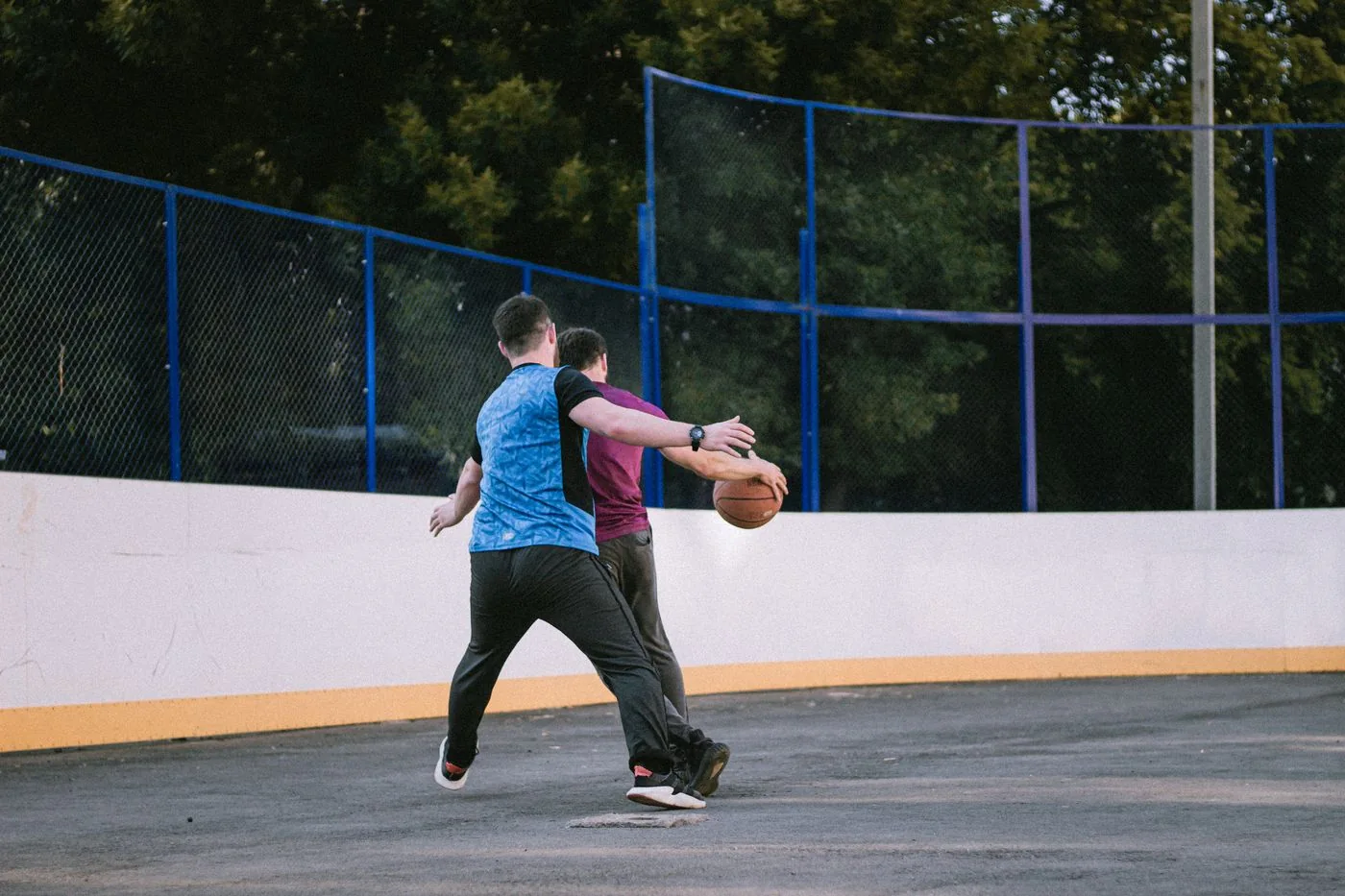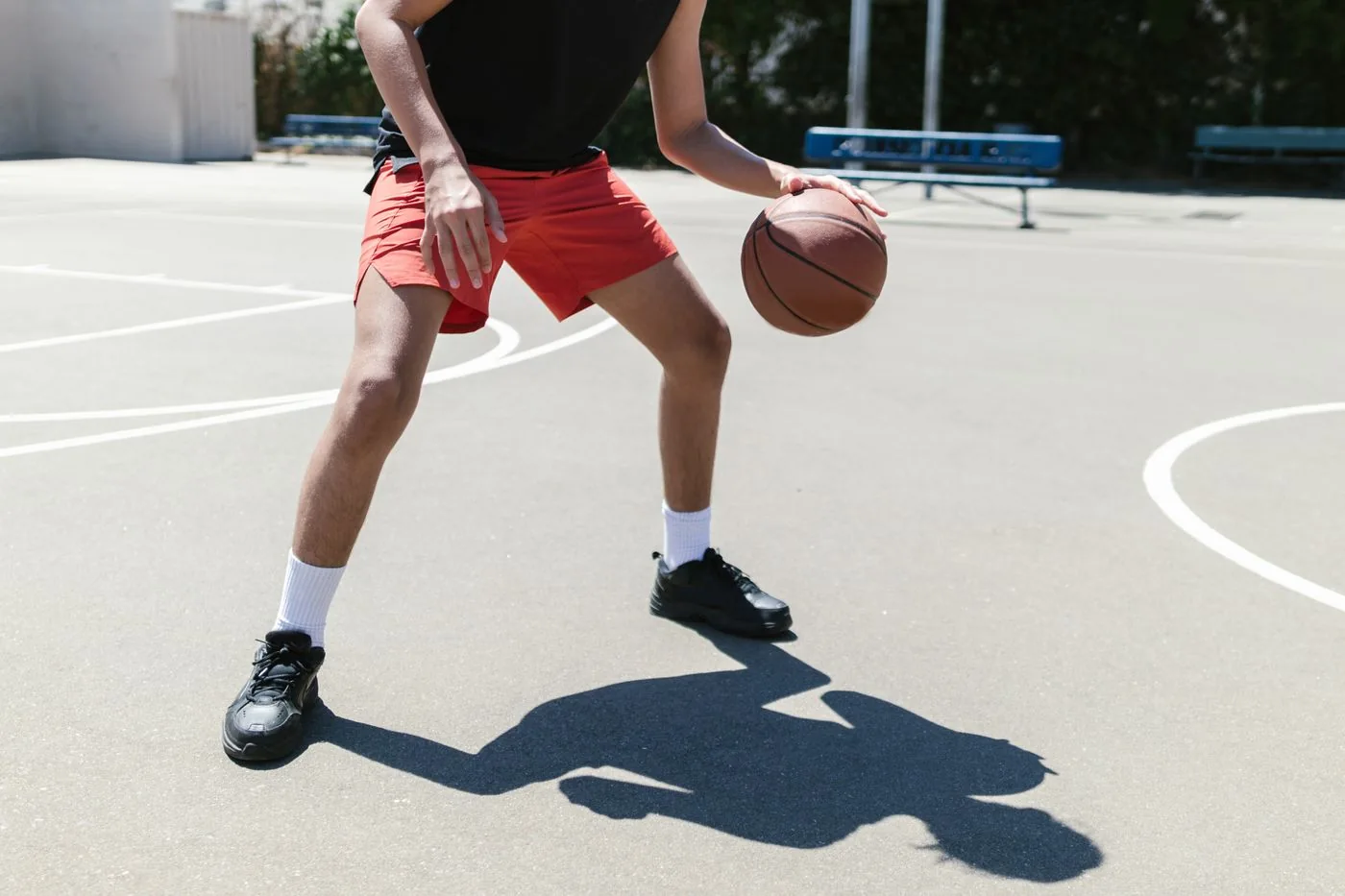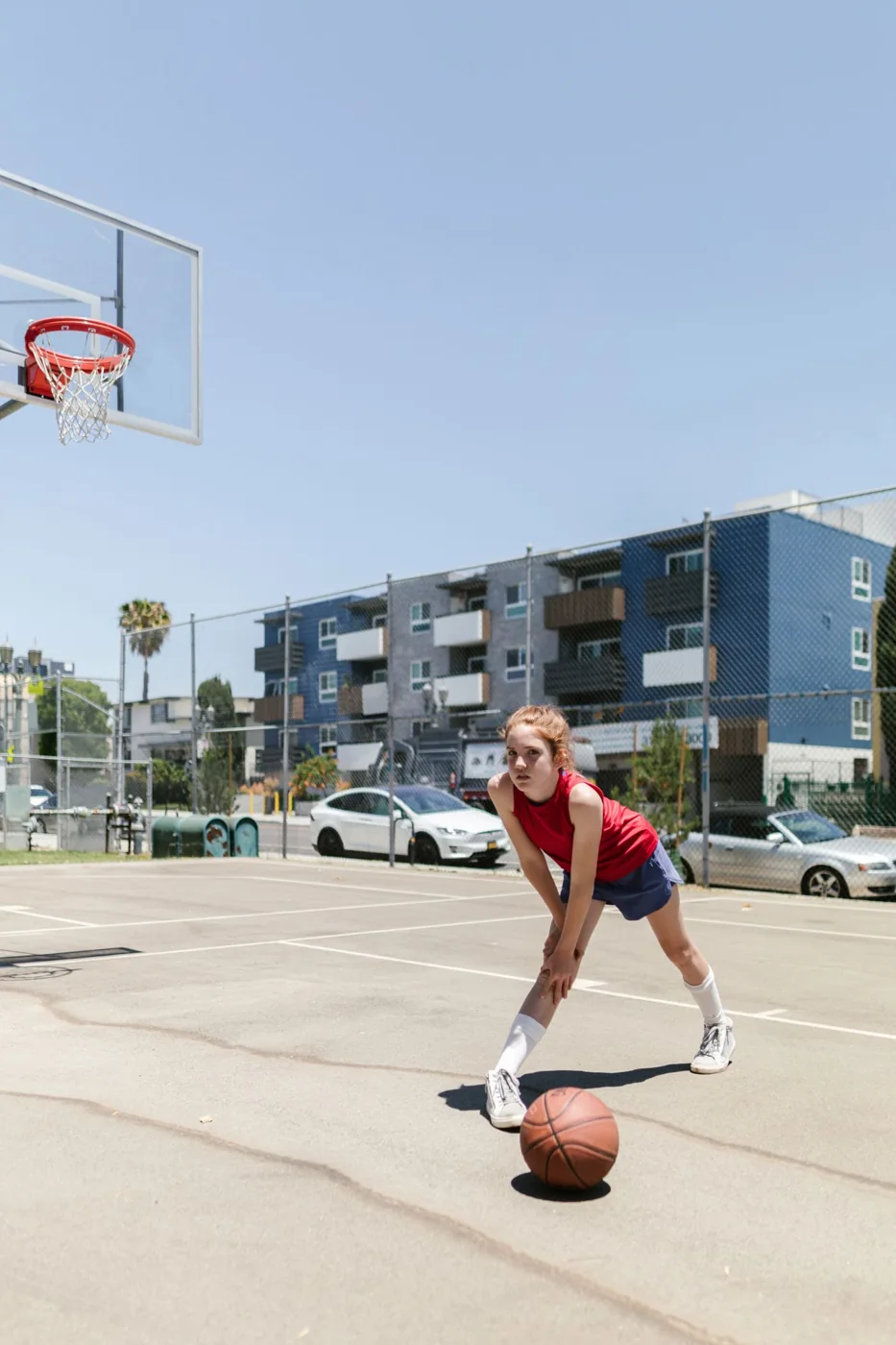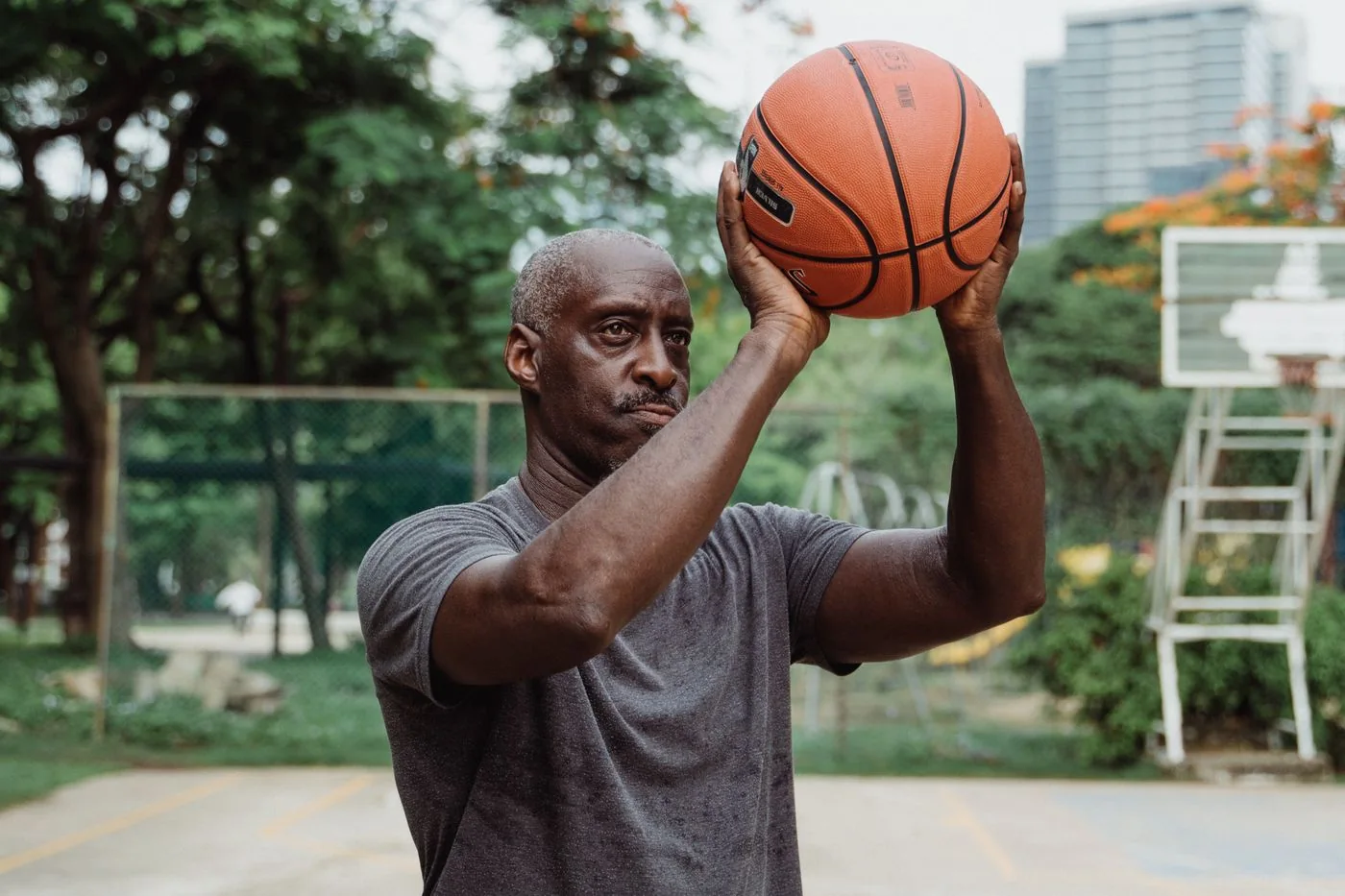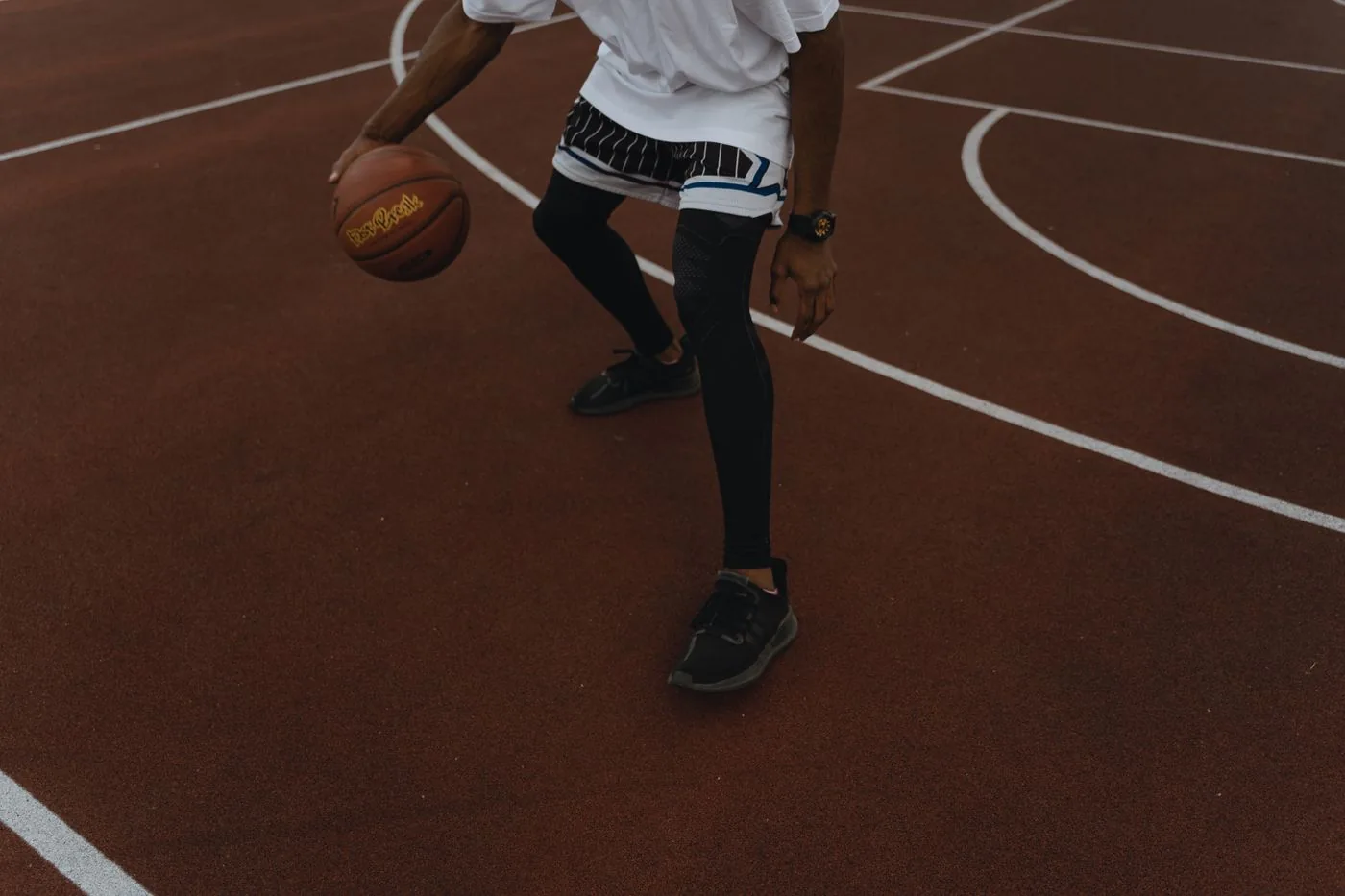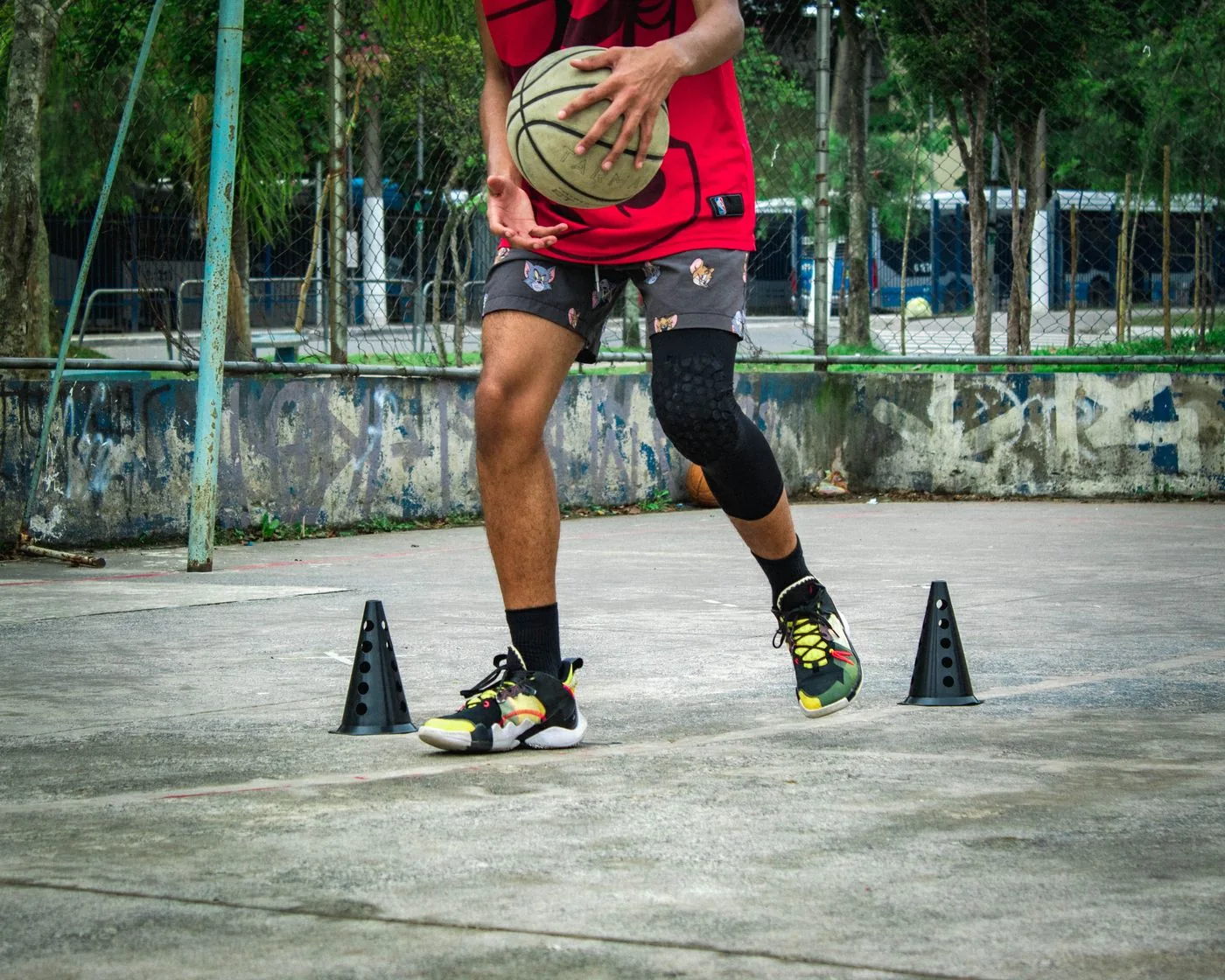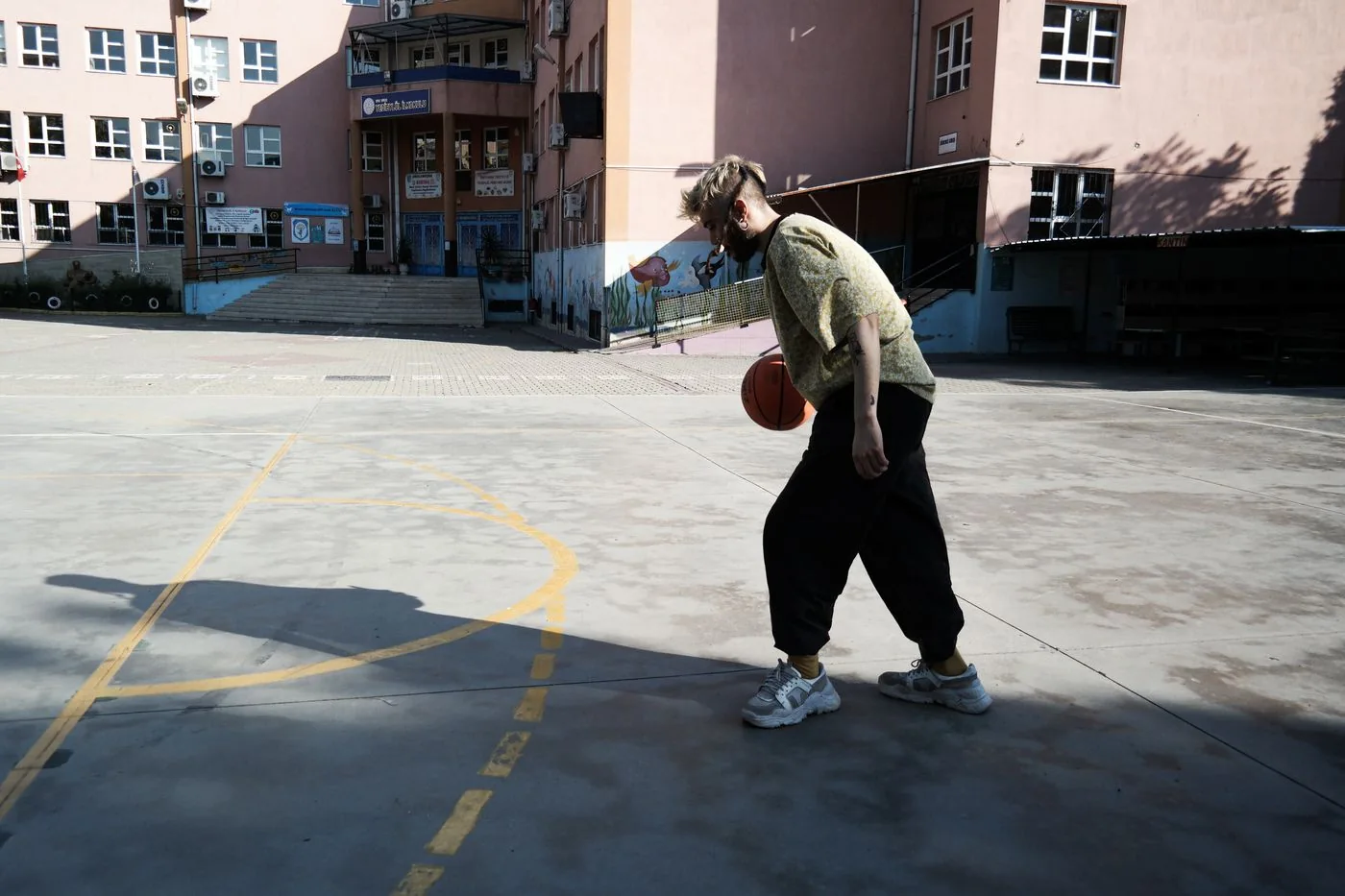
A useful solo practice with one ball and half a court
Give each part of a short session a job, then finish with a small test you can repeat.
Read the guideFind a useful answer, choose something to practice and take it to your next game.
78 guides
No guides match that search. Try a shorter term or reset the filters.
Give each part of a short session a job, then finish with a small test you can repeat.
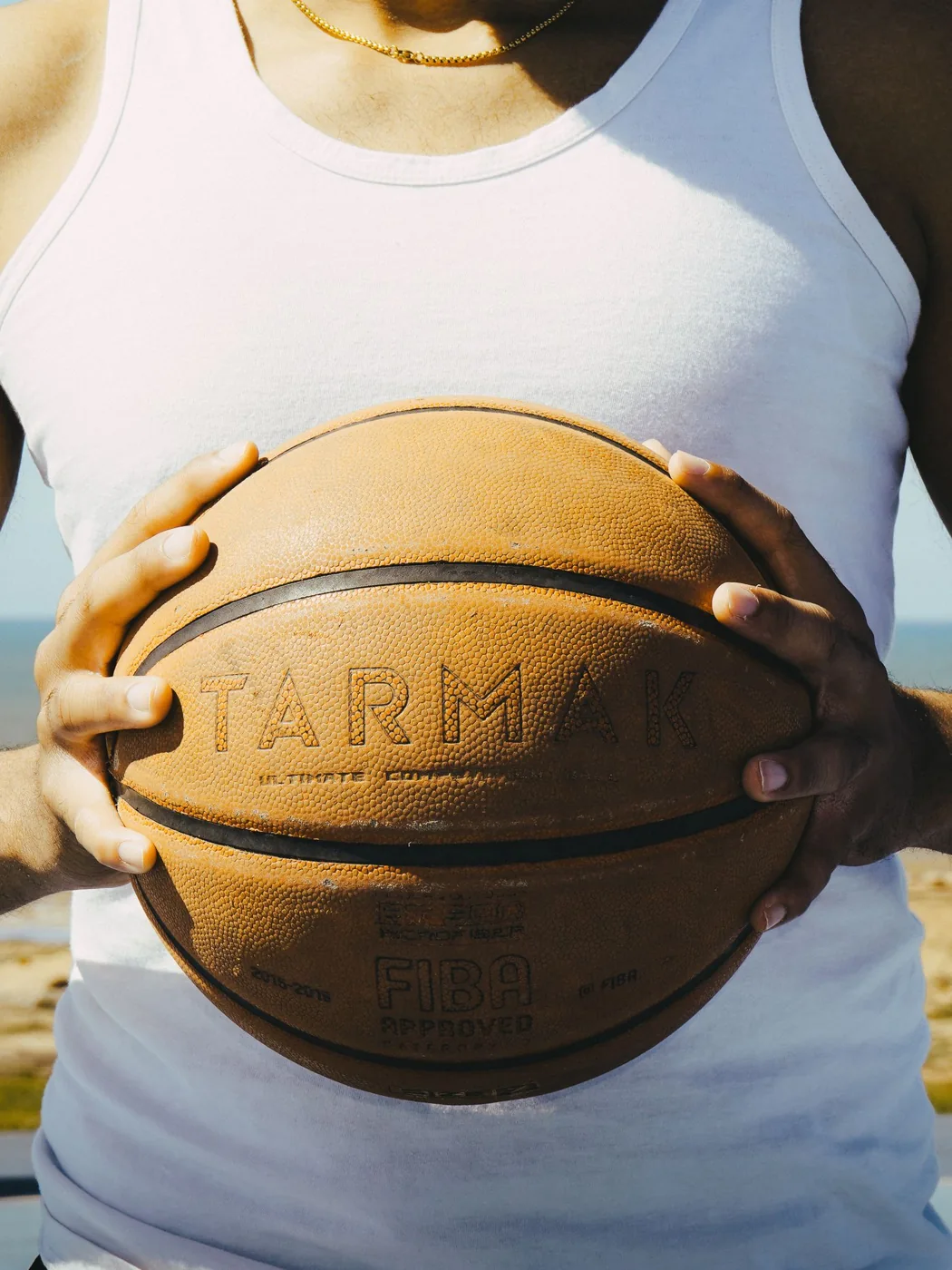
Read the guideStart with the surface and cover label, then check size, grip and the cost of replacing a worn ball.
Read the guideMake your weaker hand reliable for the ordinary dribbles a game actually demands.
Read the guideUse a crossover to move your body into a new lane, with the ball following a clear purpose.
Read the guideLearn to collect useful information while dribbling instead of forcing a stiff upward stare.
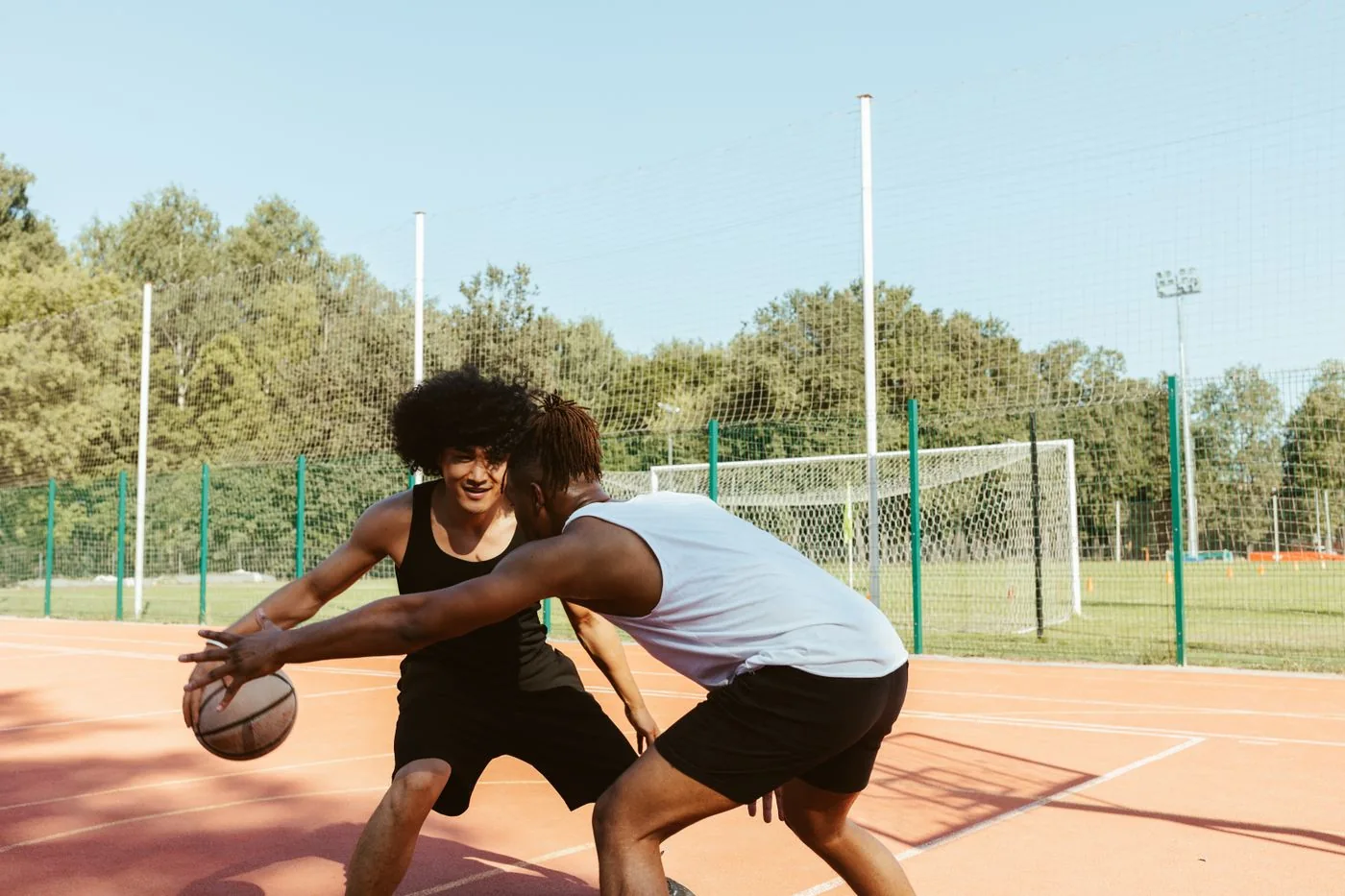
Read the guideKeep the ball away from pressure by changing your angle, spacing and body position.
Read the guideA clear change from patient movement to purposeful acceleration can create space without a complicated combination.
Read the guideCreate breathing room with a retreat dribble, then use the space to make your next decision.
Read the guideUse short shots to study your balance, release and aim before moving farther from the hoop.
Read the guideCreate a short free-throw routine that gives each attempt the same starting conditions.
Read the guidePrepare your stance while the pass travels so the catch leads naturally into the shot.
Read the guideConnect one advancing dribble to a balanced stop and a shot from a distance you control.
Read the guideLook for a repeated miss pattern and test one small explanation before changing your shooting motion.
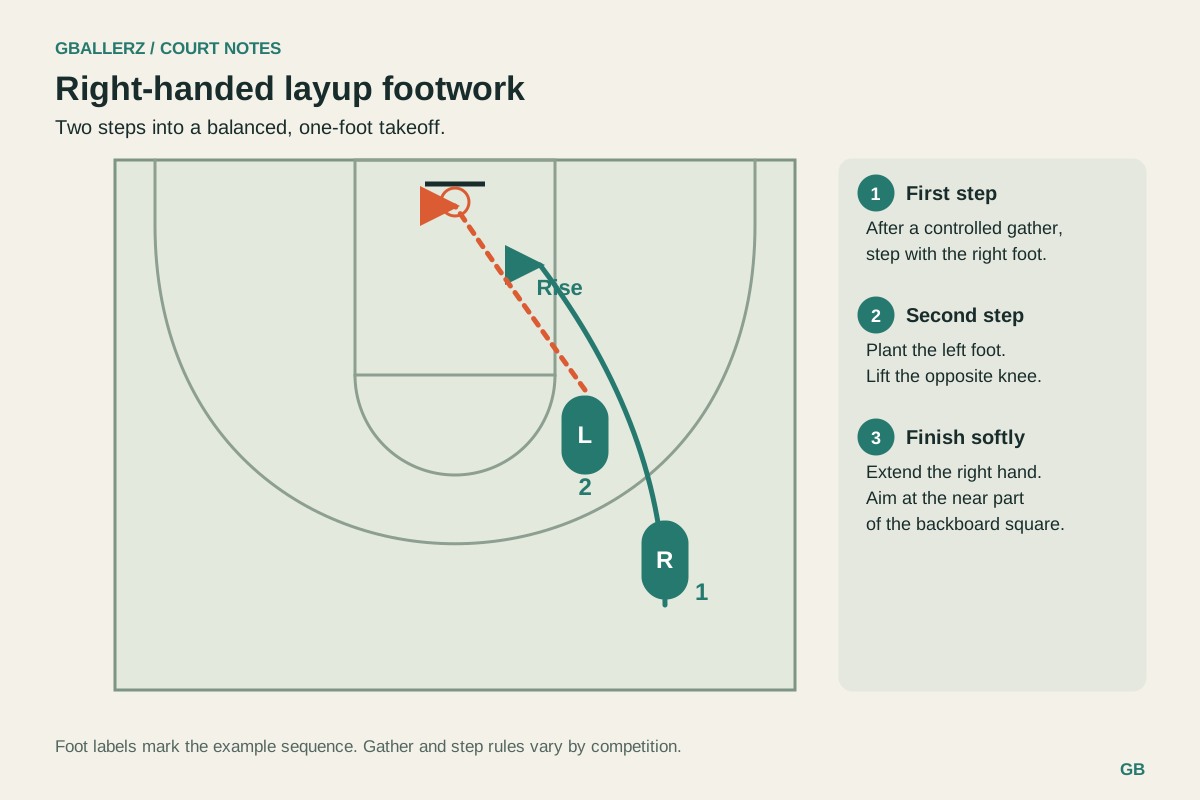
Read the guideLearn a calm right-handed layup by connecting the final steps to a controlled upward finish.
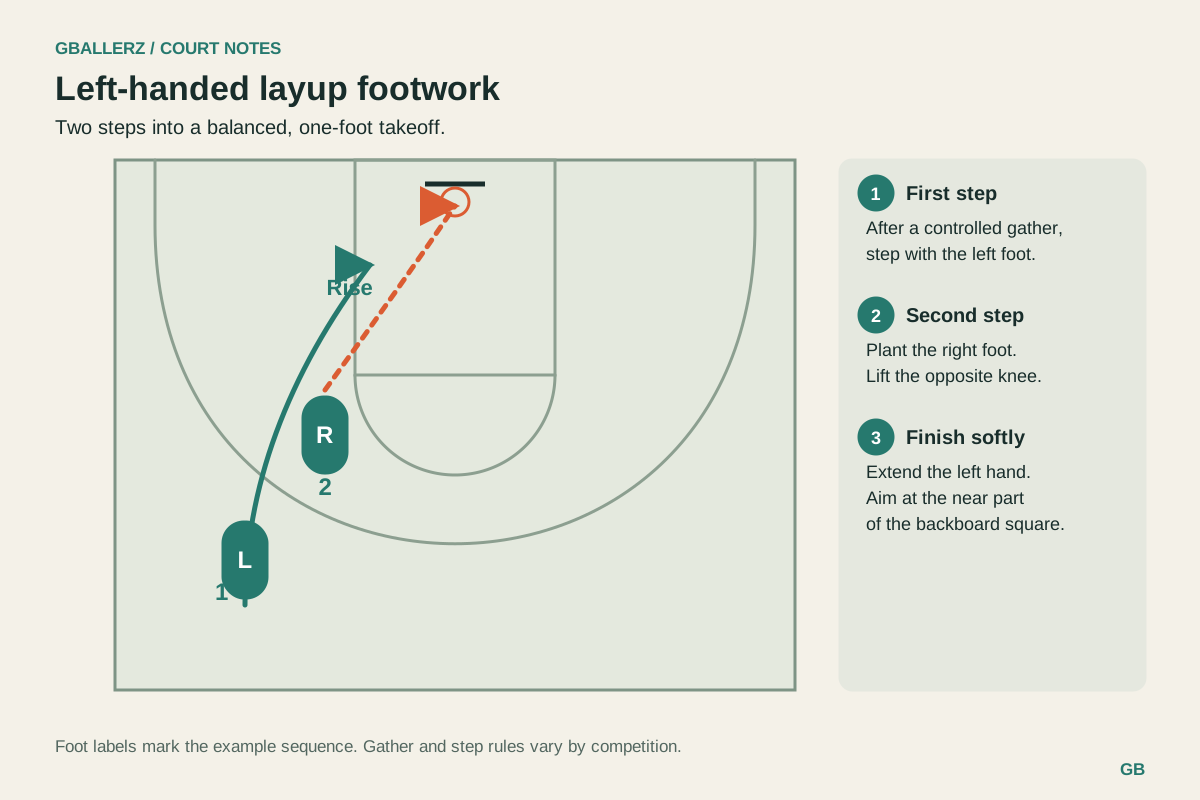
Read the guideGive the left hand and the final steps separate practice before combining them at the basket.
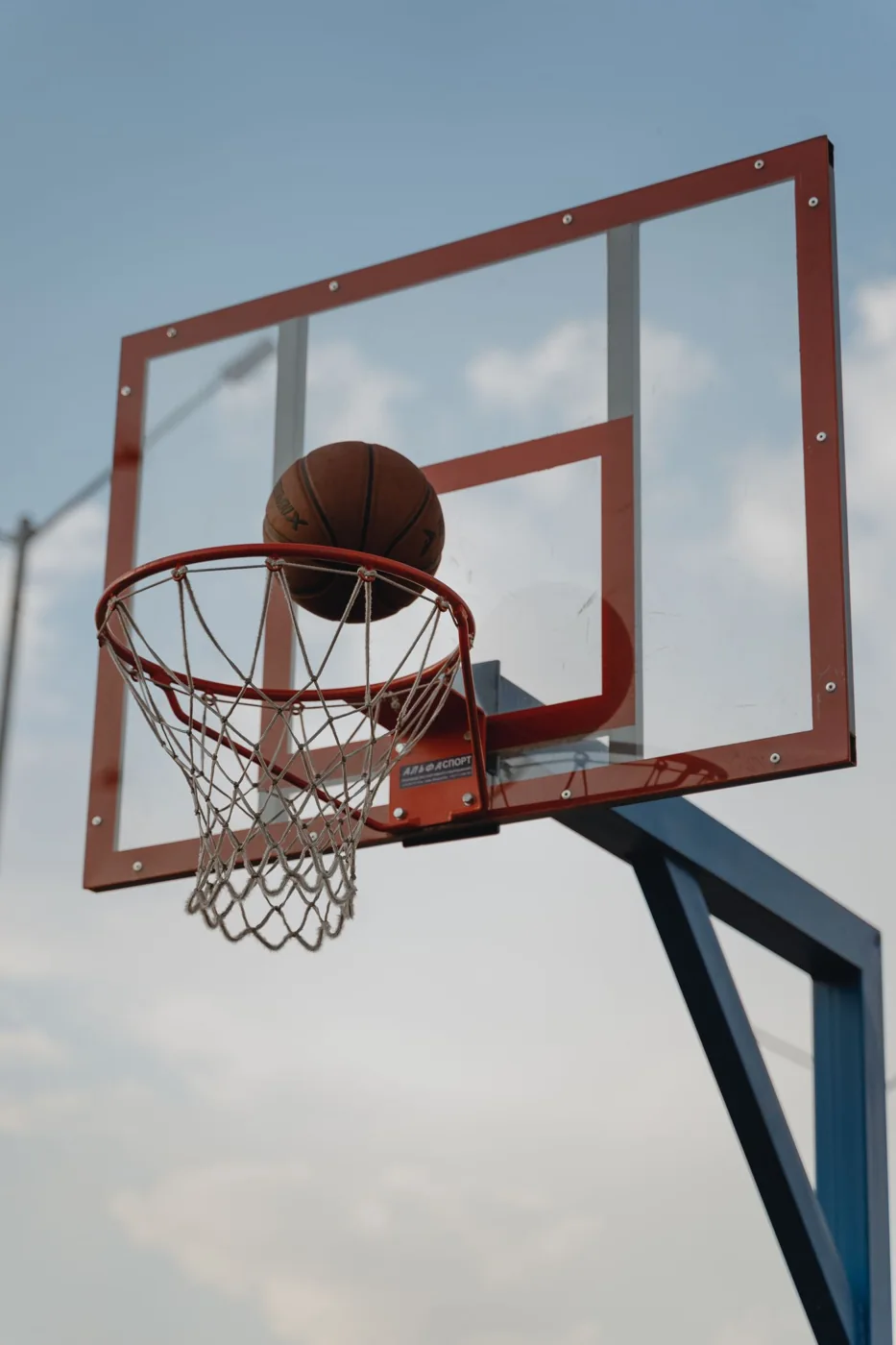
Read the guideChoose a backboard target that fits your approach and test how softly the ball needs to arrive.
Read the guidePractice seeing nearby pressure while keeping your approach, ball control and landing organized.
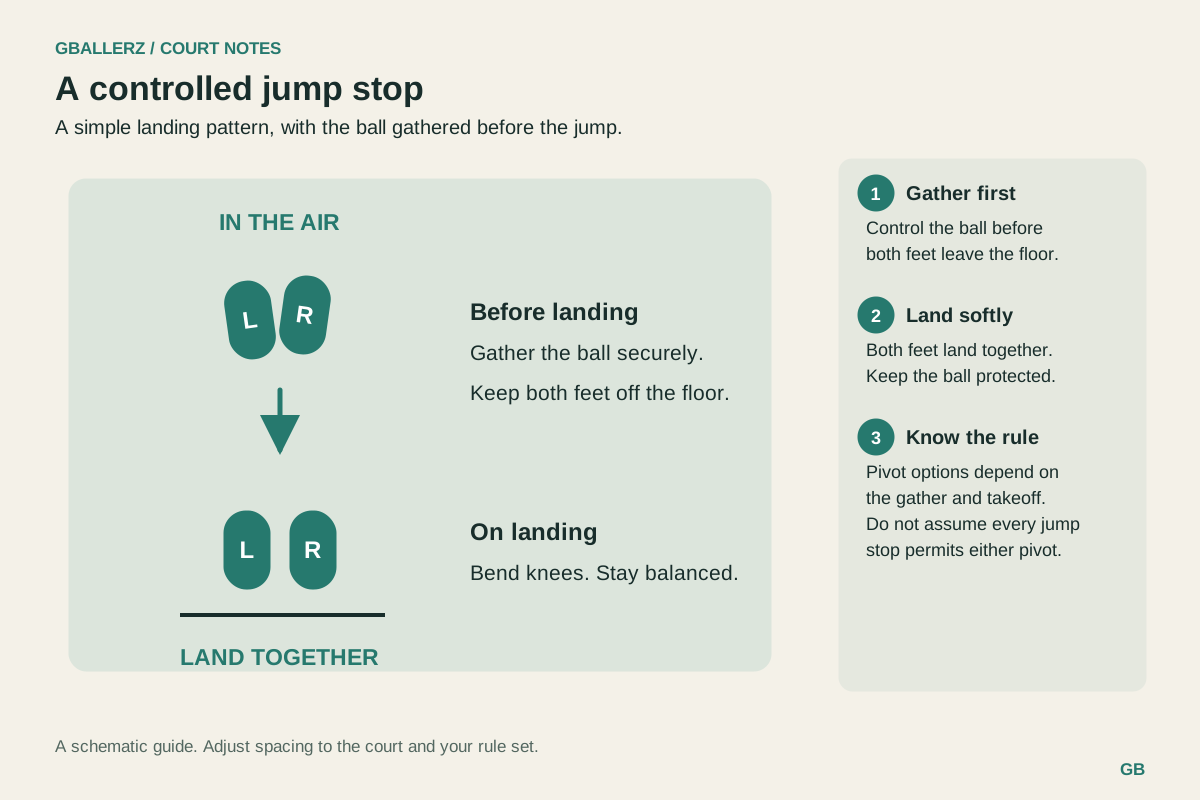
Read the guideLearn to land in balance with possession so you have time to see the next pass or finish.
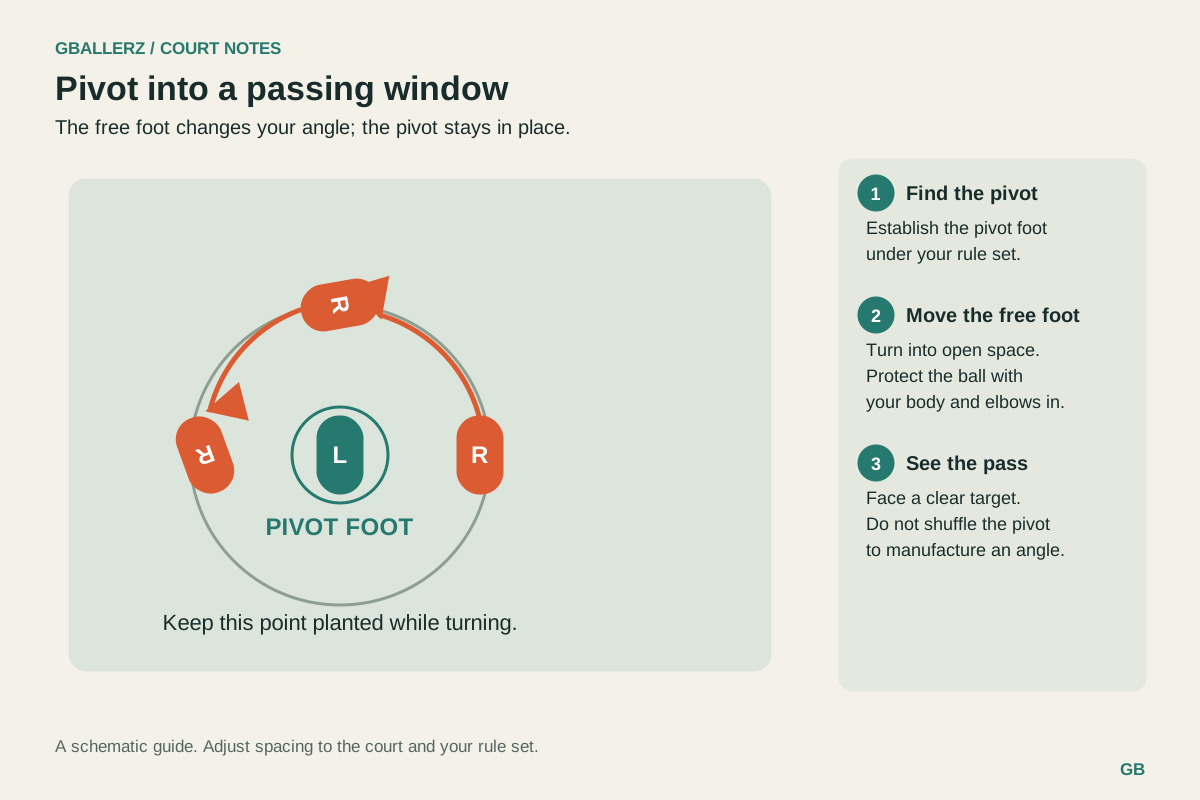
Read the guideUse a balanced pivot to open a passing lane while keeping your body and the ball under control.
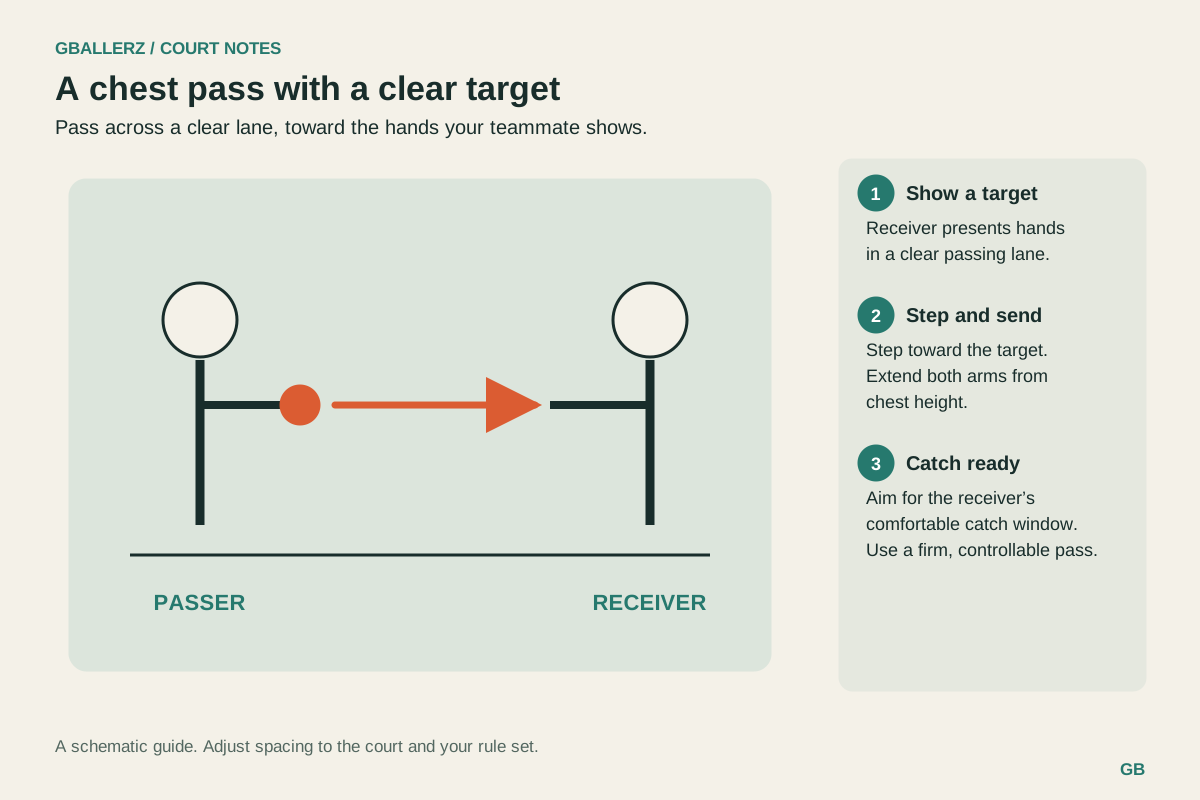
Read the guideA useful chest pass arrives where the receiver can catch it and continue the possession.
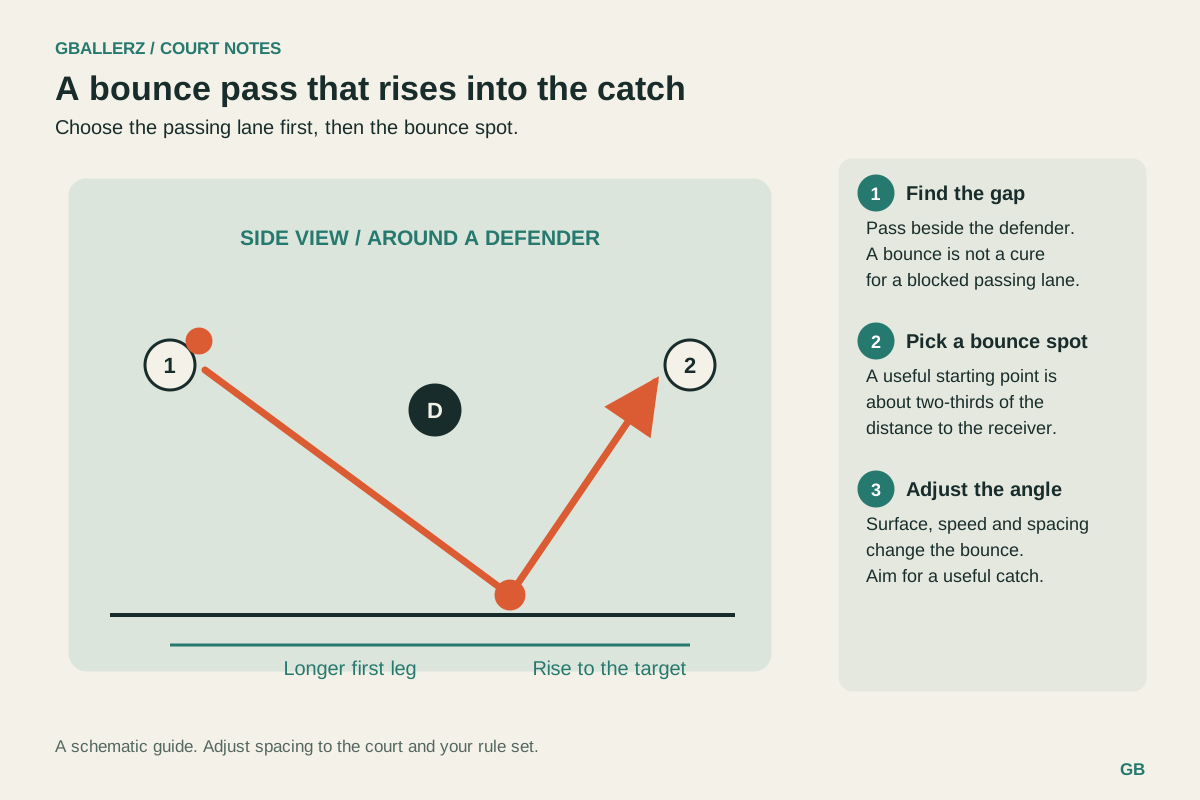
Read the guideChoose a bounce pass when the low route is clear and the bounce will lift the ball into the receiver's hands.
Read the guidePass toward the space a teammate is entering so the catch preserves their movement.
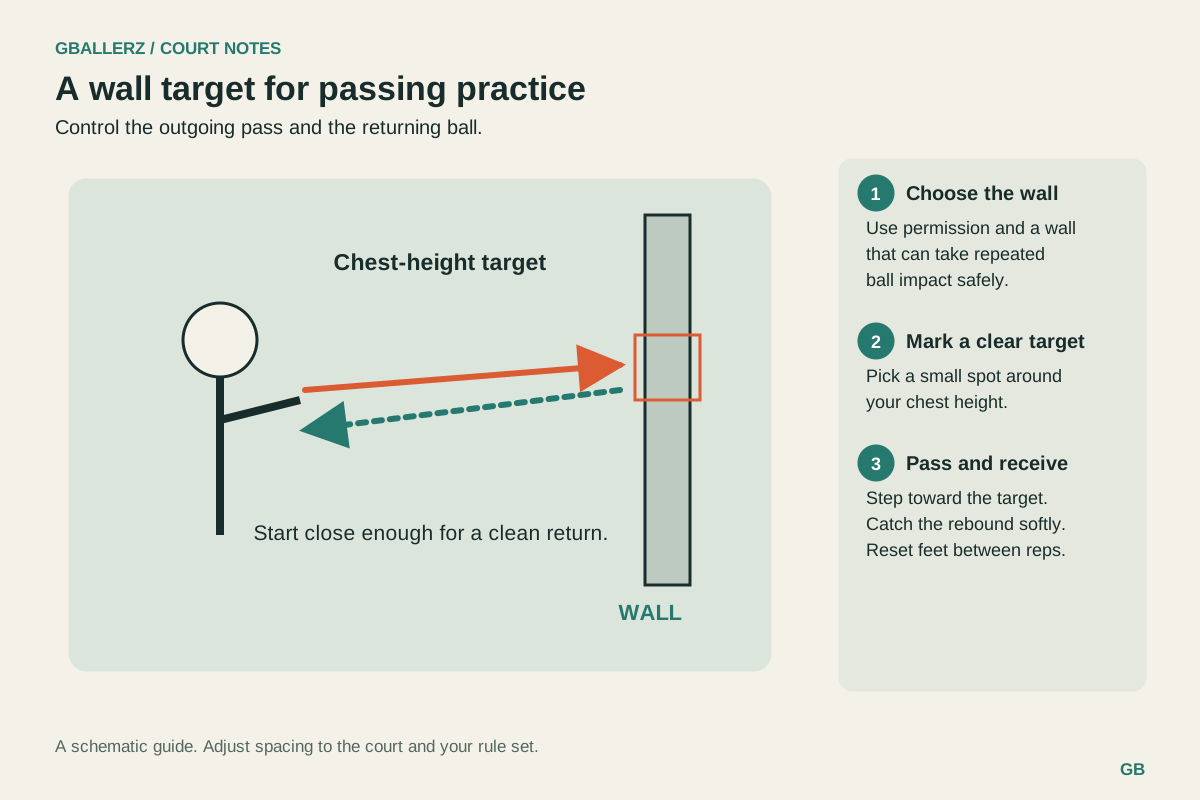
Read the guideA wall target can improve your passing accuracy when the surface, space and rebound are suitable.
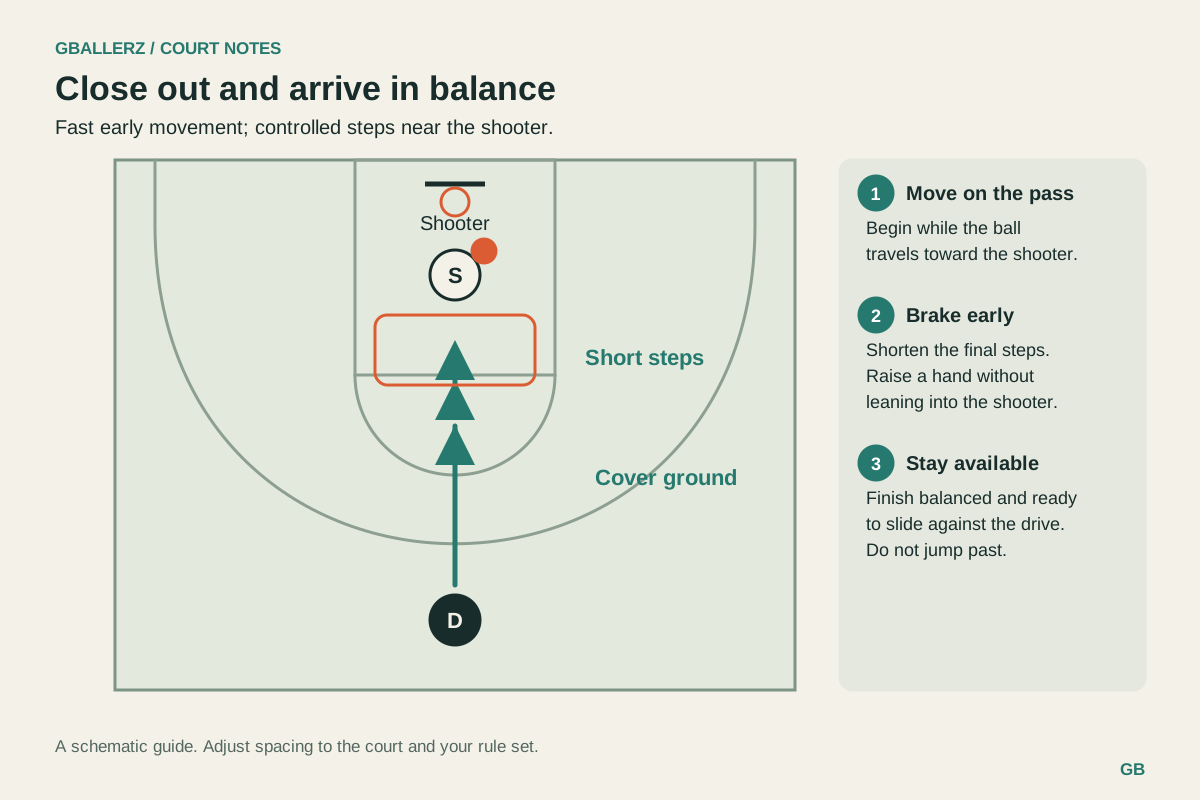
Read the guideApproach under control so you can contest a shot and still respond to a drive.
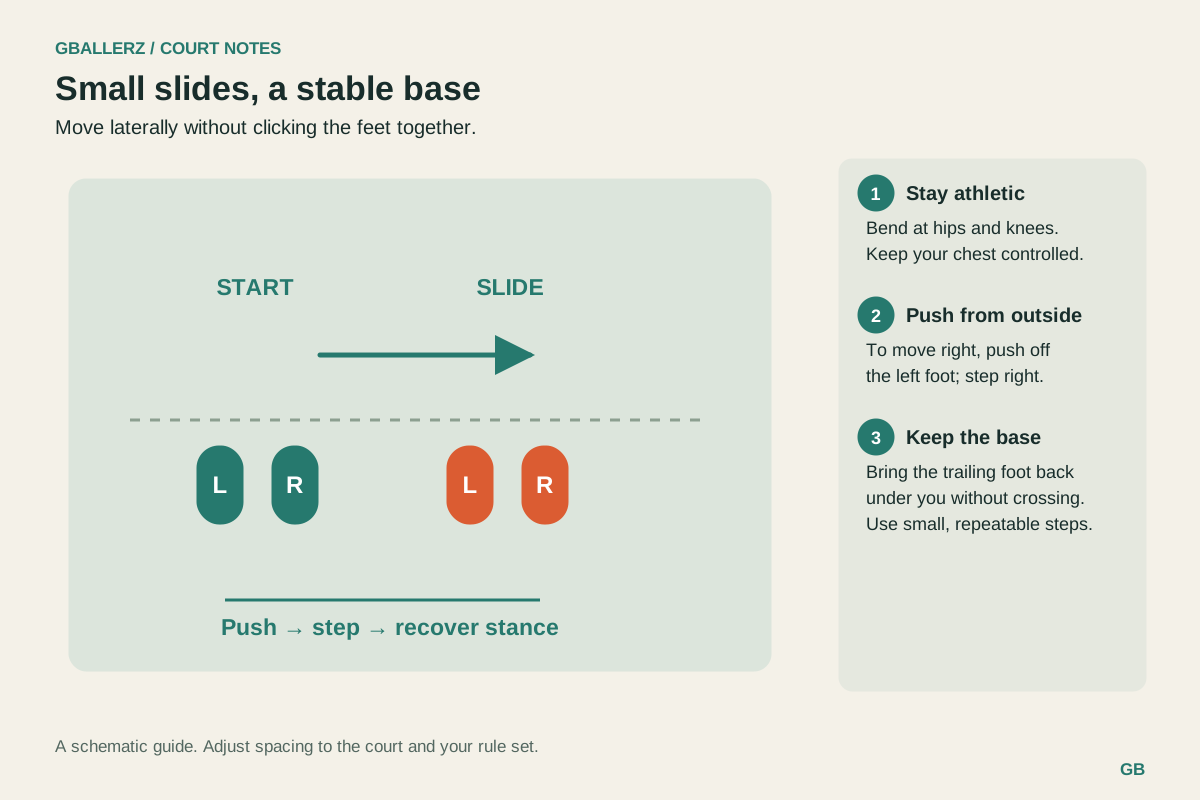
Read the guideUse a balanced stance and manageable steps to respond without crossing into an uncontrolled chase.
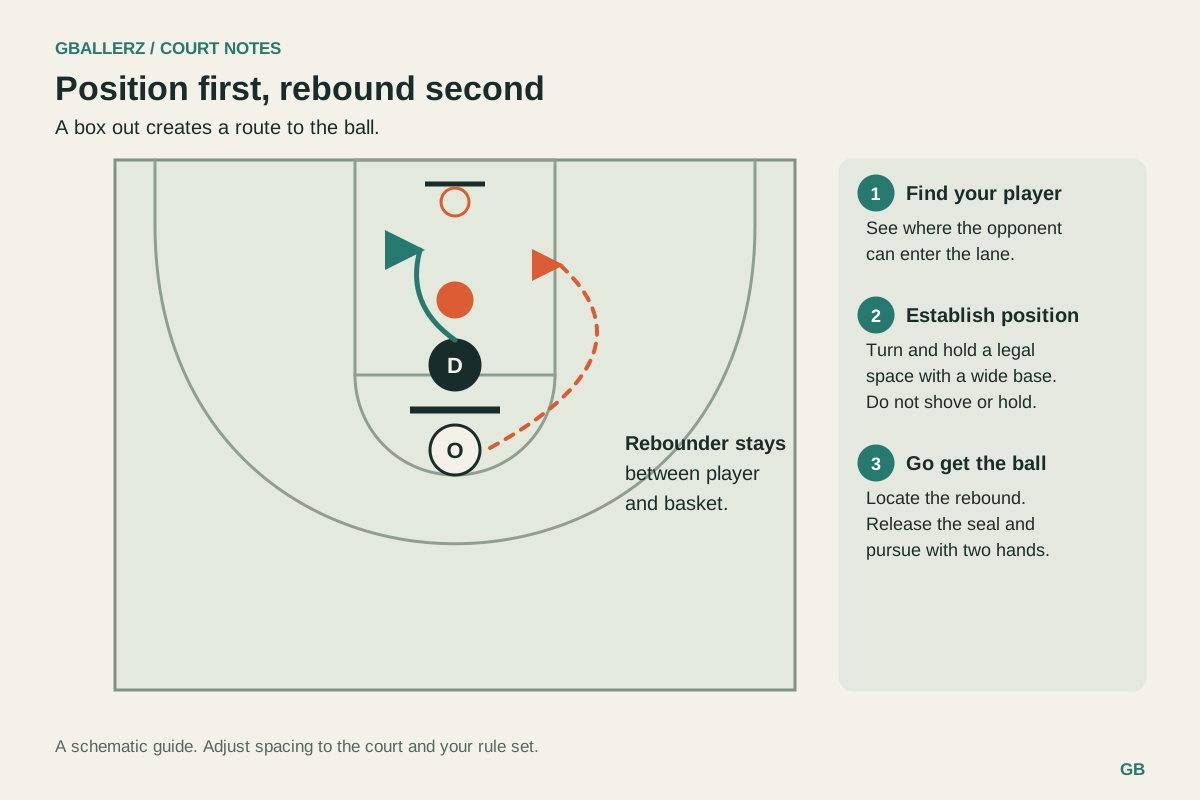
Read the guideFind the opponent, establish a legal position and then pursue the ball with space to land.
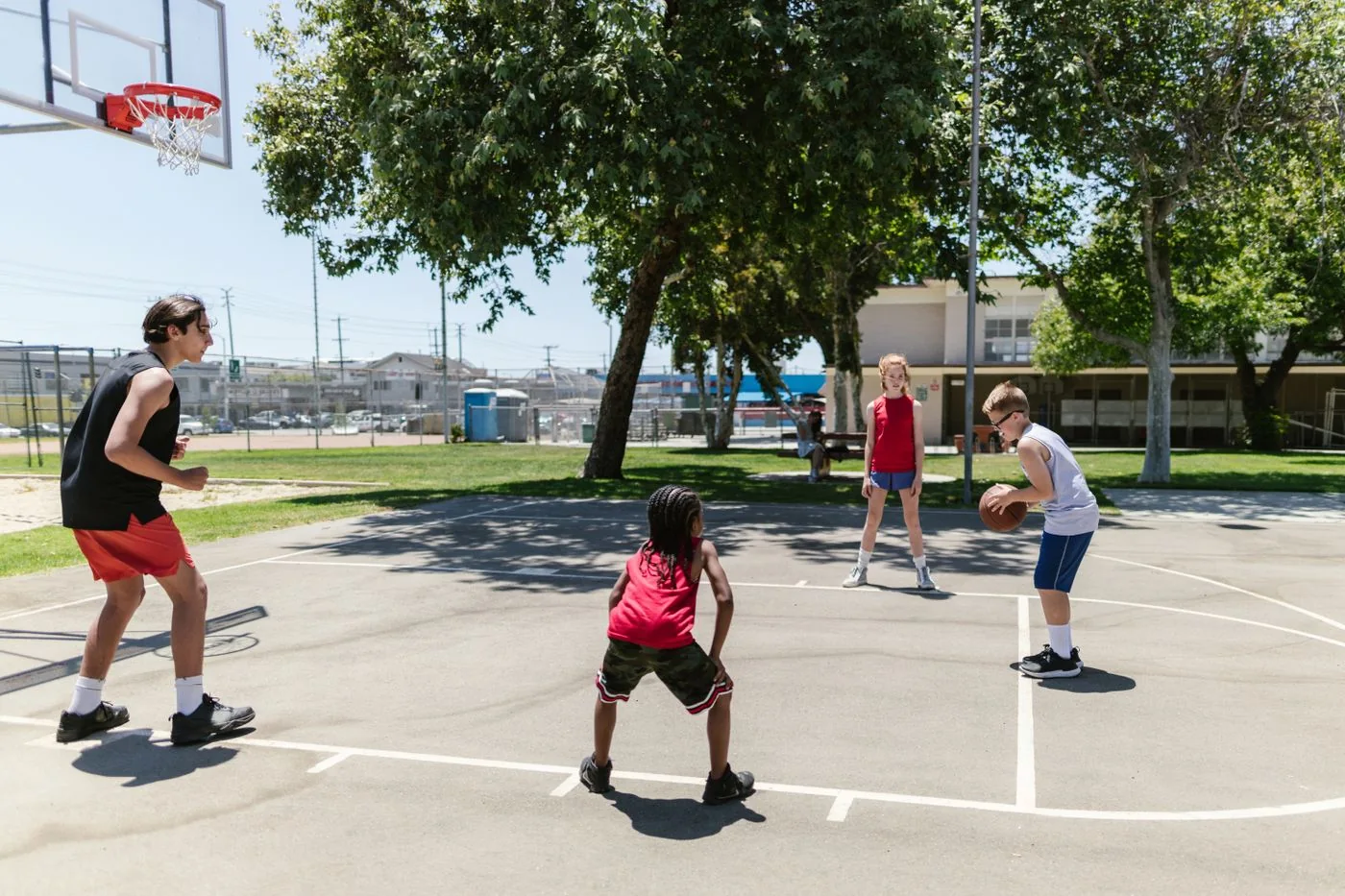
Read the guidePlan shared roles, clear targets and short feedback so both partners leave with useful practice.
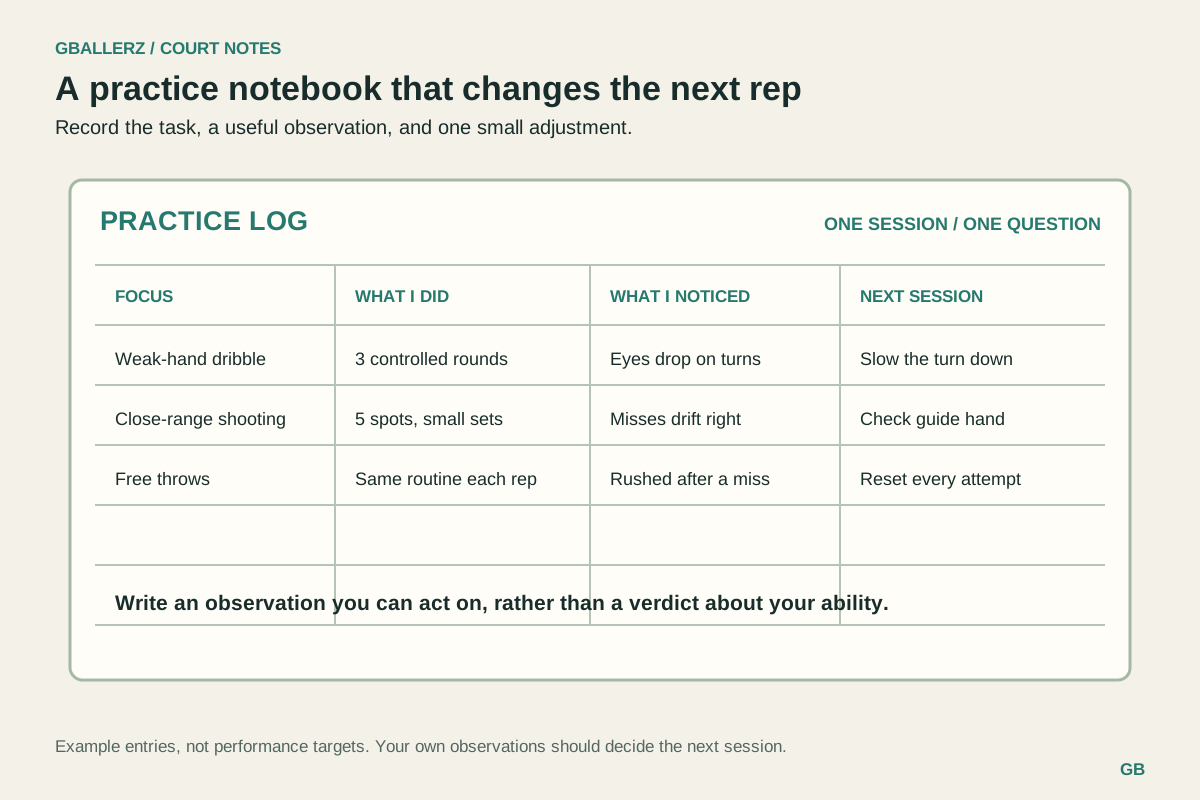
Read the guideRecord enough context to choose the next practice task without turning your notebook into extra homework.
Read the guideGood spacing gives the ball handler an option before you ever touch the ball.
Read the guidePosition names describe common responsibilities, but a useful player learns more than one job.
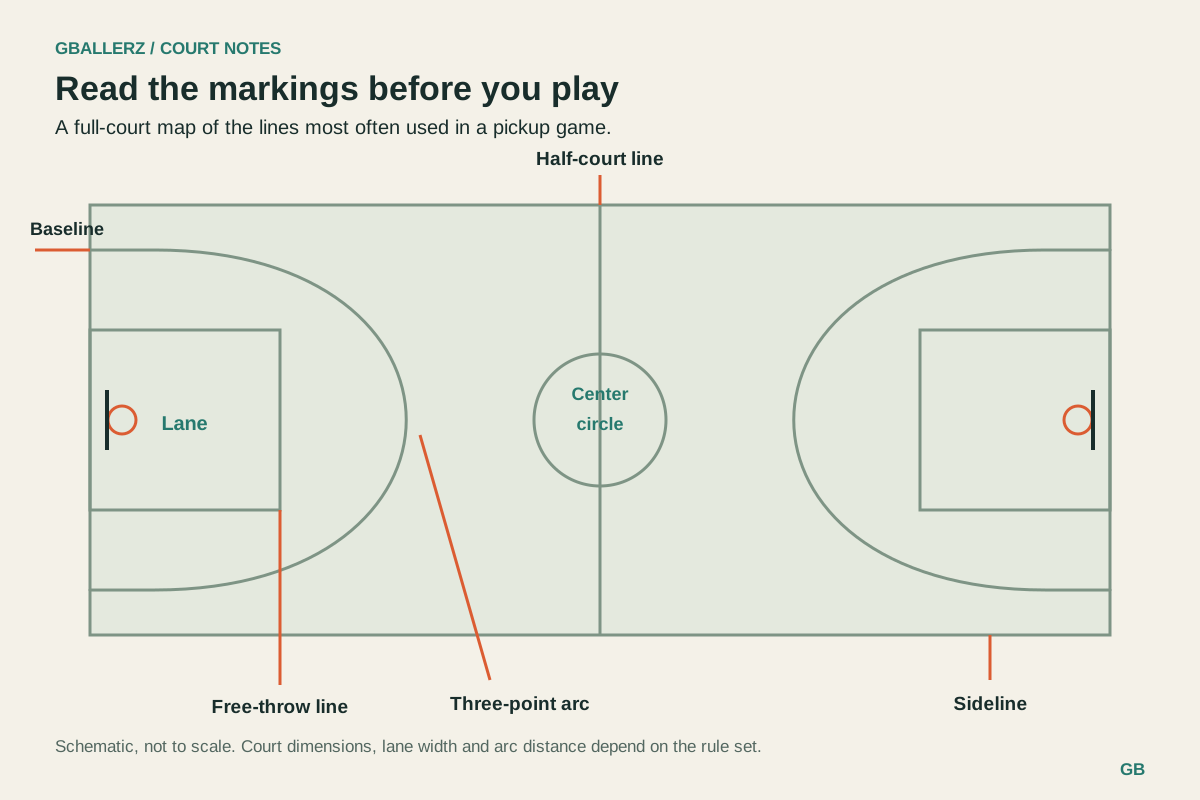
Read the guideLearn which markings define play and which ones simply help you describe a location.
Read the guideA short conversation about scoring and possession keeps local conventions from becoming midgame surprises.
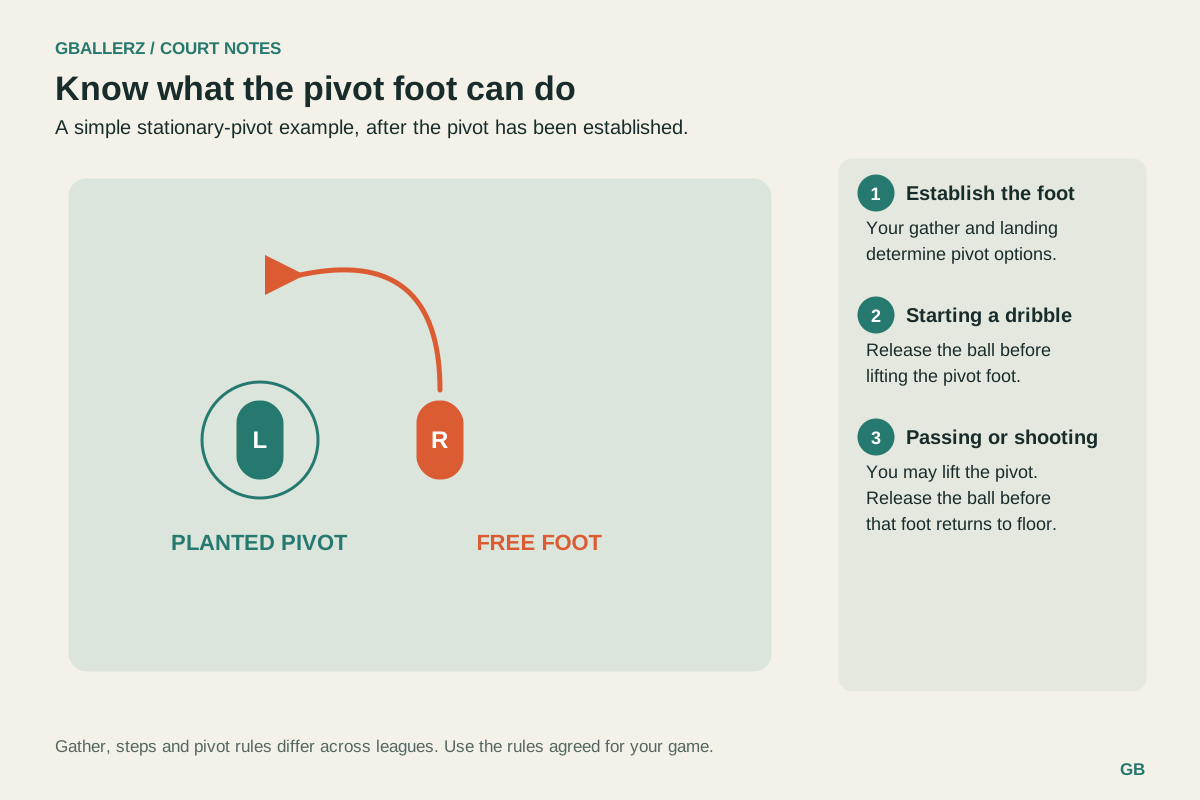
Read the guideLearn the stationary pivot first, then study moving catches under the rules your game actually uses.
Read the guideKeep your dribble continuous and make a clear passing or shooting decision once it ends.
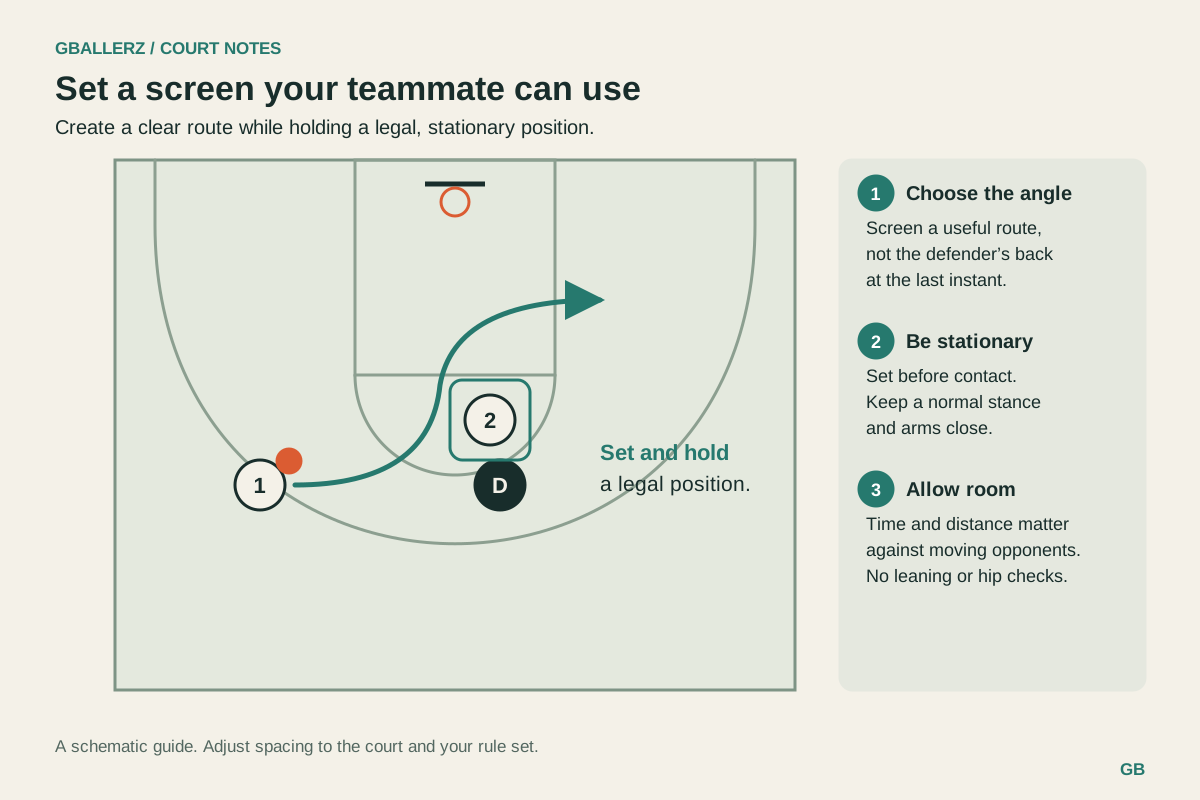
Read the guideA screen creates an angle for a teammate when its timing and position give the defender a fair path.
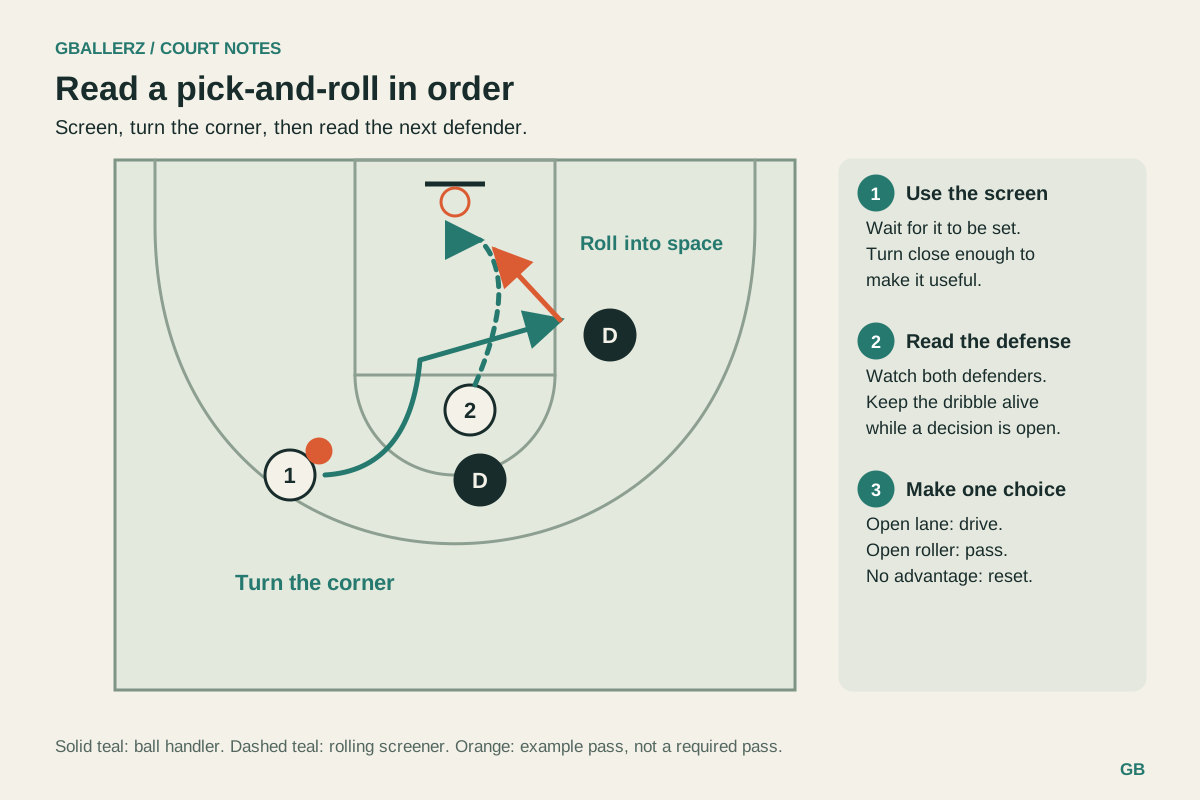
Read the guideUse the screen to reveal a defensive choice instead of deciding on the pass before the play begins.
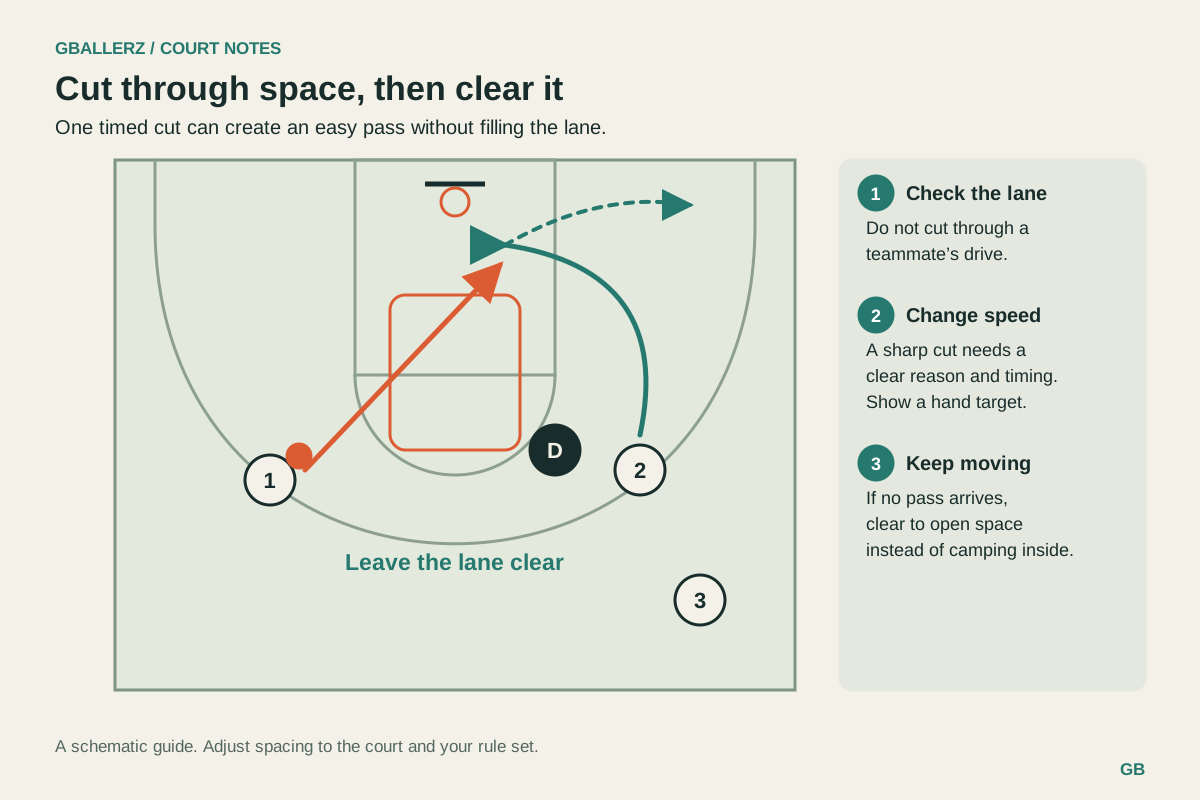
Read the guideA well-timed cut uses a defender's distraction and leaves the lane available when the pass does not come.
Read the guideReact to a drive by opening a passing window instead of following the ball into the lane.
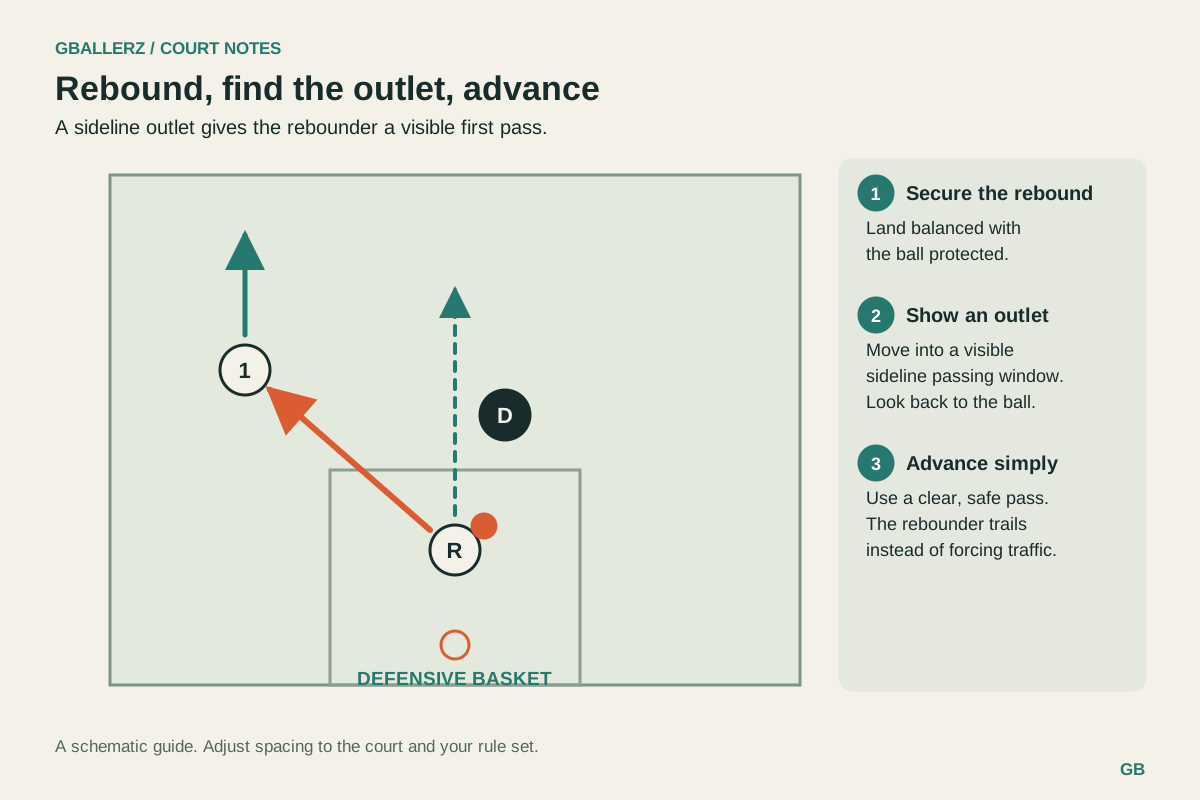
Read the guideSecure the rebound first, then find a receiver who gives the ball a clear route out of traffic.
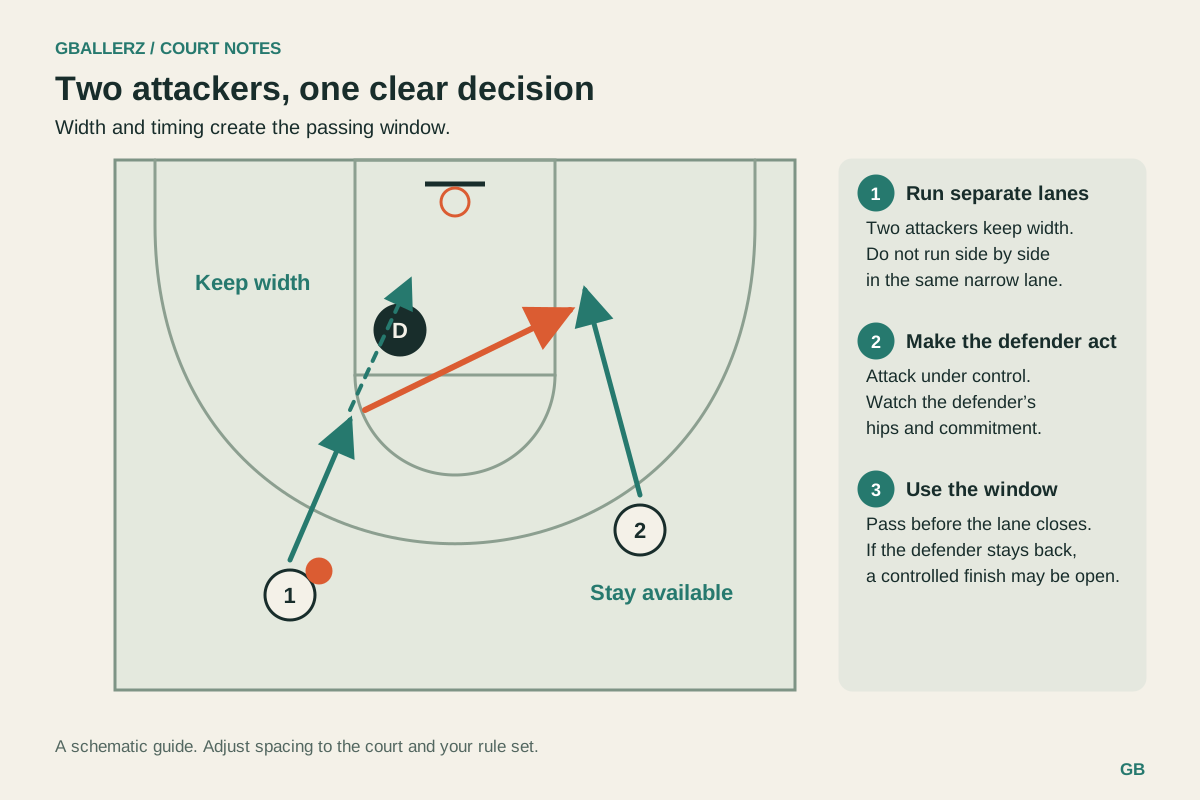
Read the guideSeparate your lanes and make the defender commit before choosing the finish or pass.
Read the guideA useful shot combines your range, balance, defensive pressure and the state of the possession.
Read the guideA useful off-ball stance lets you track the possession without losing the player you are guarding.
Read the guideUseful help stops an immediate threat while leaving a realistic route to the next defensive job.
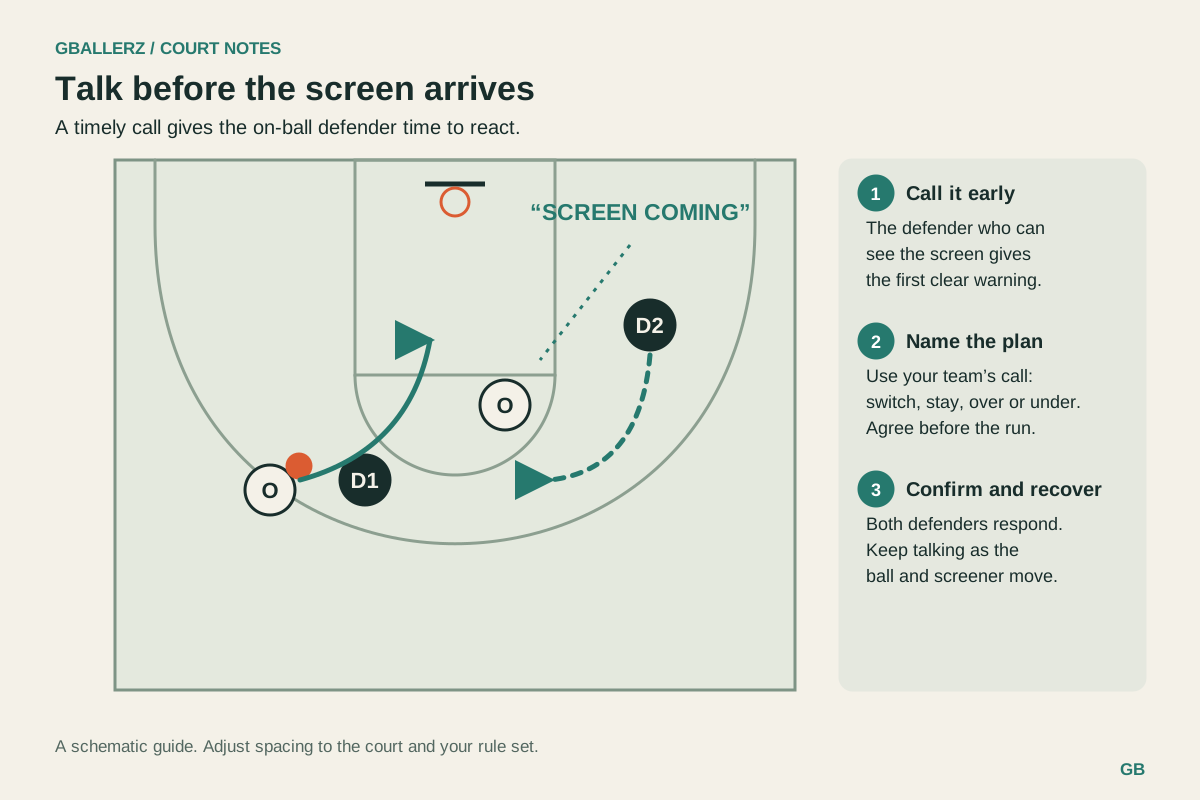
Read the guideEarly, specific screen calls give the defender time to use the coverage the team has agreed on.
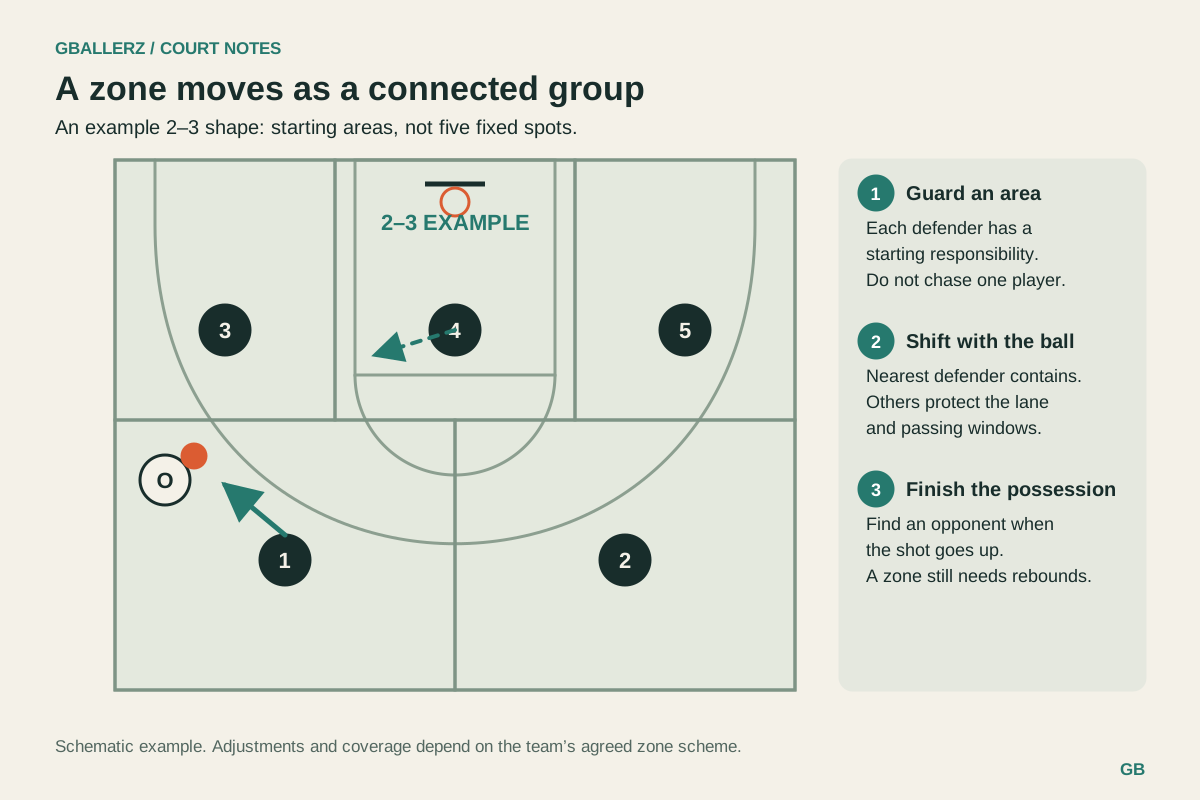
Read the guideA zone works through coordinated coverage of threats, rather than five players standing in fixed patches of floor.
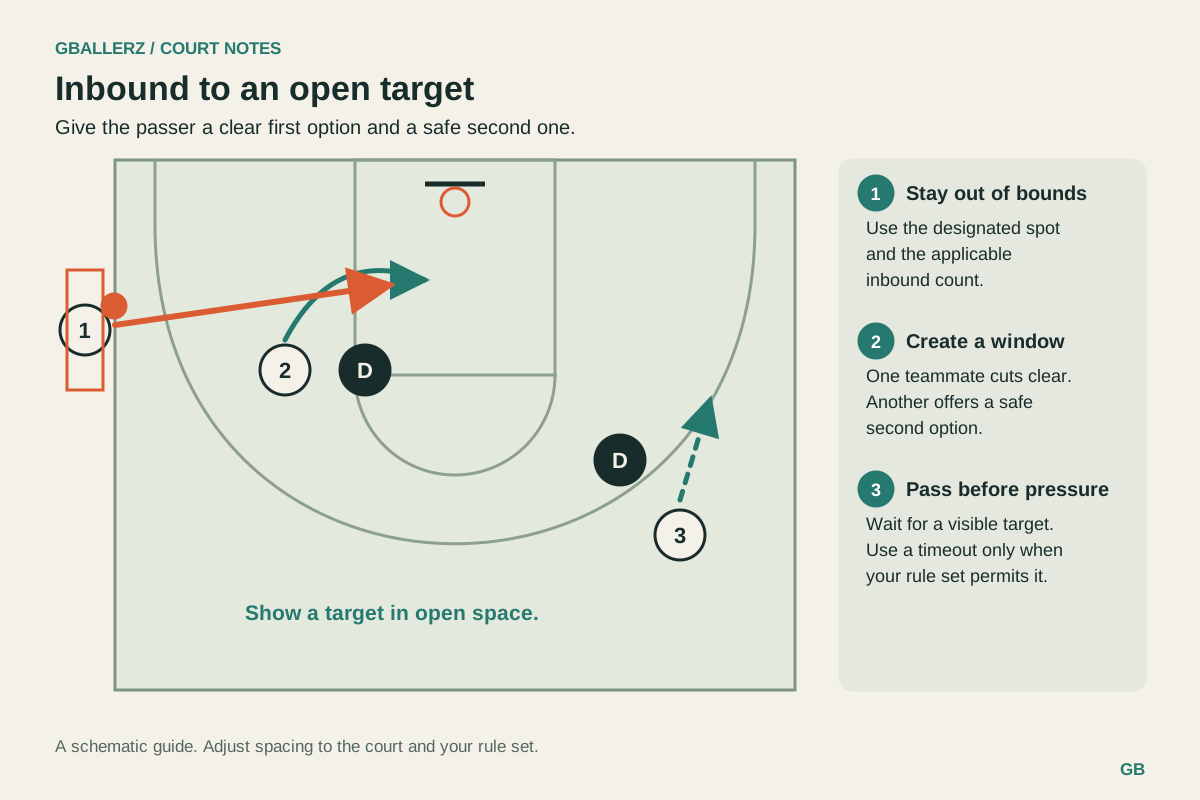
Read the guideA good inbound begins with a legal setup and receivers who offer more than one visible option.
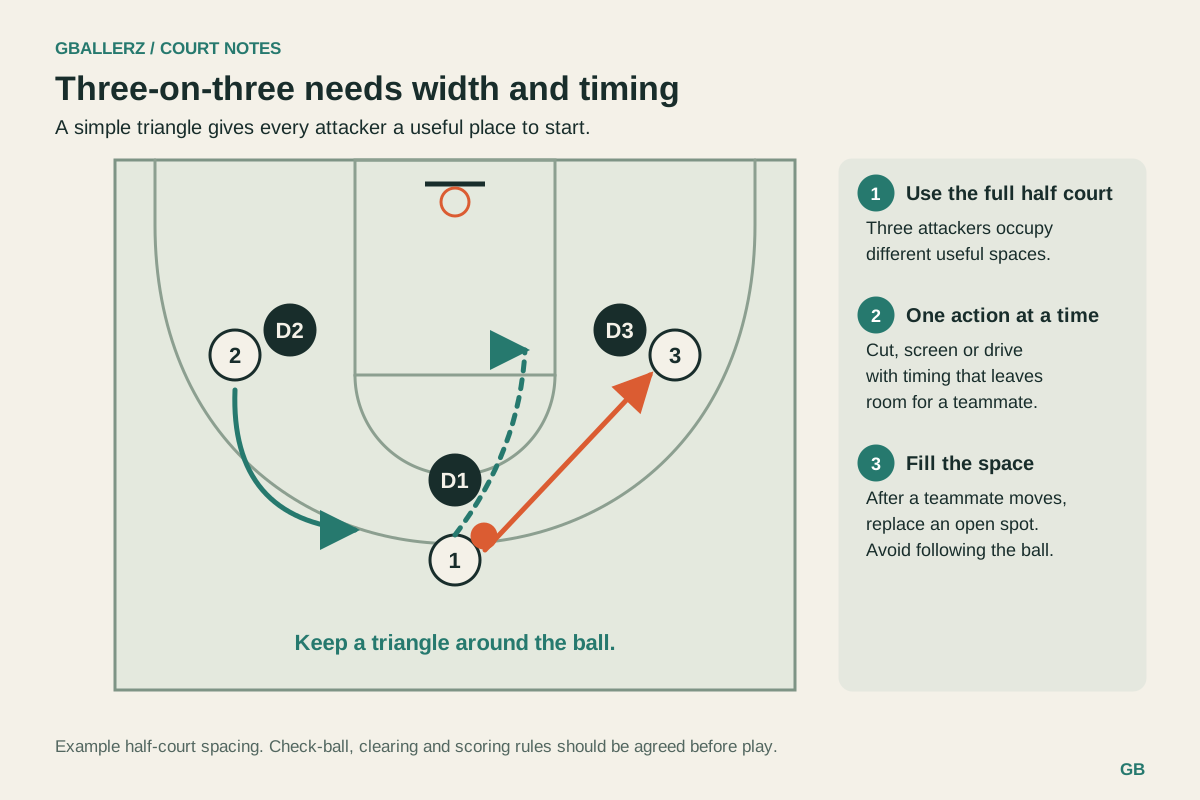
Read the guideThree players can create plenty of options when each action leaves space for the next one.
Read the guideA mistake costs less when you move immediately toward the next useful defensive responsibility.
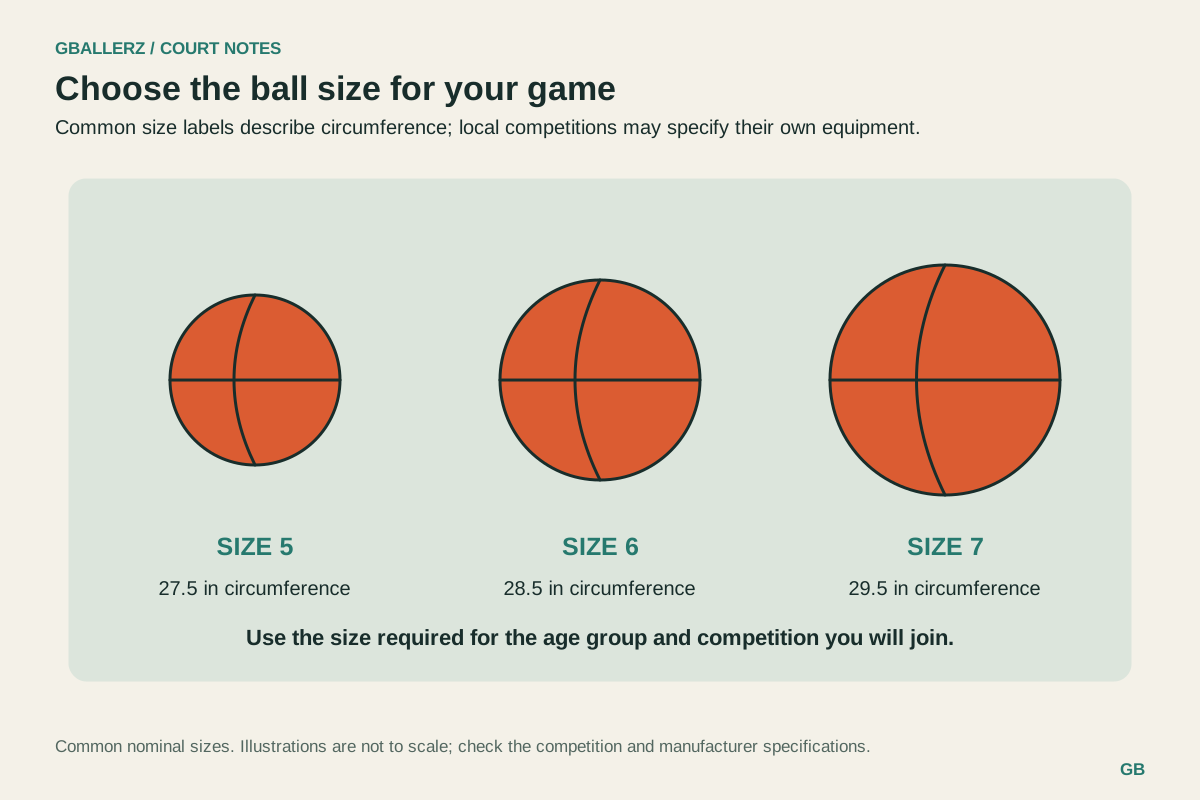
Read the guideStart with the competition's ball specification, then match the practice ball to the player's task.
Read the guideThe cover material helps explain feel and wear, but the ball's own surface rating should decide where it goes.
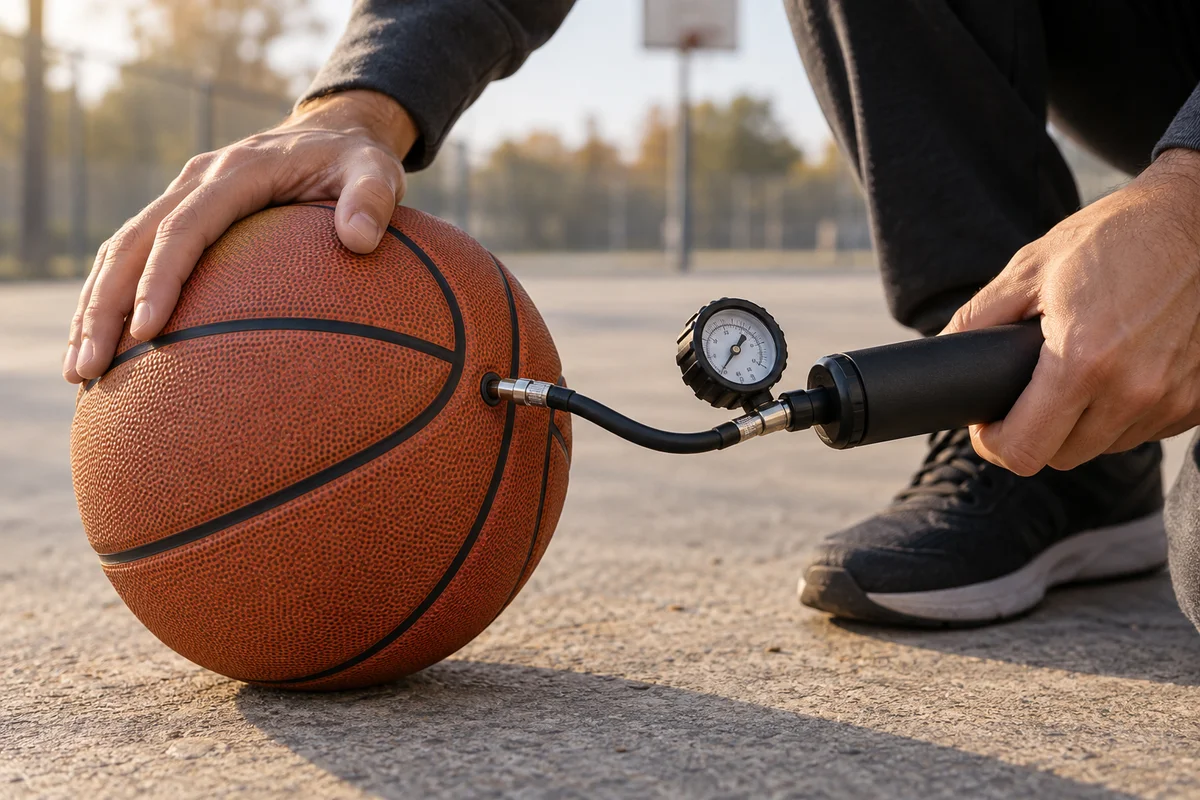
Read the guideA suitable gauge and the ball's own instructions are more dependable than guessing from one bounce.
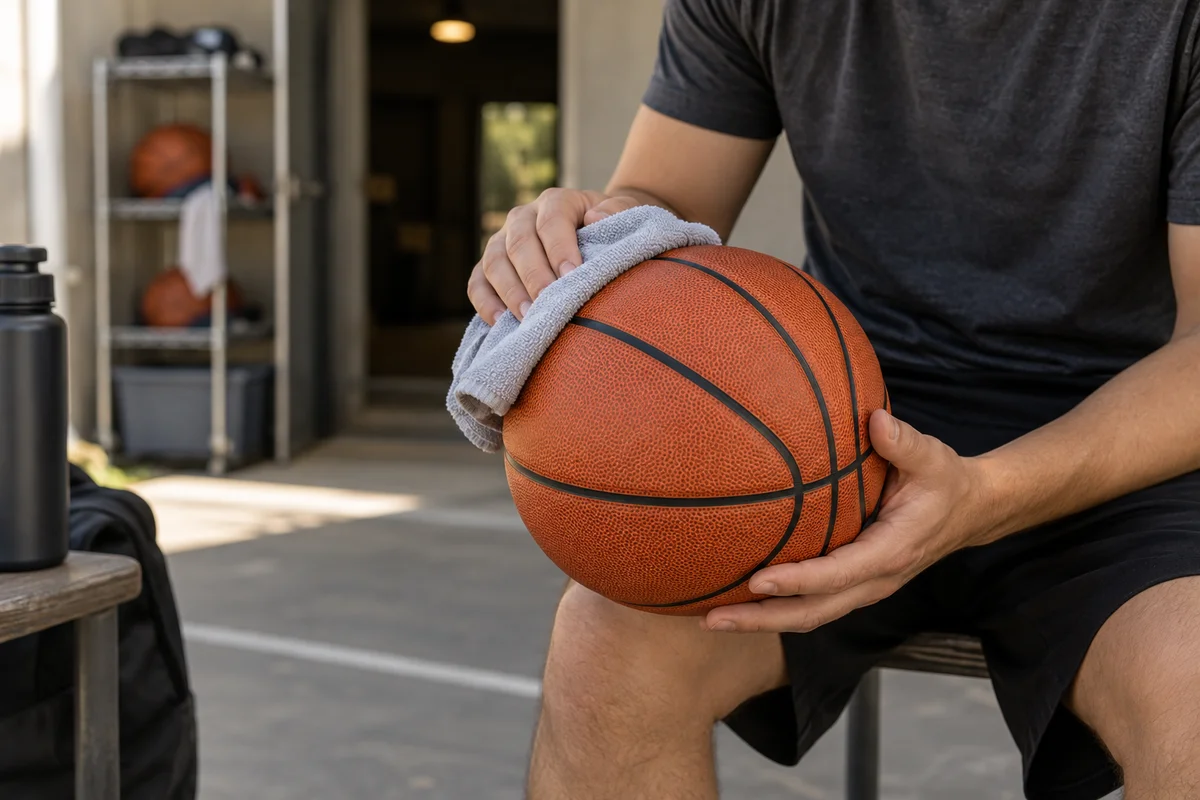
Read the guideA gentle, material-appropriate routine protects the ball better than aggressive washing or heat.
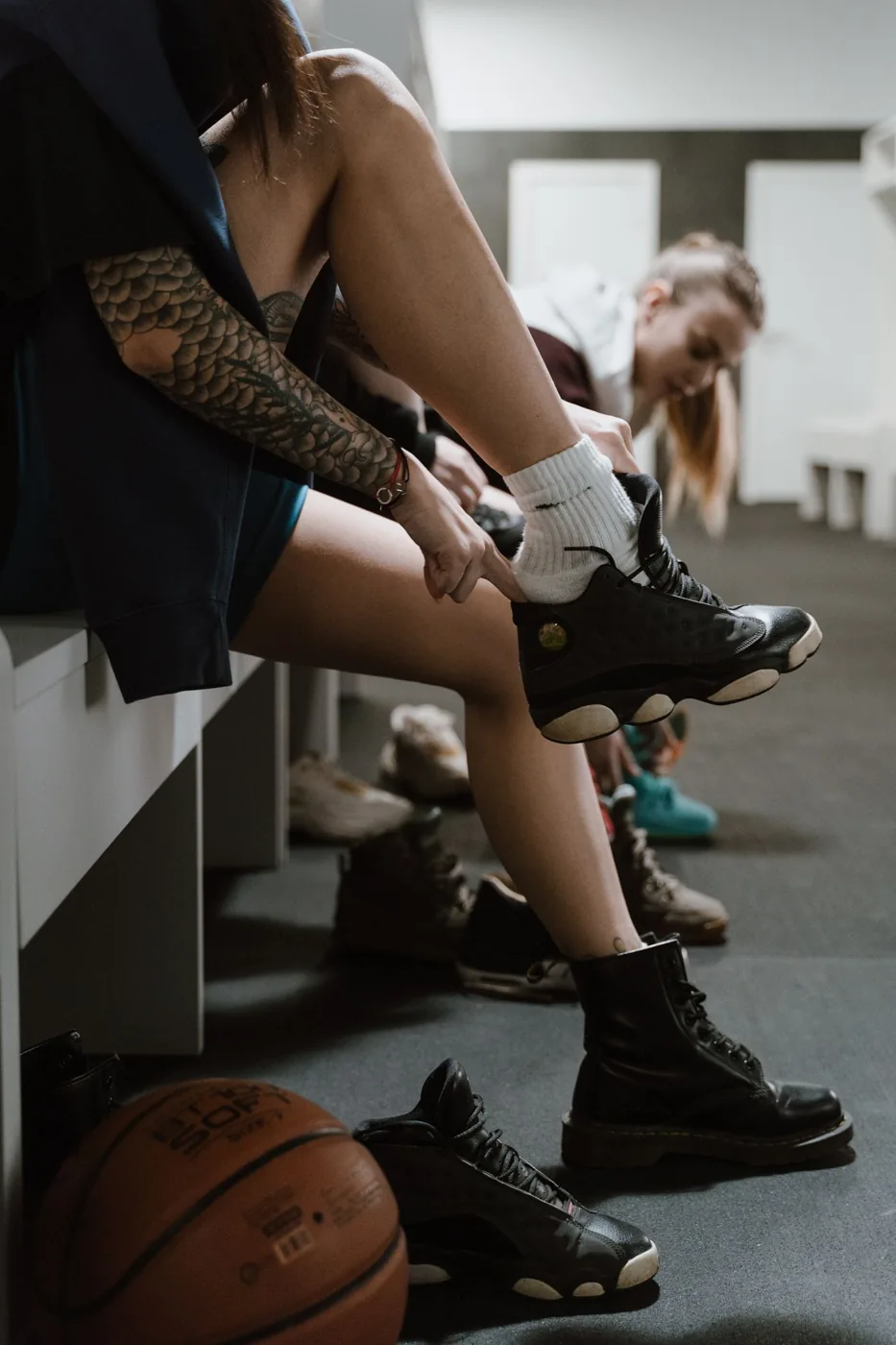
Read the guideJudge the shoe on both feet during controlled basketball movements before its feature list decides the purchase.
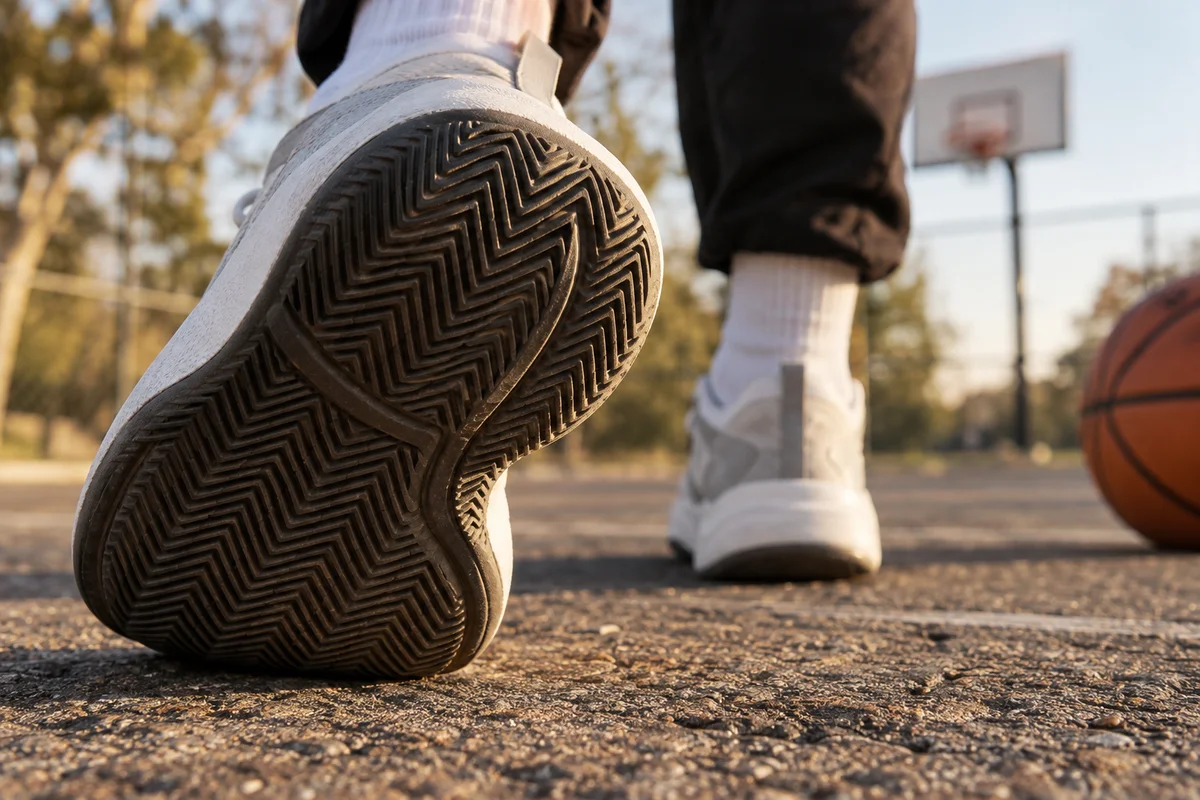
Read the guideCompare outdoor intent, rubber coverage and tread construction before judging a shoe by its appearance.
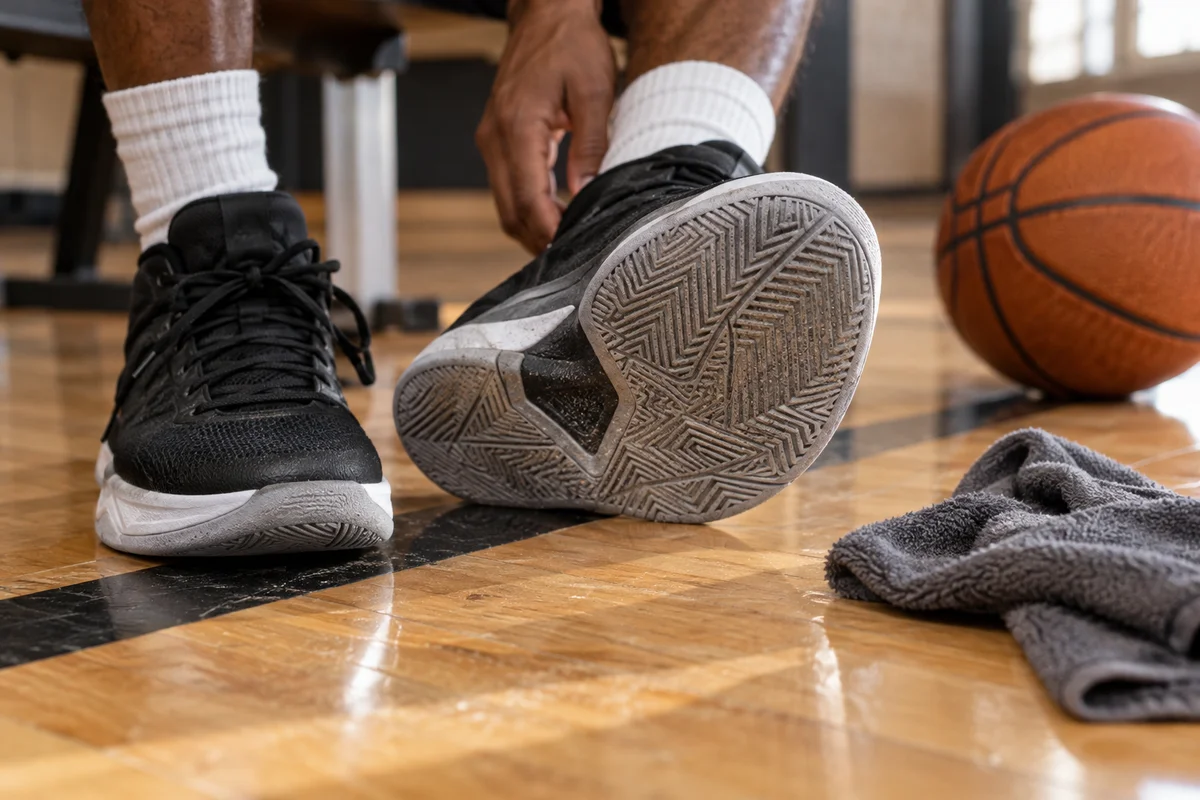
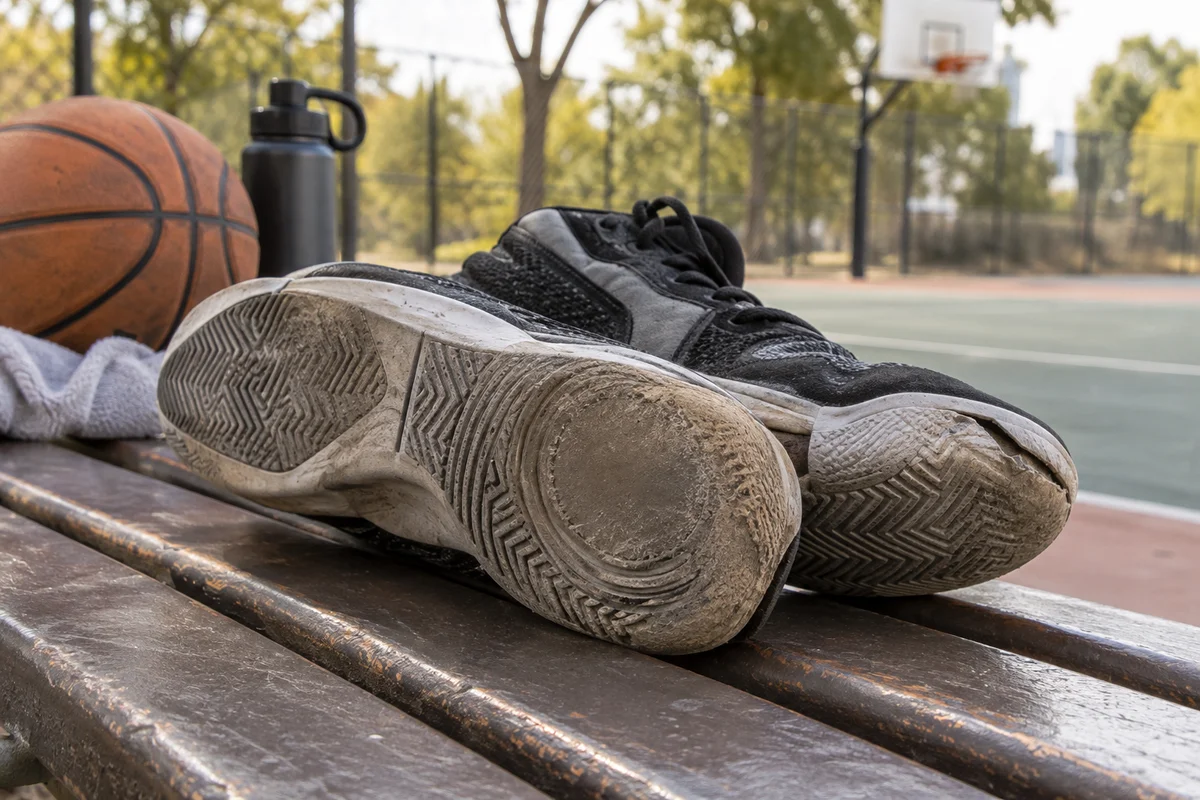
Read the guideSeparate a dirty outsole from a dusty floor before deciding that your shoes have lost their grip.
Read the guideJudge how a shoe behaves while you move, rather than choosing the softest pair on the shelf.
Read the guideCollar height is one design feature; heel hold, a stable base and comfortable movement deserve equal attention.
Read the guideInspect the whole pair and the way it behaves rather than replacing shoes by a universal calendar.
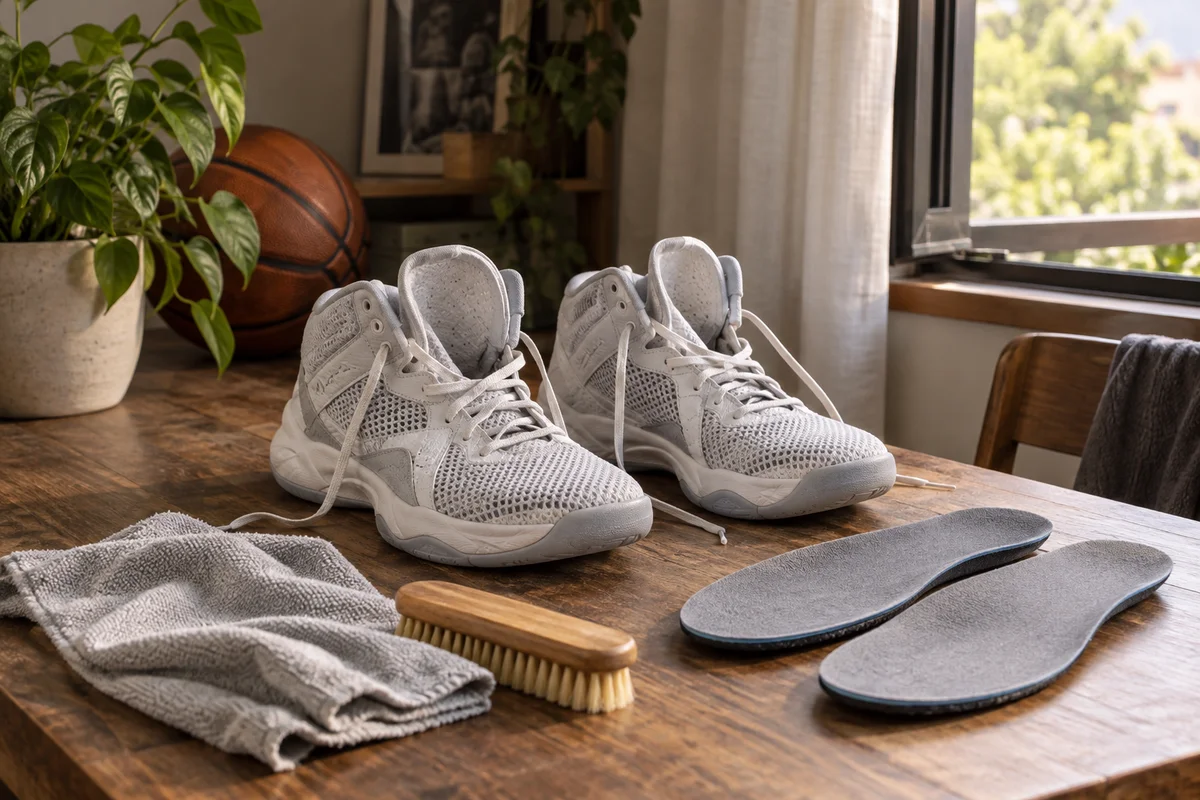
Read the guideEmpty the bag, remove loose dirt and give the shoes time to dry before the next session.
Read the guideTest socks as part of the shoe fit instead of treating thickness and fabric labels as separate purchases.
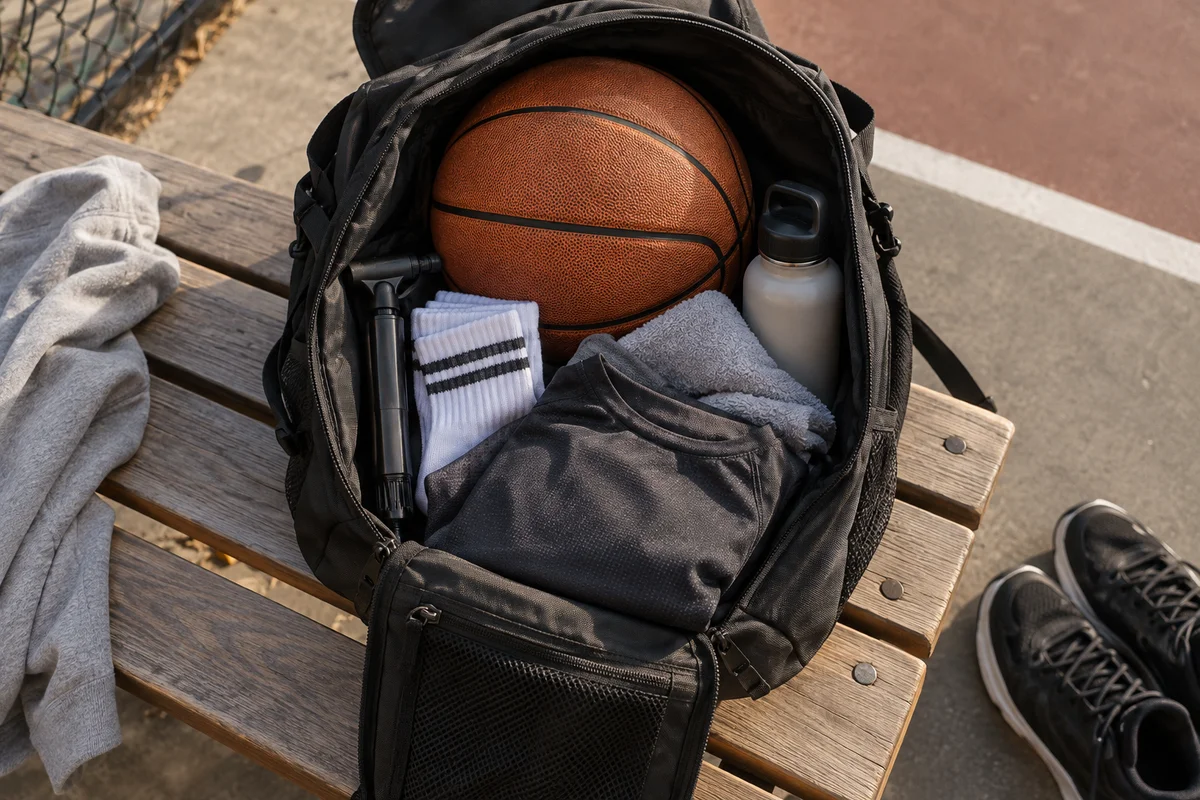
Read the guideBuild the bag around the court you use and the session you actually attend.
Read the guidePlace markers to define the task while keeping landing areas and shared routes clear.
Read the guideCheck the waistband, openings and movement of the outfit rather than selecting by an oversized silhouette.
Read the guideA brief visual check can identify reasons to stop and report a problem, but it cannot certify the equipment.
Read the guideSpend first on a workable shoe fit and the right ball, then add equipment only when a real need appears.
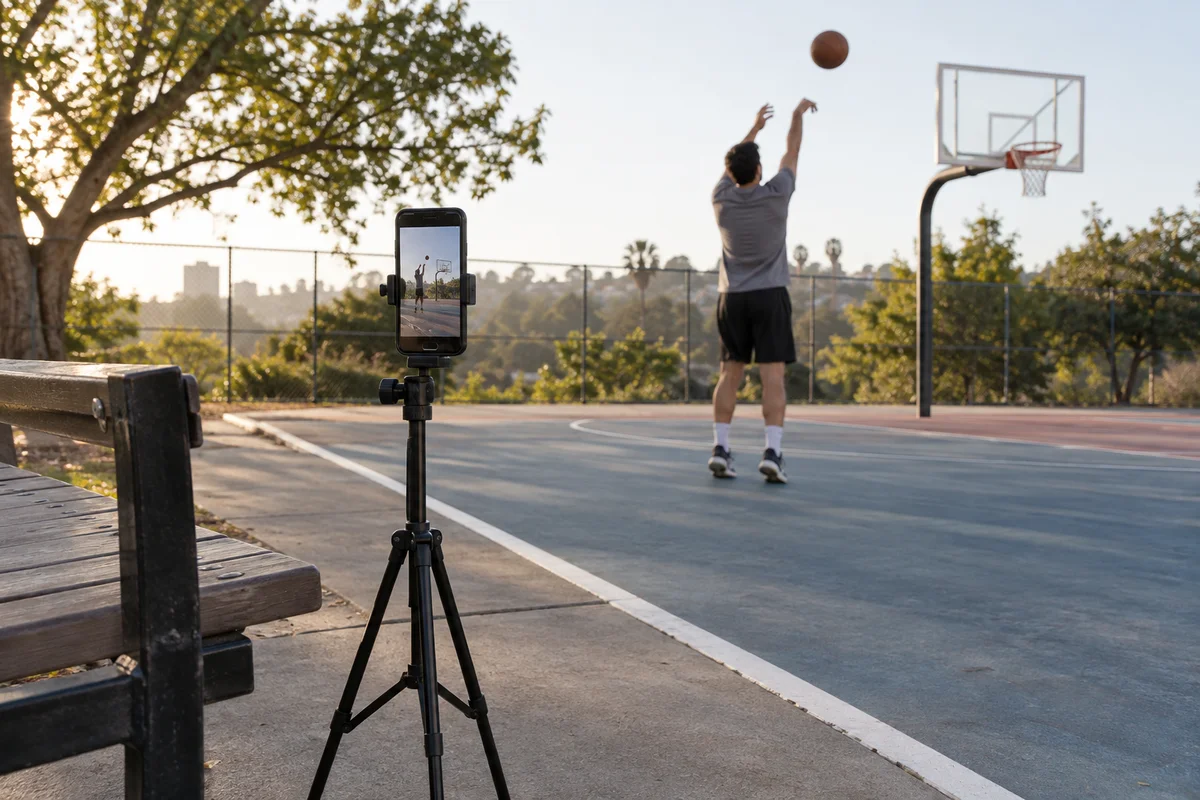
Read the guideRecord one clear movement from a permitted position without putting a device in anyone's playing route.
Read the guideMake your first approach clear, learn the local rotation and join at a moment that respects the game.
Read the guideName the contact promptly, agree on the restart and keep the conversation attached to the actual play.
Read the guideUse visible space, clear time limits and direct conversation to make a crowded court workable.
Read the guideA dependable weekly run needs a clear place, a realistic player count and one simple way to handle changes.
Read the guideBuild competitive teams by considering ball handling, effort and roles alongside size and scoring reputation.
Read the guideAgree on the kind of game you want and create useful choices for players with different experience.
Read the guideHelp the possession through spacing, communication and reliable decisions that do not depend on taking the shot.
Read the guideDecide what you will engage with, use a brief response and move your attention to the next basketball task.
Read the guideExplain the run beforehand, make introductions and let your friend choose the level of involvement that feels manageable.
Read the guideGet clear permission before recording, keep the camera outside play and explain what you intend to do with the footage.
Read the guideA few minutes of cleanup and clear equipment placement make the next group's game easier to start.
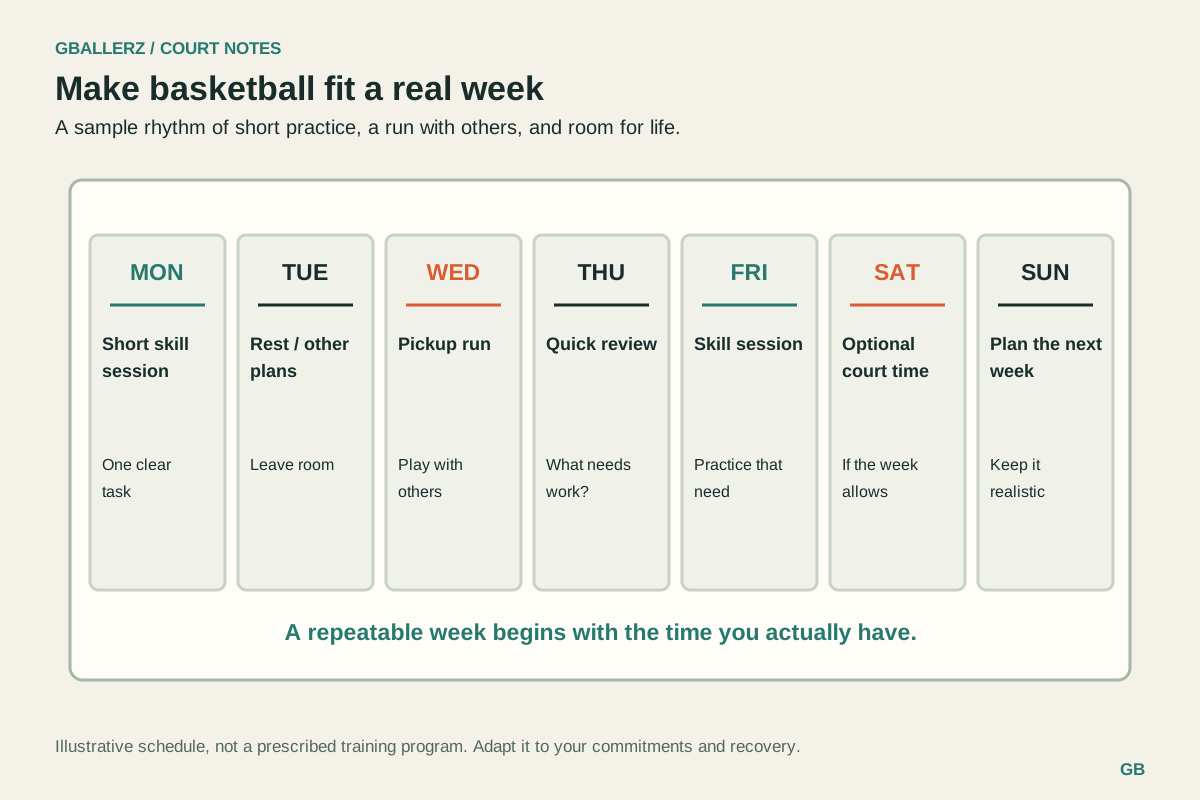
Read the guideChoose a repeatable time, a small fallback session and a clear way to return after a missed week.
Read the guide