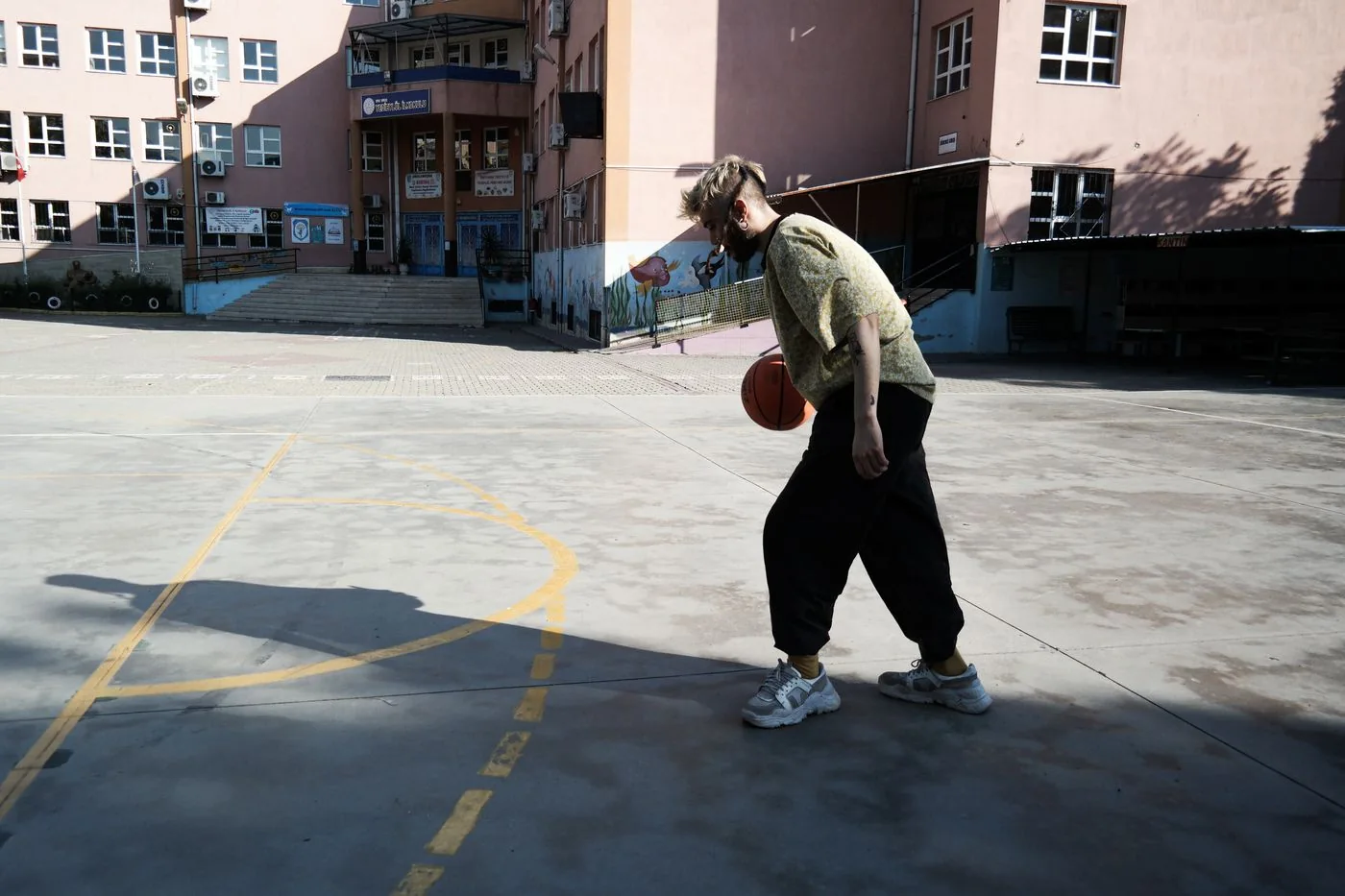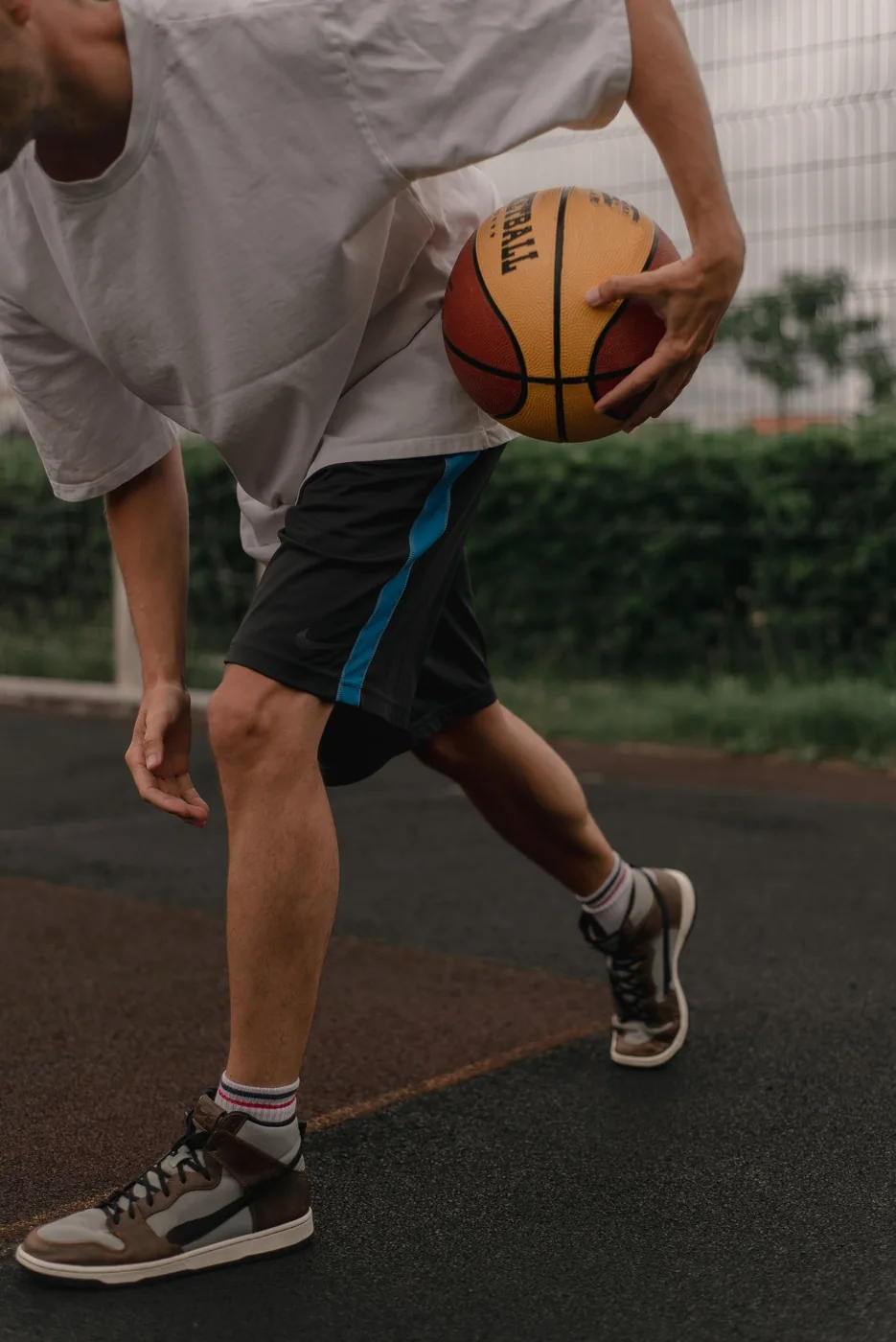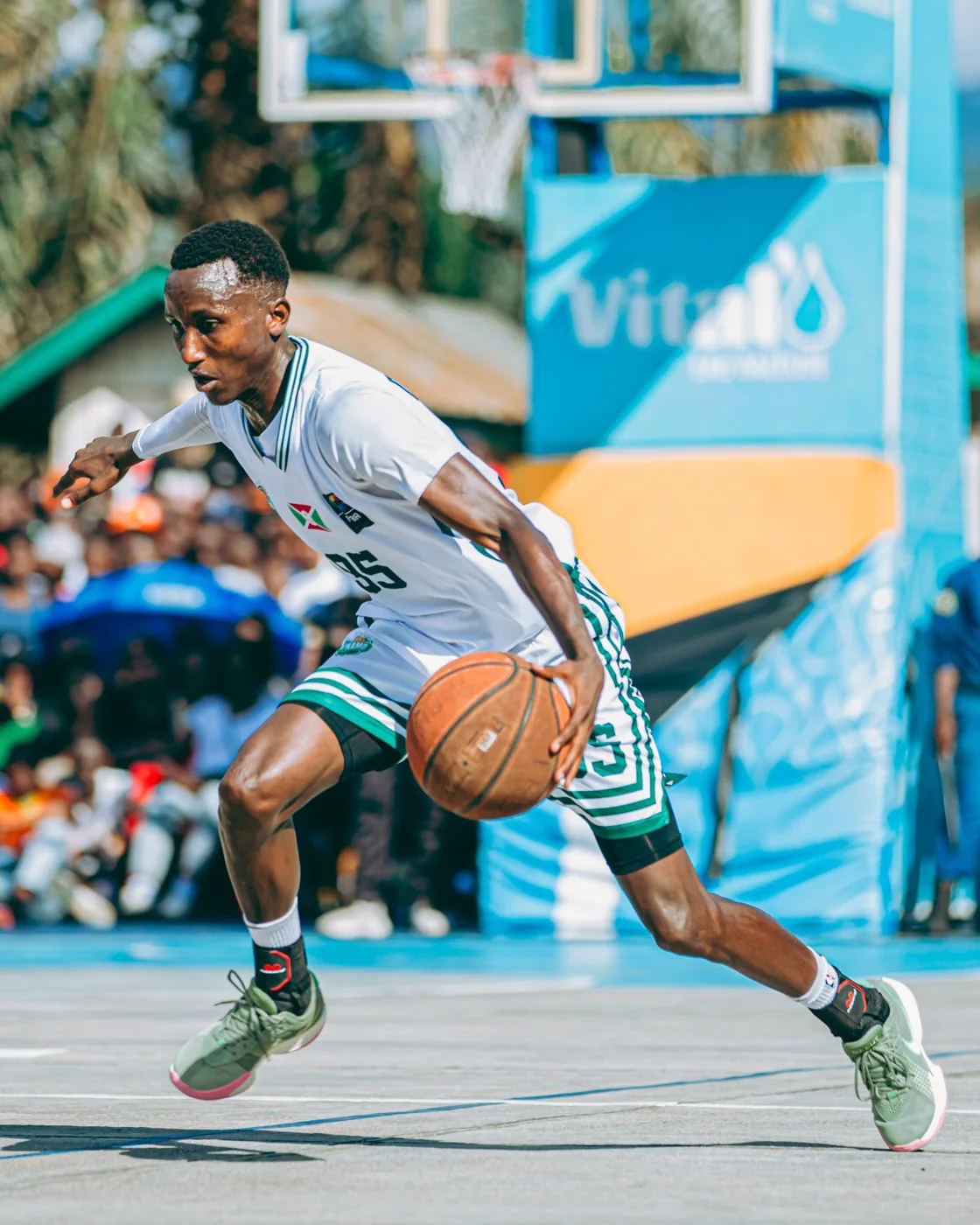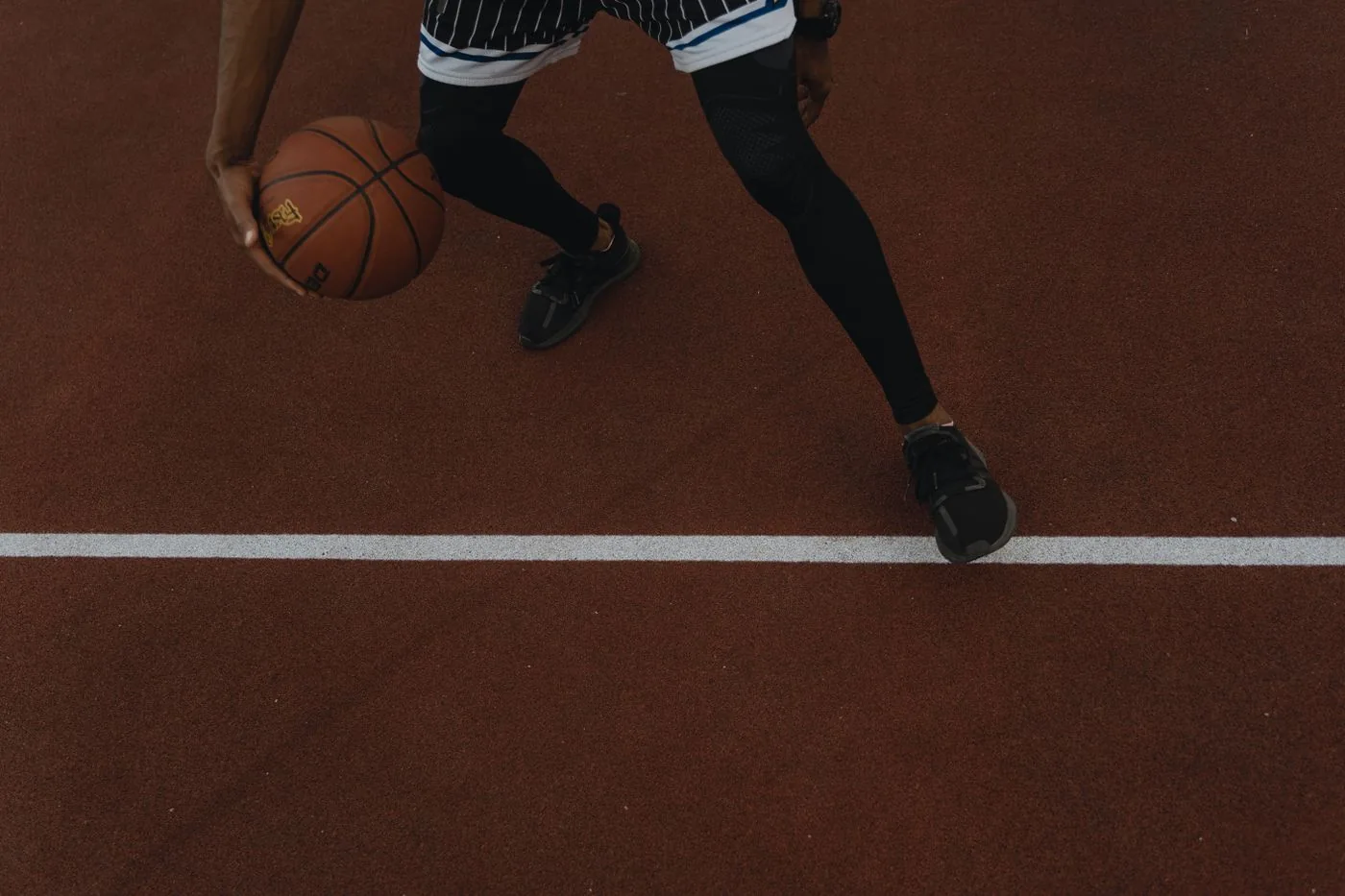
Switching the ball from right to left is only one part of a crossover. The useful outcome is a change in the path of your hips and feet that makes a defender adjust. If the ball moves sideways while you stay in the same place, the defender has little reason to react. Build the move around a destination: an open strip of court beyond the defender's outside foot, where your next dribble can stay protected.
Set two destinations
Mark a starting point and two exits a few steps forward, one to either side. Approach the start at walking speed with the ball in your right hand. Show a small movement toward the right exit, bring the bounce across in front and travel toward the left exit. Let the new direction carry your body, rather than planting and waving the ball several times. Alternate directions. The markers are simply references; keep loose objects outside the route so that you do not step on them.
Keep the exchange close enough to control
A wide, high crossover gives a nearby defender time and space to reach. Start with a bounce that travels below your normal upright dribble and reaches the other hand in front of your body. You do not need to slap downward with maximum force. The ball should arrive where the receiving hand can continue the next bounce without a pause. If it hits your shin, widen the route slightly. If you must lunge to collect it, bring the first hand's release closer to your body.
Make the next step count
After receiving the ball, take a purposeful step into the new lane and place the next bounce ahead and to that side. This second dribble often reveals whether the crossover worked. Players sometimes complete a neat exchange, then stand upright and allow the defender to recover. Practice the exchange and two advancing dribbles as one short action. Stop before the basket at first. Adding a shot too early can distract you from the angle and spacing that make the move useful in the first place.
Read a person instead of a cone
Ask a partner to stand in front with their arms comfortable and their feet still. Learn the distance at which the crossover passes safely beyond their reach without forcing contact. Next, let the partner take one slide toward whichever exit you show first. Choose your path in response rather than agreeing on a direction beforehand. If the original lane stays open, use it. A crossover is a solution to a closed route, and deciding not to use it can be the best result of the drill.
Practice five controlled exits each way, then ask a partner to close one route so your direction change answers something you actually see.
Something unclear? Send a correction or question.