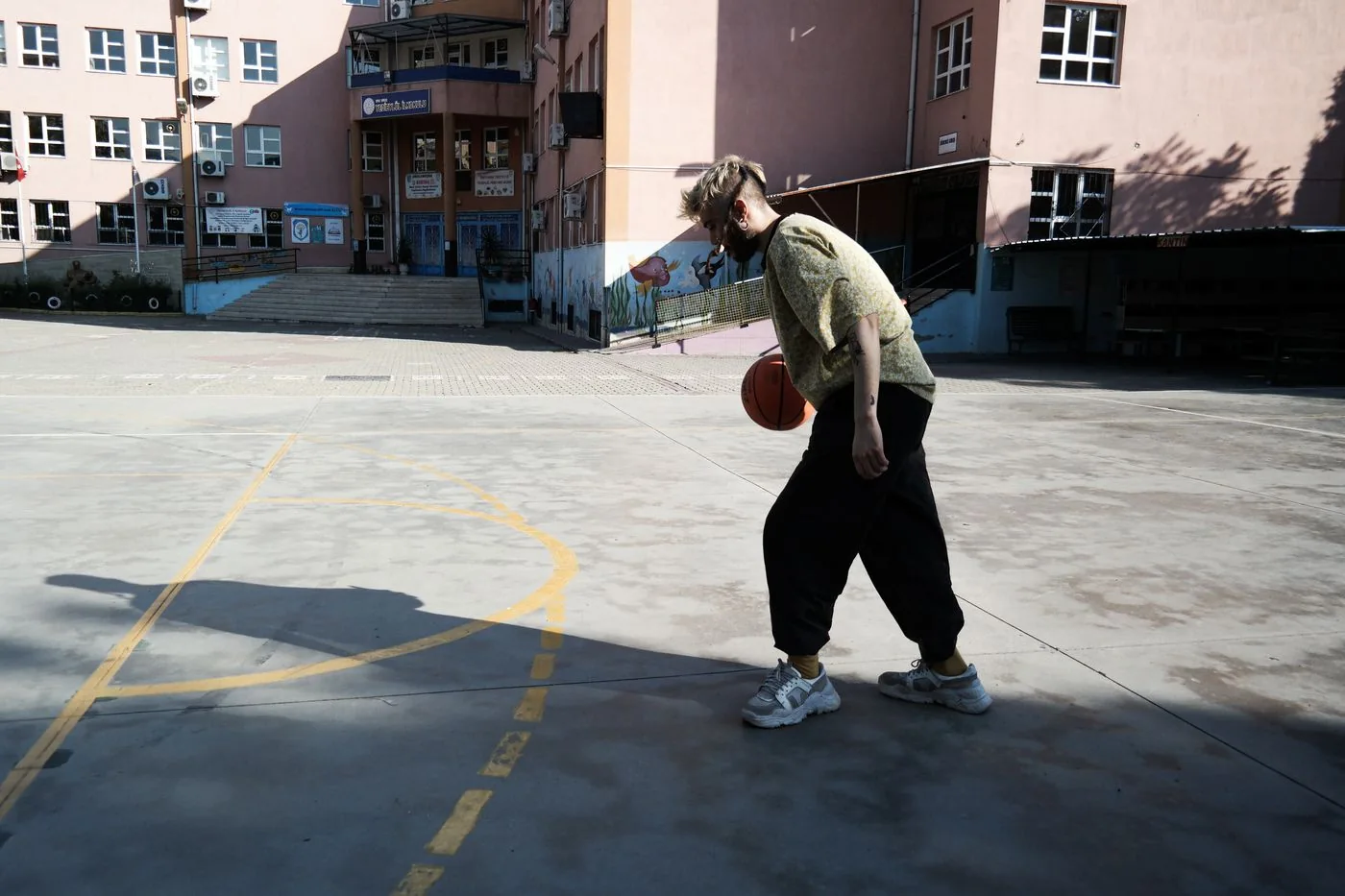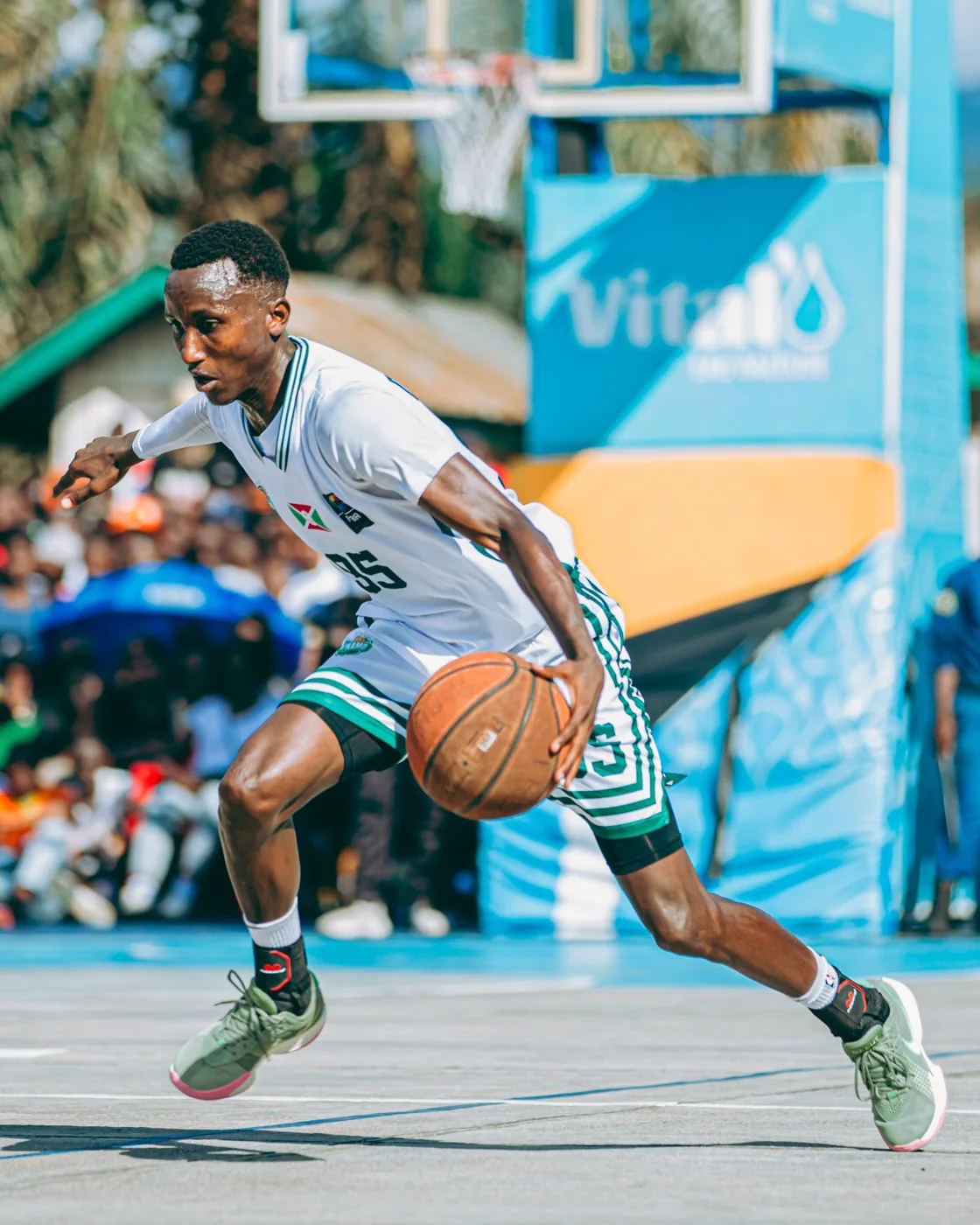
A useful weak-hand dribble lets you move into open space, get away from pressure and deliver the ball without immediately switching back. You do not need to copy a long sequence of tricks. Start with the moments that usually expose the problem: bringing the ball up the left side, taking two dribbles toward the basket and keeping possession when your stronger hand is covered. Practice those situations at a pace you can control.
Find a comfortable contact point
Stand with your feet comfortably apart and your knees slightly bent. Bounce the ball beside your weaker-side foot, rather than directly between your shoes. Meet the upper surface with relaxed fingers and guide the next bounce downward. If the ball keeps hitting your foot, move the contact point slightly outward. If your shoulder rises on every bounce, reduce the force and find a height around your hip before trying a lower dribble. Keep your free arm relaxed instead of holding it rigidly for balance.
Move before you add speed
Walk along a court line using only your weaker hand. Take enough time between bounces to place the ball beside you, without reaching far forward. At the end, turn your body and walk back while keeping the same hand. This exposes a common habit: the hand works when the body is still, then loses its position as soon as the feet move. Shorten your steps if the ball trails behind. Complete a clean walking trip before increasing the pace to an easy jog.
Give the hand a real job
Choose a starting point on the wing and a second point a few steps nearer the basket. Dribble between them, stop under control and make a simple pass to a partner or an appropriate wall target. Repeat from another starting angle. The task is to arrive with enough balance to do something useful, rather than merely survive the dribble. When that becomes comfortable, have a partner walk alongside without reaching. Their presence adds pressure while leaving room to correct the ball position.
Measure control in short sets
Use sets of six trips, recording how many finish without a lost ball, an unplanned hand change or a look down that lasts several steps. Rest and repeat the set after making one adjustment. A result of four clean trips tells you more than an uncounted ten minutes. When six becomes comfortable, change one demand: a little more pace, a narrower route or a partner showing a hand. Do not increase every demand together. You should still recognize the movement you practiced slowly.
For your next session, complete two walking sets and two wing-to-pass sets with the weaker hand, then write down the specific moment that caused each loss.
Something unclear? Send a correction or question.