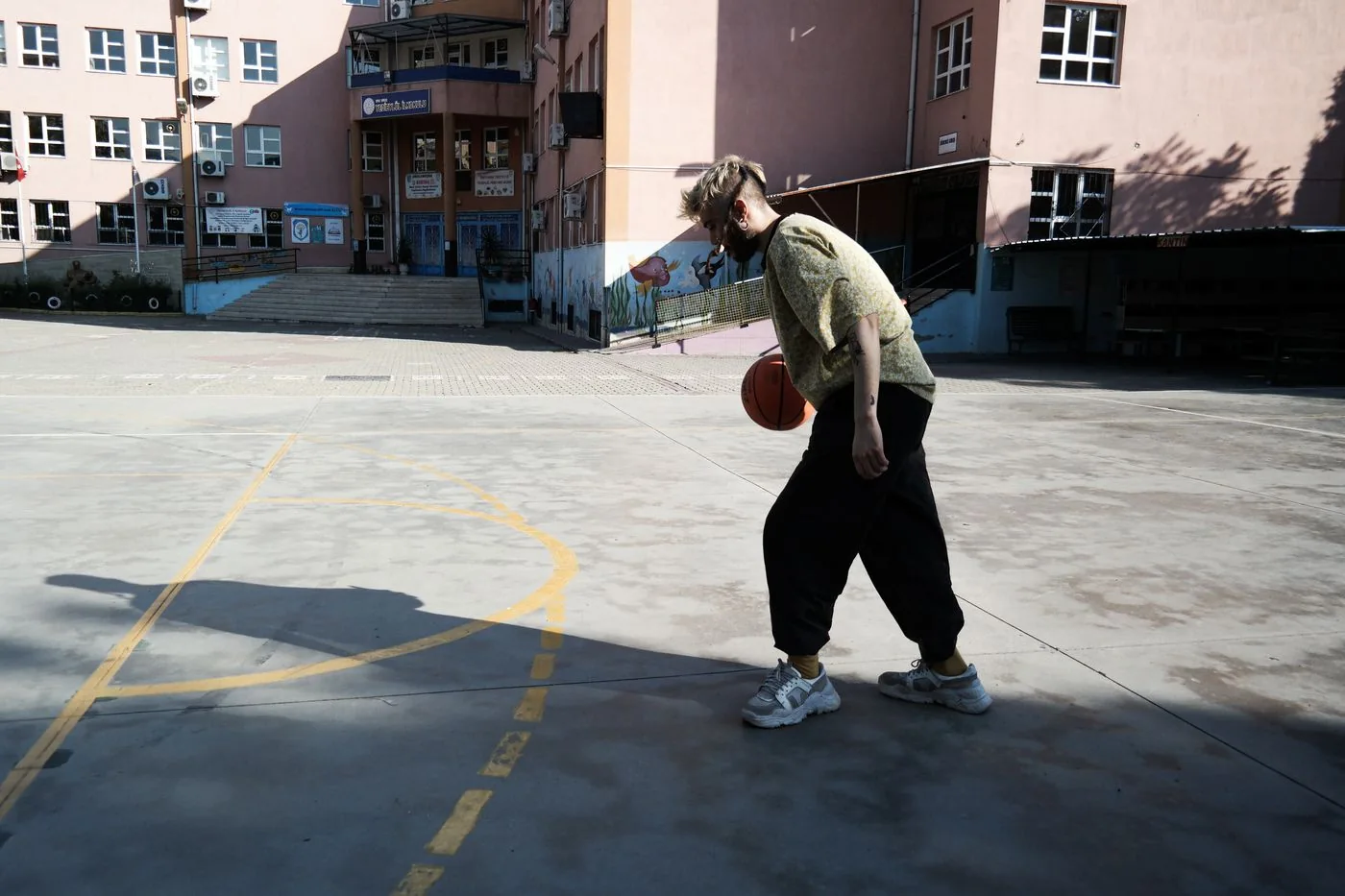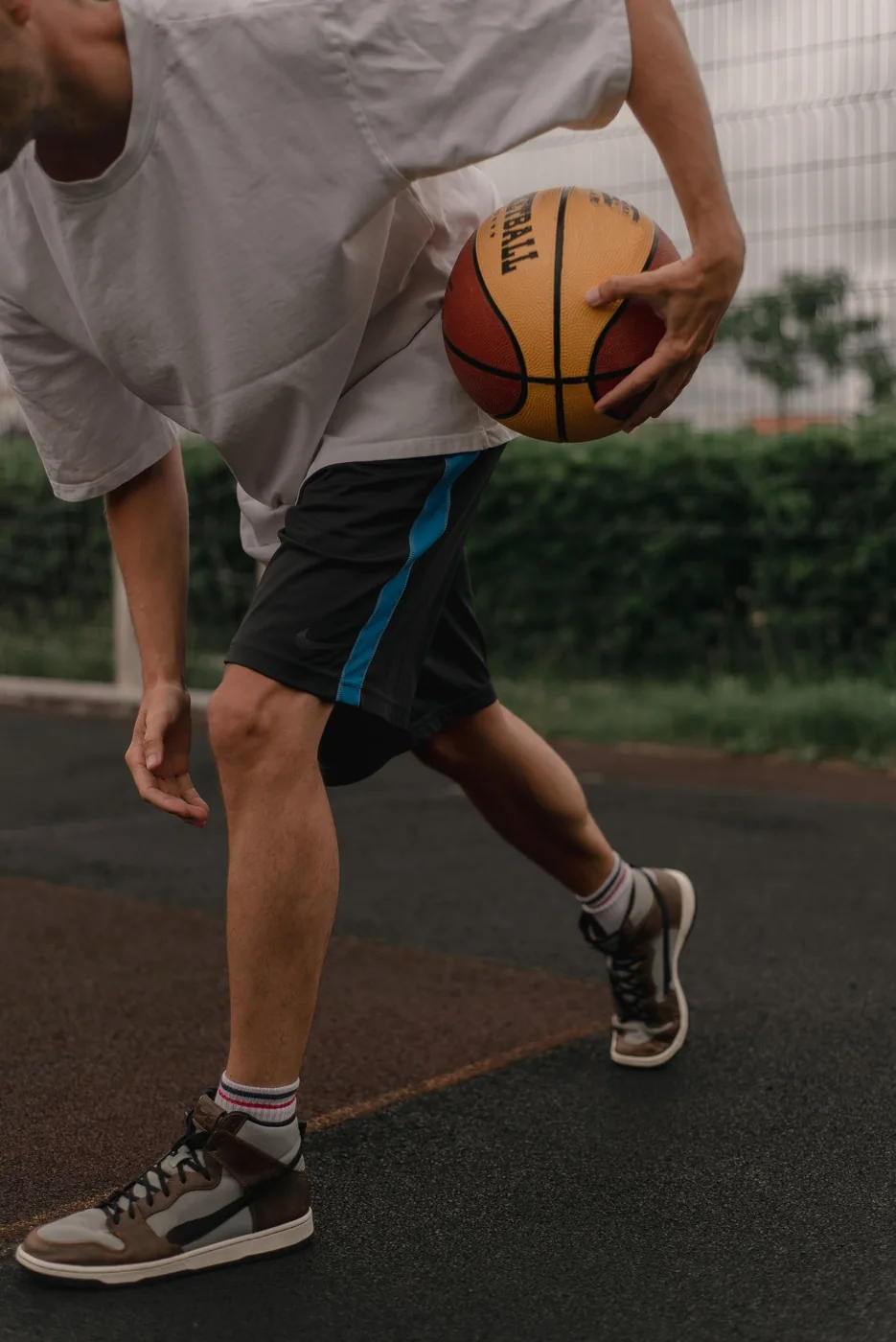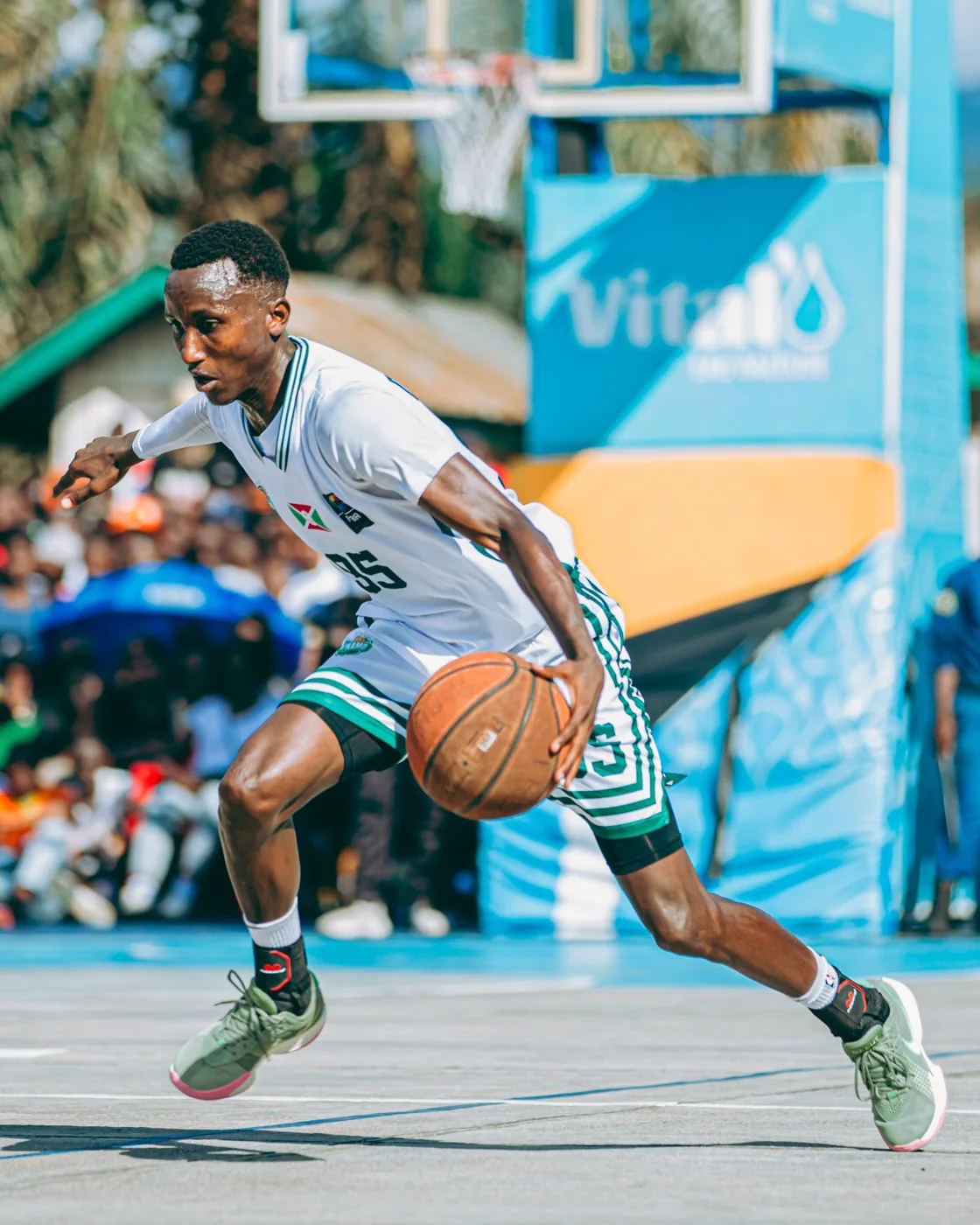
Keeping your eyes up means noticing teammates, defenders and available space while maintaining the ball. It does not mean staring at the ceiling or pretending you can never glance down. A quick check after an unusual bounce is different from watching every contact. Build comfort by adding simple visual decisions to a dribble you already control, then make those decisions more like the ones that appear during a possession.
Start with a view you can use
Stand several steps from a partner and dribble in place at a comfortable height. Look generally toward their upper body so your view includes their hands and the space beside them. Ask them to show a number with their fingers, then say it aloud. Keep the changes slow enough that the exercise measures recognition rather than guessing. If you repeatedly miss the signal, simplify the dribble. Changing hands, bouncing lower and reading faster signals all at once makes the source of a mistake harder to identify.
Add a moving route
Walk toward the partner while they move backward into clear space. They can point left or right, asking you to travel a few steps in that direction. Keep the ball on the side with room and turn your body along the route. Watch where you are going as well as the signal. A successful response includes clear foot placement, because seeing a direction is not useful if you stumble over a marker or another player. Return to a slower pace whenever the ball begins leading your gaze downward.
Read something basketball-related
Replace finger numbers with two actions. When the partner shows both hands, stop under control and pass. When they keep their hands down, continue dribbling through a nearby gap. Begin with generous space and no defender. The passing option makes looking up matter: there is a useful action available only when you notice it. Vary the signal's timing so you do not memorize where it appears. After each repetition, name what you saw before describing whether the dribble felt smooth or awkward.
Bring the habit into a small game
Play a short two-on-one exercise in an open half court, with the defender moving at an agreed moderate pace. The ball handler must watch the defender and a teammate rather than simply complete the planned route. If you lose the ball, identify whether the bounce itself was difficult or whether you looked away for too long. Work on the actual problem next. You might need a calmer weak-hand dribble, or you might need to scan before approaching the defender, while there is still room to think.
Choose one visual cue for today's practice and record how often you noticed it in time to act; make the dribble harder only after that cue becomes reliable.
Something unclear? Send a correction or question.