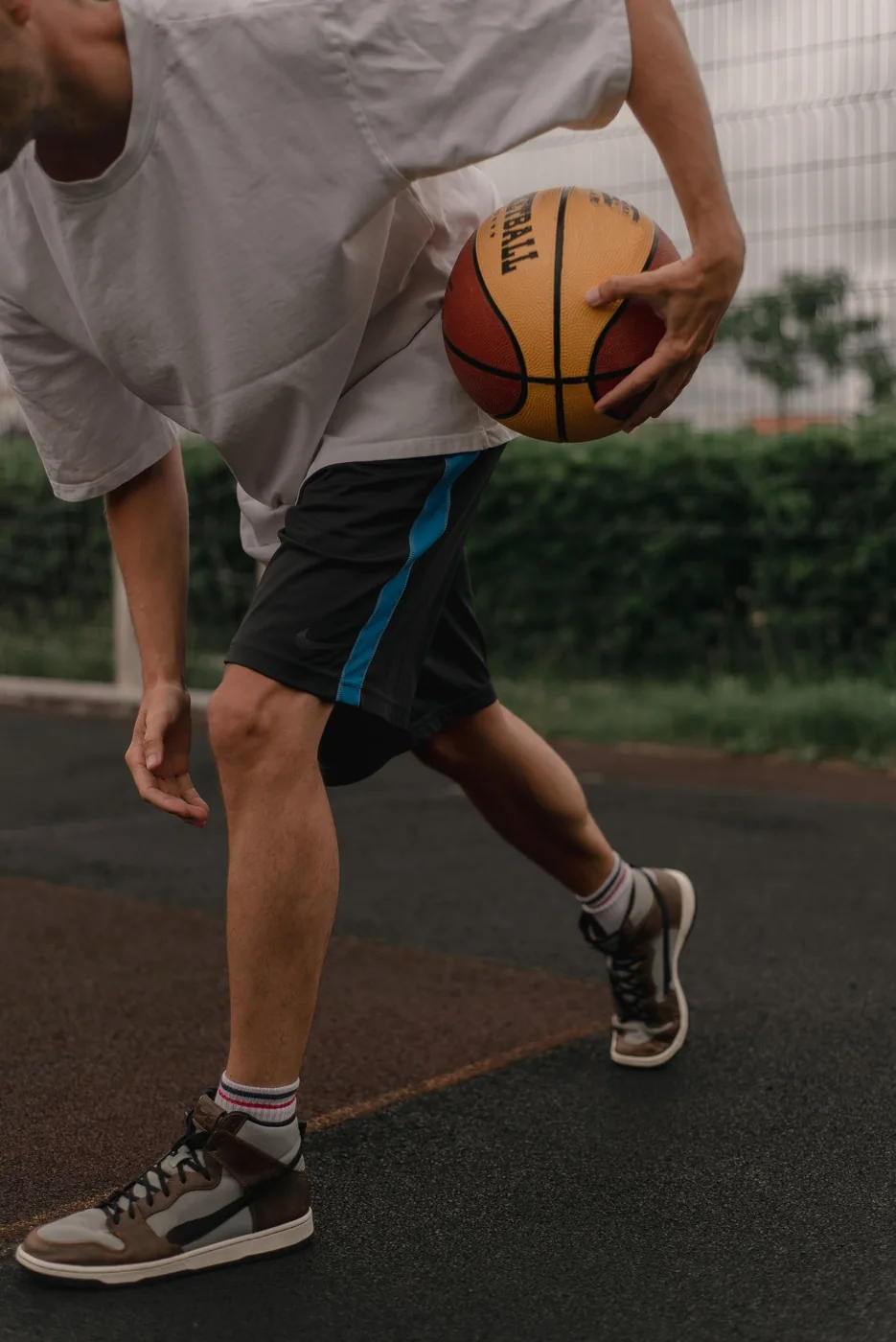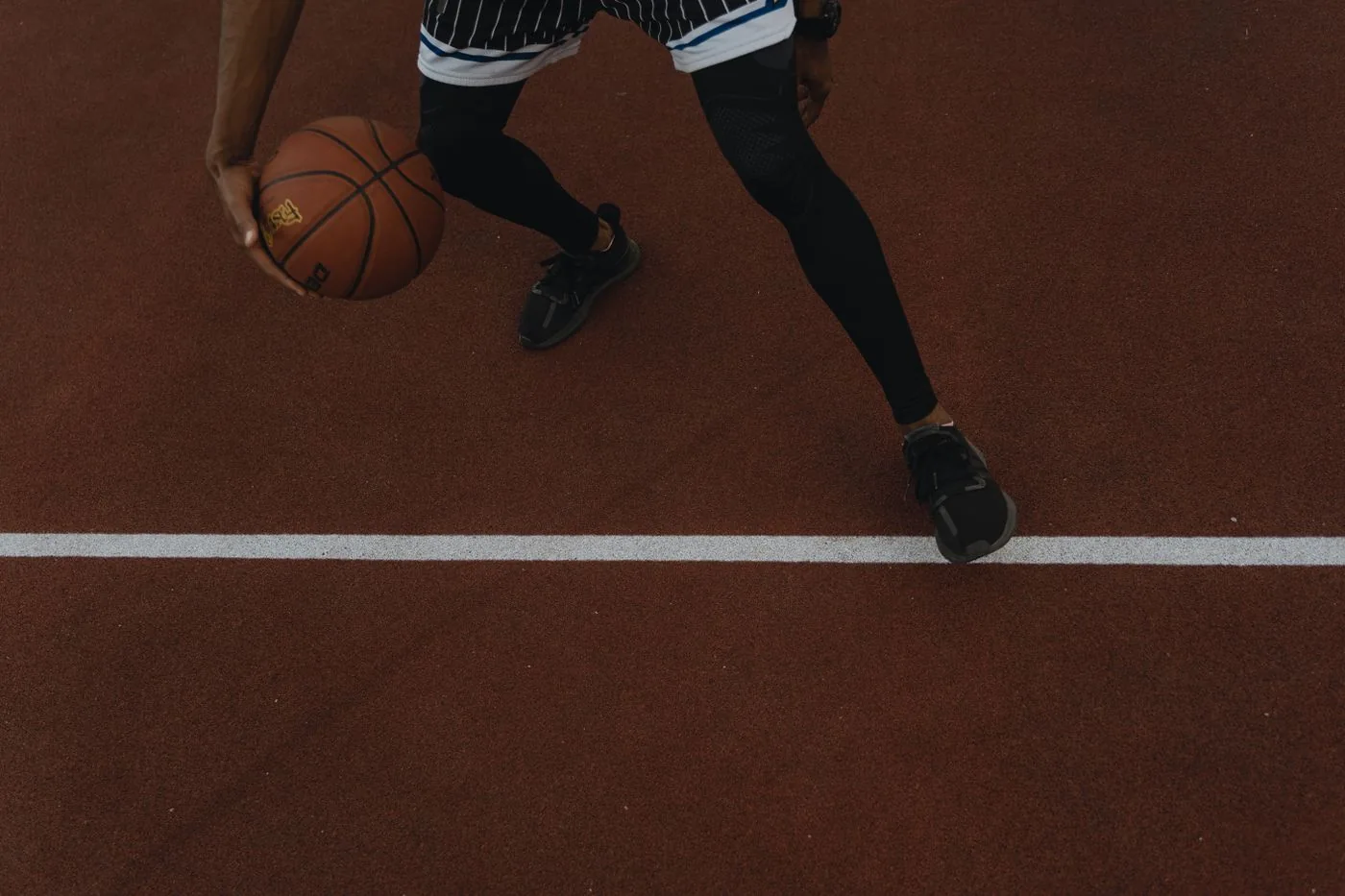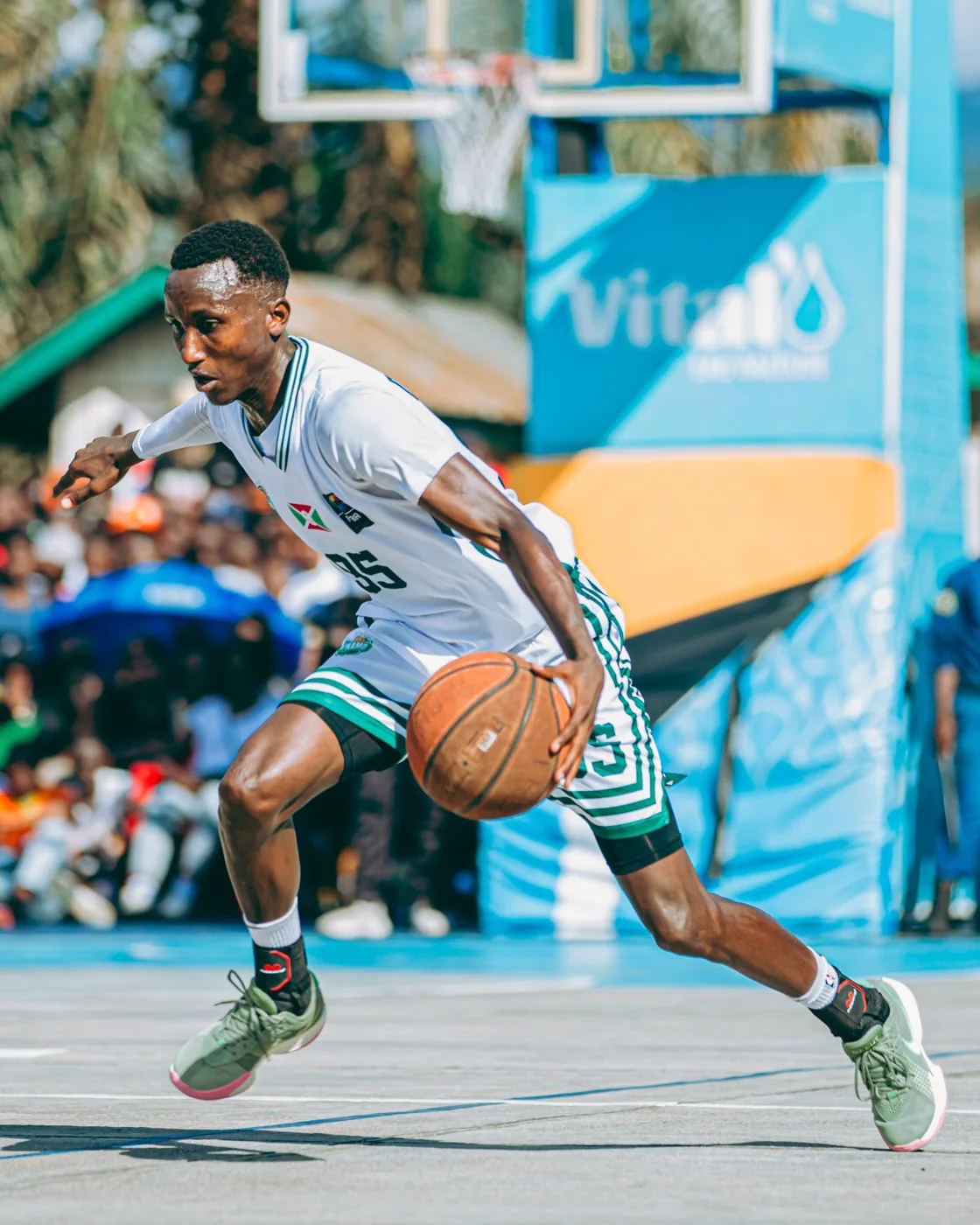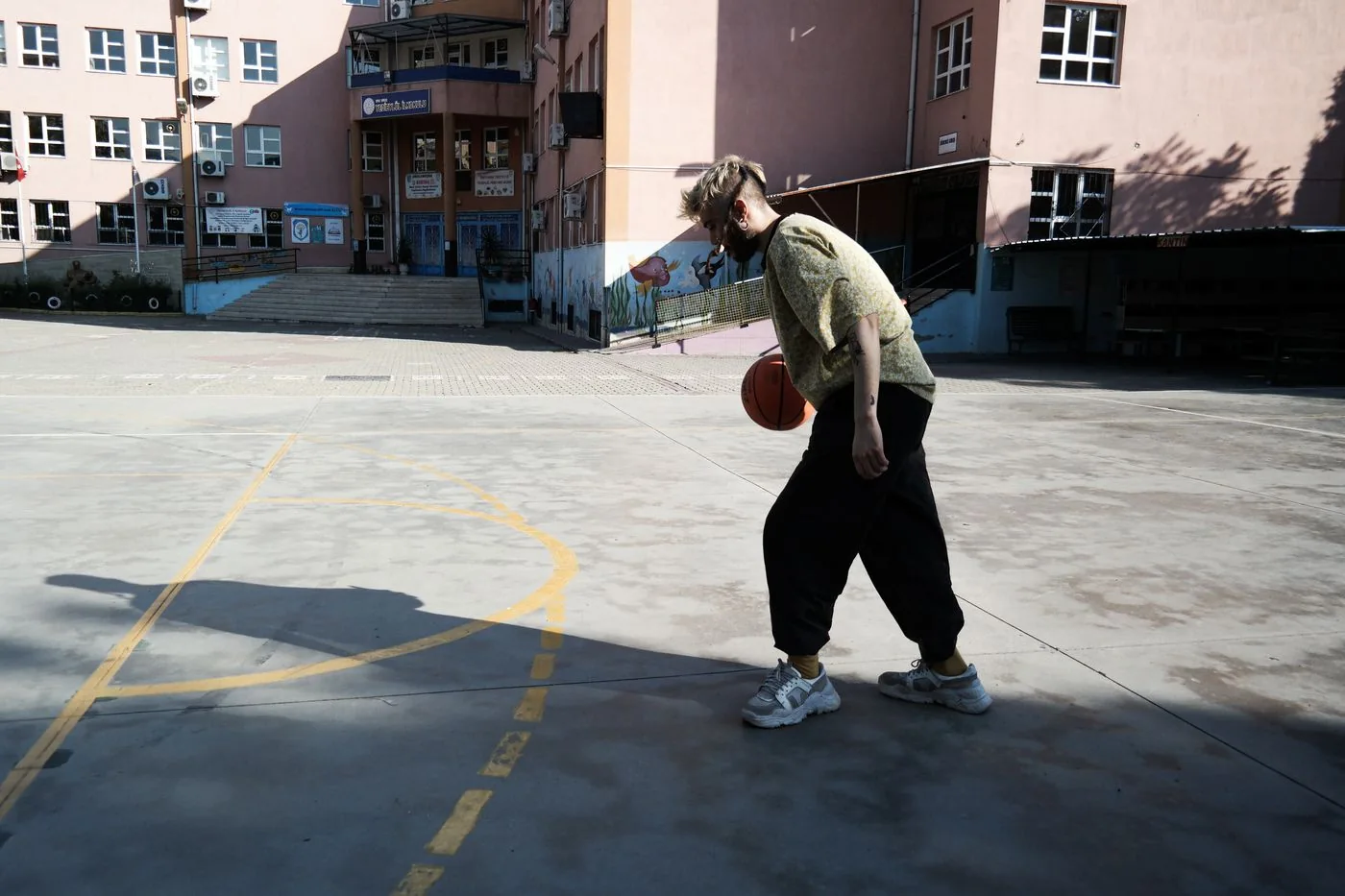
An empty half court is enough for a worthwhile practice. The difficulty is deciding what to do once the first few shots stop being interesting. A useful session connects a controllable skill to a situation you meet in a game. You do not need a long list of moves, a rebounder or a perfect shooting day. You need a clear starting point, enough space to move safely and one way to notice whether the work is helping.
Choose one game problem
Pick something narrower than becoming a better player. Perhaps your left-hand dribble breaks down as you approach the basket, or you catch a pass with your feet pointing away from the rim. Write that problem in a sentence before you start. It will decide which repetitions deserve the most attention.
Walk the area first. Look for loose gravel, wet patches, broken glass and objects behind the baseline. Keep your bag clear of landing space. Start with easy movement and comfortable dribbles rather than making your first action a hard sprint or jump.
Build three connected blocks
For a sample session, spend the opening five minutes handling the ball while walking between the sideline and lane. Change hands at a line, turn under control and return. Look ahead often enough to identify a mark on the fence or wall. These are suggested blocks, not a requirement to rush when you need a pause.
- Spend about eight minutes on the chosen problem. For weak-hand control, travel from the wing toward the lane with your left hand, stop outside the crowded space under the hoop and return at walking speed.
- Use the next eight minutes to connect it to a finish. Begin close enough that you can complete a controlled layup. Alternate short approaches rather than sprinting the length of the court to collect every rebound.
- Finish with five attempts from each of three comfortable shooting spots. Count attempts as well as makes so the result has a clear denominator.
Make a miss informative
If you lose the ball at the same point twice, reduce your speed and examine that transition. Is the bounce too far ahead? Are you standing upright before changing direction? Correct one detail and try again. Adding a complicated move usually makes the original problem harder to see.
For shooting, distinguish a balanced miss from an attempt you had to throw while falling sideways. Record the outcome, but also mark whether you finished under control. A session with fewer makes can still reveal a useful improvement in preparation.
Leave with a repeatable test
Repeat ten left-hand approaches from the same starting spot and count clean possessions: controlled dribble, legal stop and an unhurried finish. Keep that test unchanged for several visits. Do not compare it directly with a different distance, a new ball or a crowded court.
If someone arrives, shorten the route or share the basket. A solo plan should adapt to the space. Before leaving, note one thing that held up and one thing to revisit. That is enough information to make the next practice purposeful.
At your next session, choose one problem, work on it in a simple route and repeat the same ten-possession check before leaving.
Something unclear? Send a correction or question.