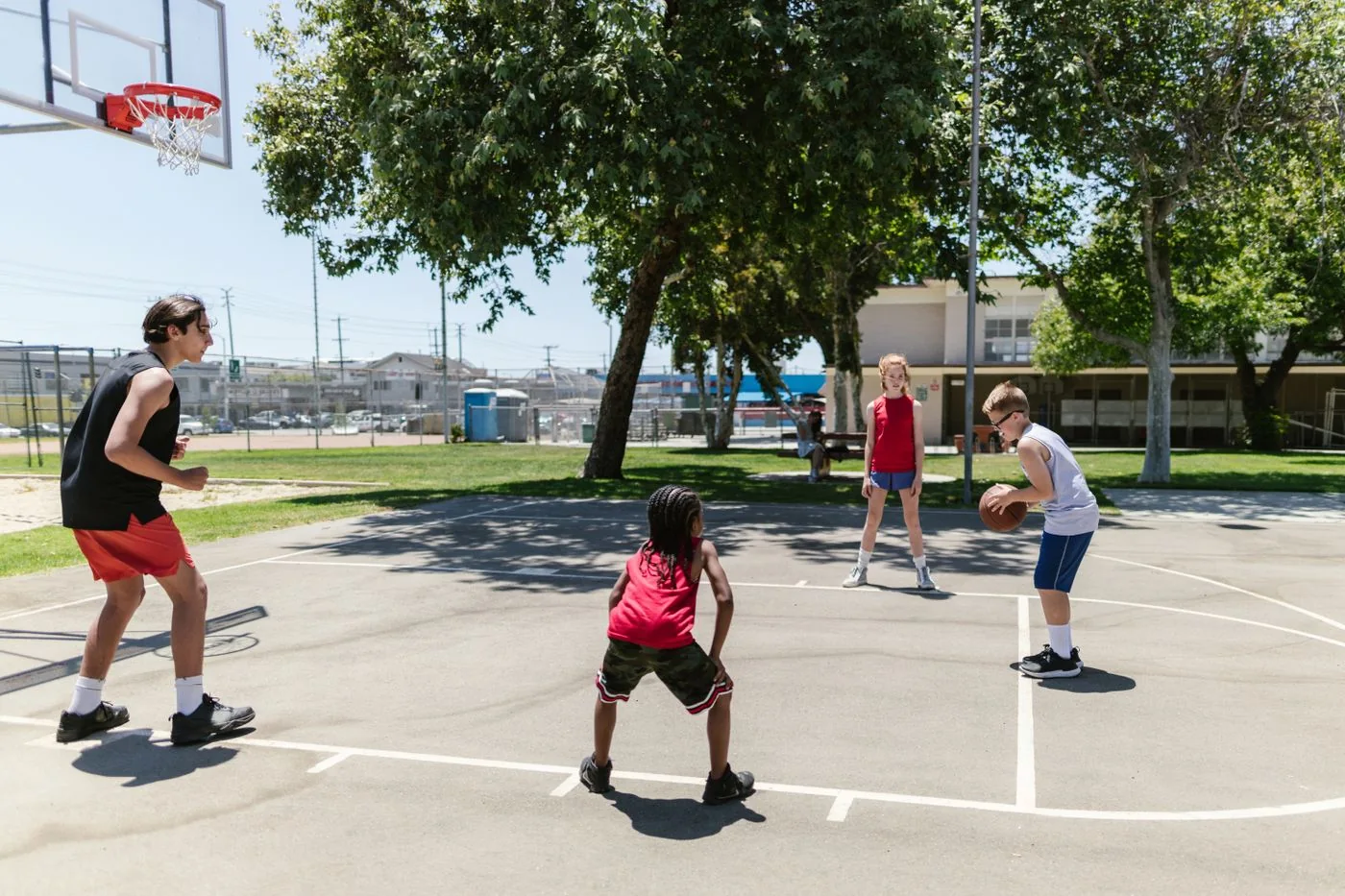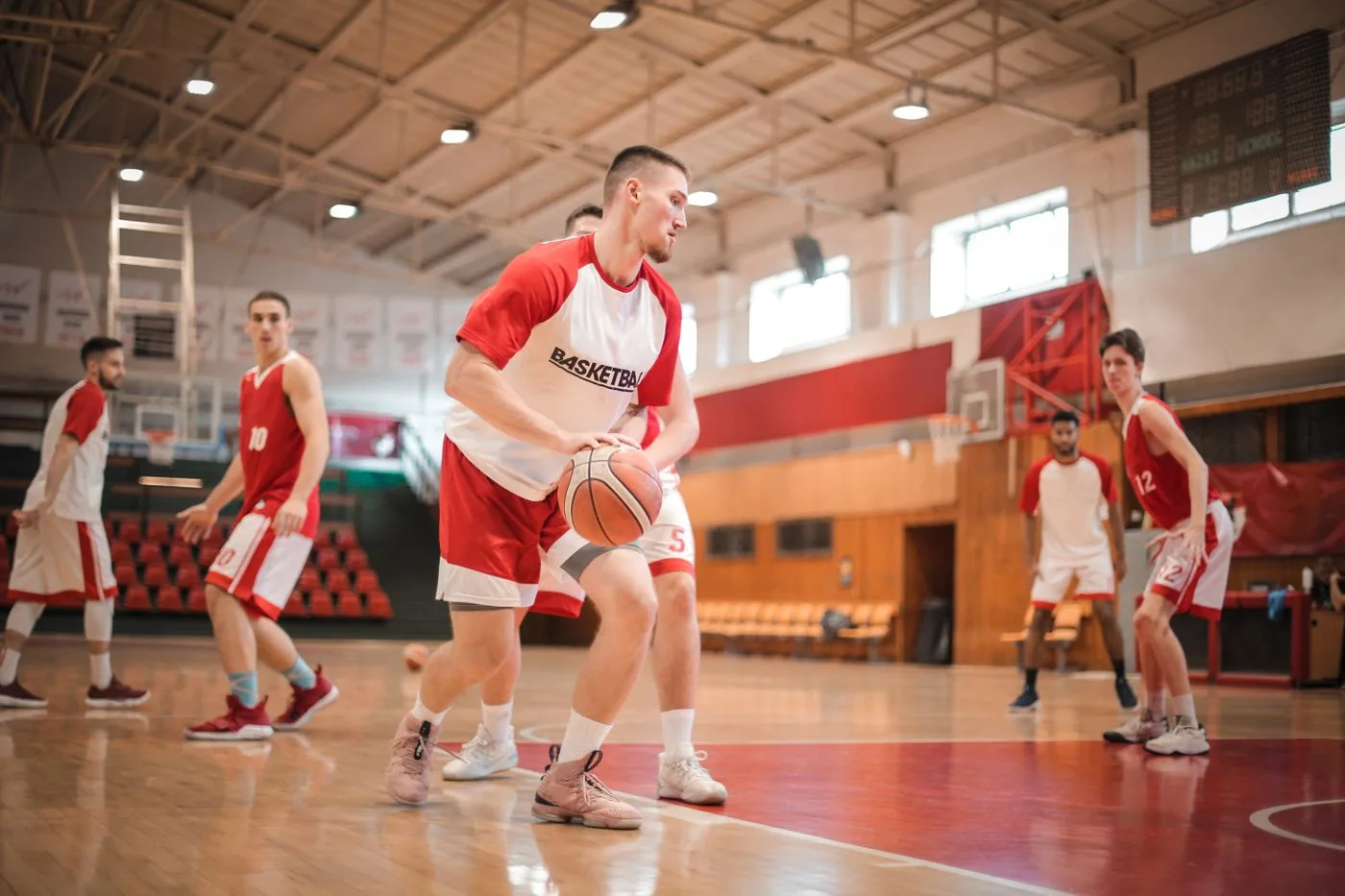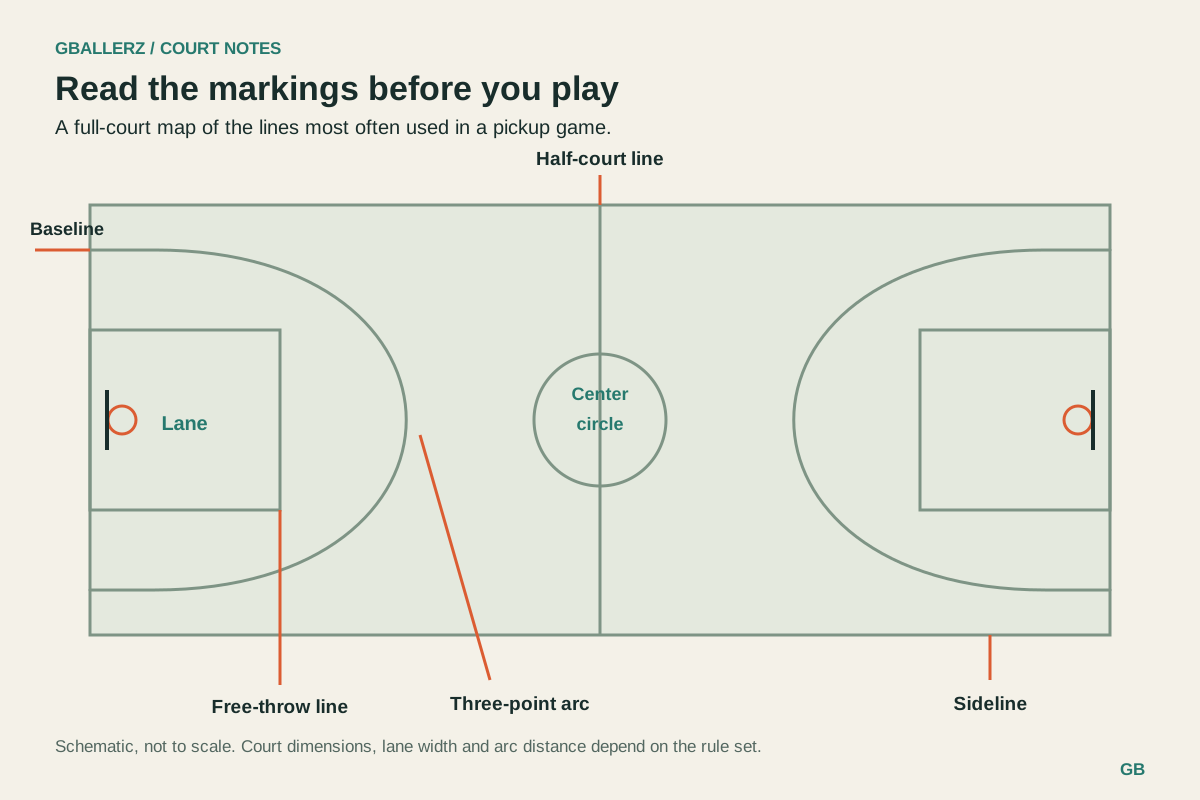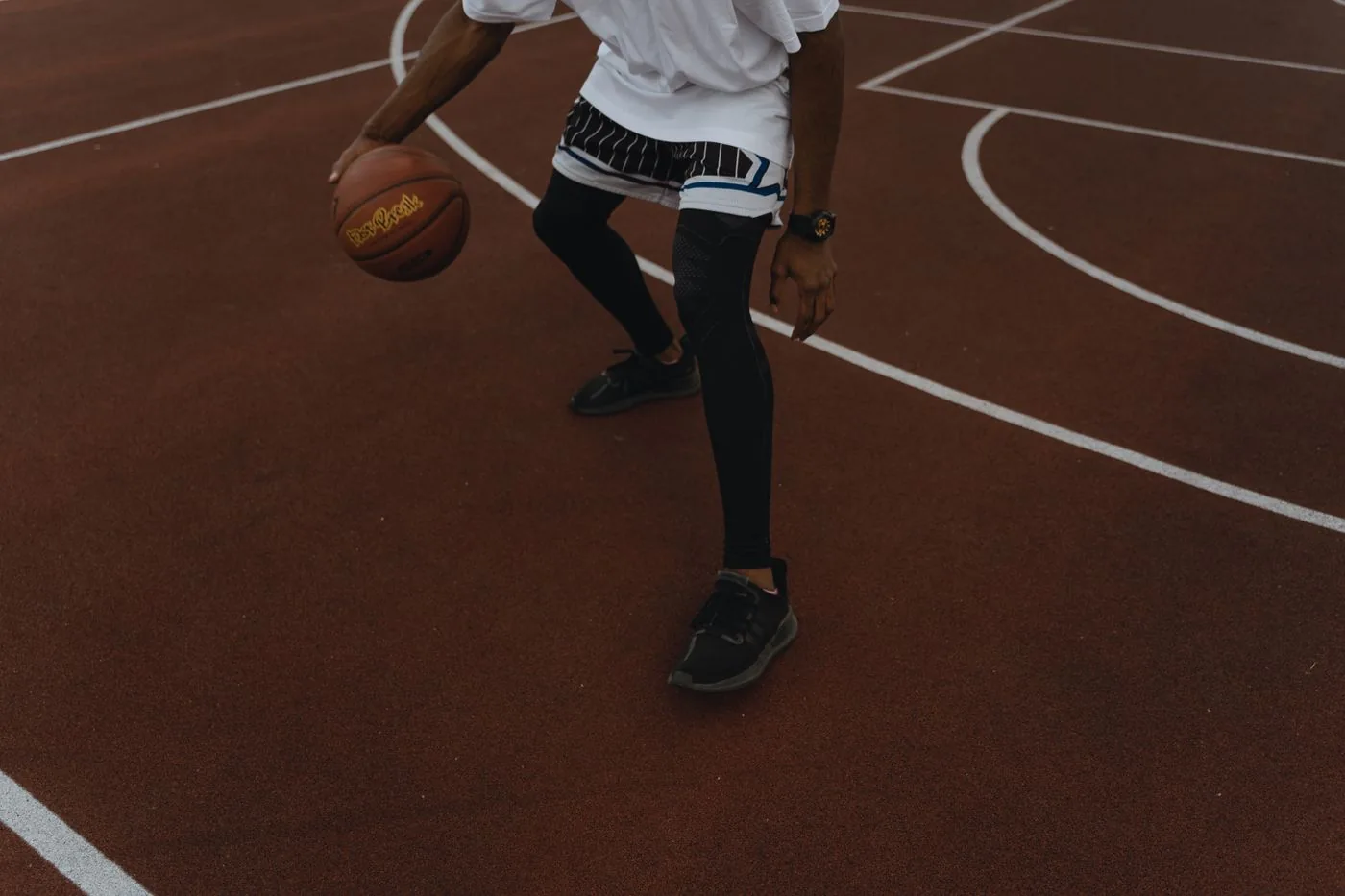
You stop your dribble to look for a teammate, see no opening and bounce the ball again. That instinct is understandable, but it can give away the possession. Knowing how a dribble begins and ends helps you choose better escape options before pressure arrives, especially when practicing moves that briefly slow the ball.
Know the basic restriction
Under NBA Rule No. 10, a player may not start a second dribble after voluntarily ending the first. That rule also prohibits putting a hand under the ball to carry it between points or pause it and continue dribbling. These are NBA examples; consult your competition's rulebook for its full definitions and exceptions.
Do not reduce the entire rule to the height of a bounce. A high bounce is not automatically a carry, and a low bounce does not automatically make every hand position legal. The control and movement of the ball matter.
Keep the hand guiding rather than shelving
Practice a comfortable waist-level dribble beside your body. Push the ball toward the floor and let it return to your hand without holding it underneath. When changing direction, guide the ball across your path instead of turning your palm into a platform that lifts it sideways.
A useful check is whether the bounce remains continuous at the moment you change direction. If your move depends on visibly holding the ball in one hand and then restarting the bounce, simplify it. Speed will not correct a control habit you have practiced slowly.
Do not end the dribble without an exit
Before picking the ball up, locate a shot, a pass or a safe place to stop and pivot. This matters near a sideline, where a defender can take away half your available space. Keep a retreat dribble available while you still have a live dribble.
Once you have stopped, widen your view rather than bouncing again in panic. Protect the ball, establish your legal pivot and look for a teammate moving into a reachable window. Teammates should help by offering different angles rather than lining up behind the same defender.
Practice a stop-and-pass game
Work with a partner several strides away. Dribble toward an imaginary defender, stop under control and pass. The partner changes their receiving location between repetitions, making you find a window after the stop. Keep the pace slow enough that your feet and ball remain organized.
Add a passive defender who blocks one passing lane without grabbing the ball. Your aim is to pivot and find the open angle. If you cannot find it, reset the drill. The exercise teaches you to solve pressure after a pickup without inventing another dribble.
Separate a fumble from an intentional pickup
Formal rules contain specific situations involving loss of control and touches by other players. Do not assume that deliberately dropping the ball recreates a legal dribble. Equally, a genuine bobble should be judged under the applicable rule rather than a blanket statement that every recovery is illegal.
In practice, favor clear control and simple decisions. Ask an official or coach about an unusual sequence using the actual rule code and a precise description. During an informal run, follow the agreed call procedure and use the next possession to keep your dribble and pickup easier to recognize.
Maintain a continuous bounce while dribbling, and have a pass or shot available before you choose to stop.
Further reference
Something unclear? Send a correction or question.