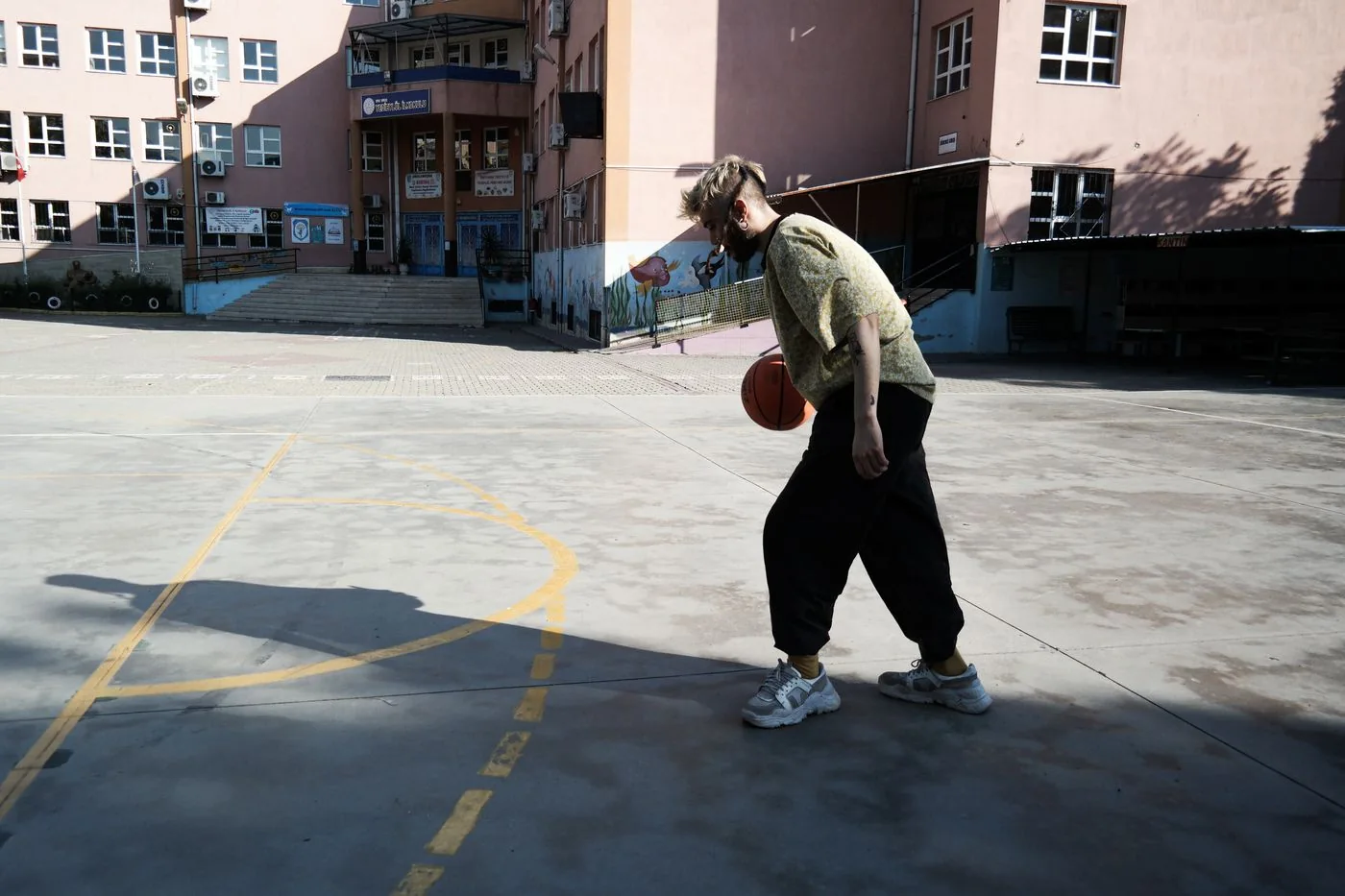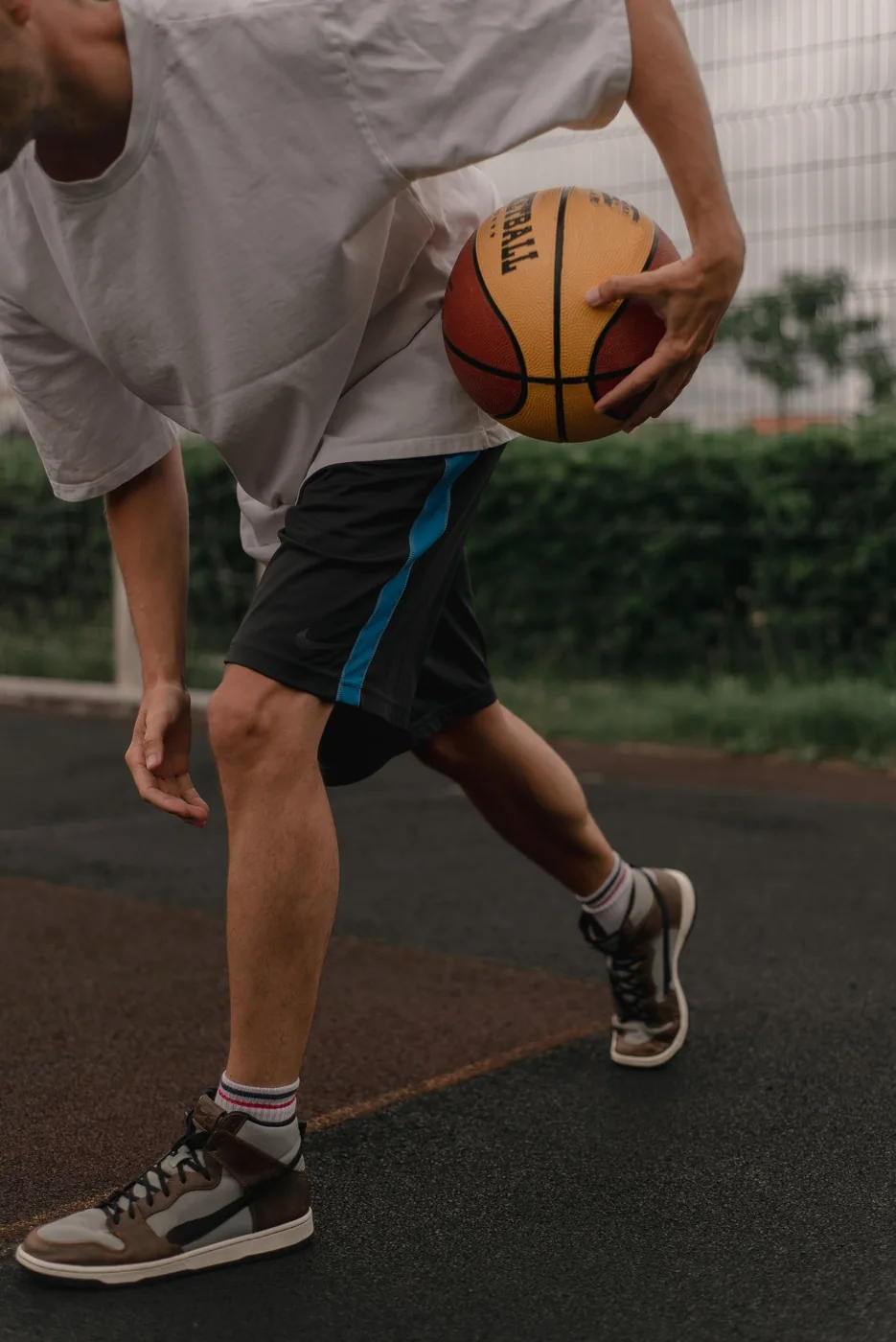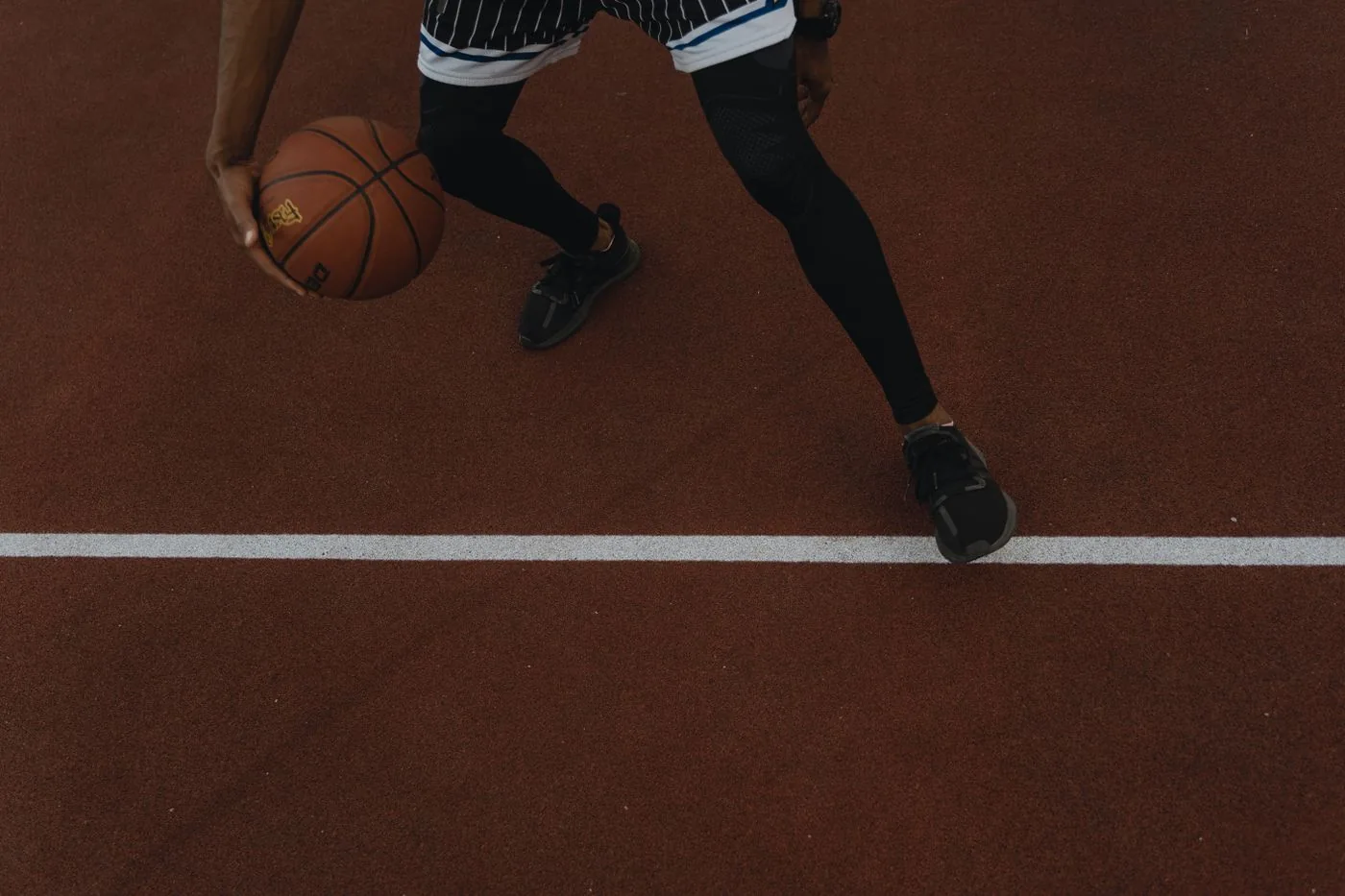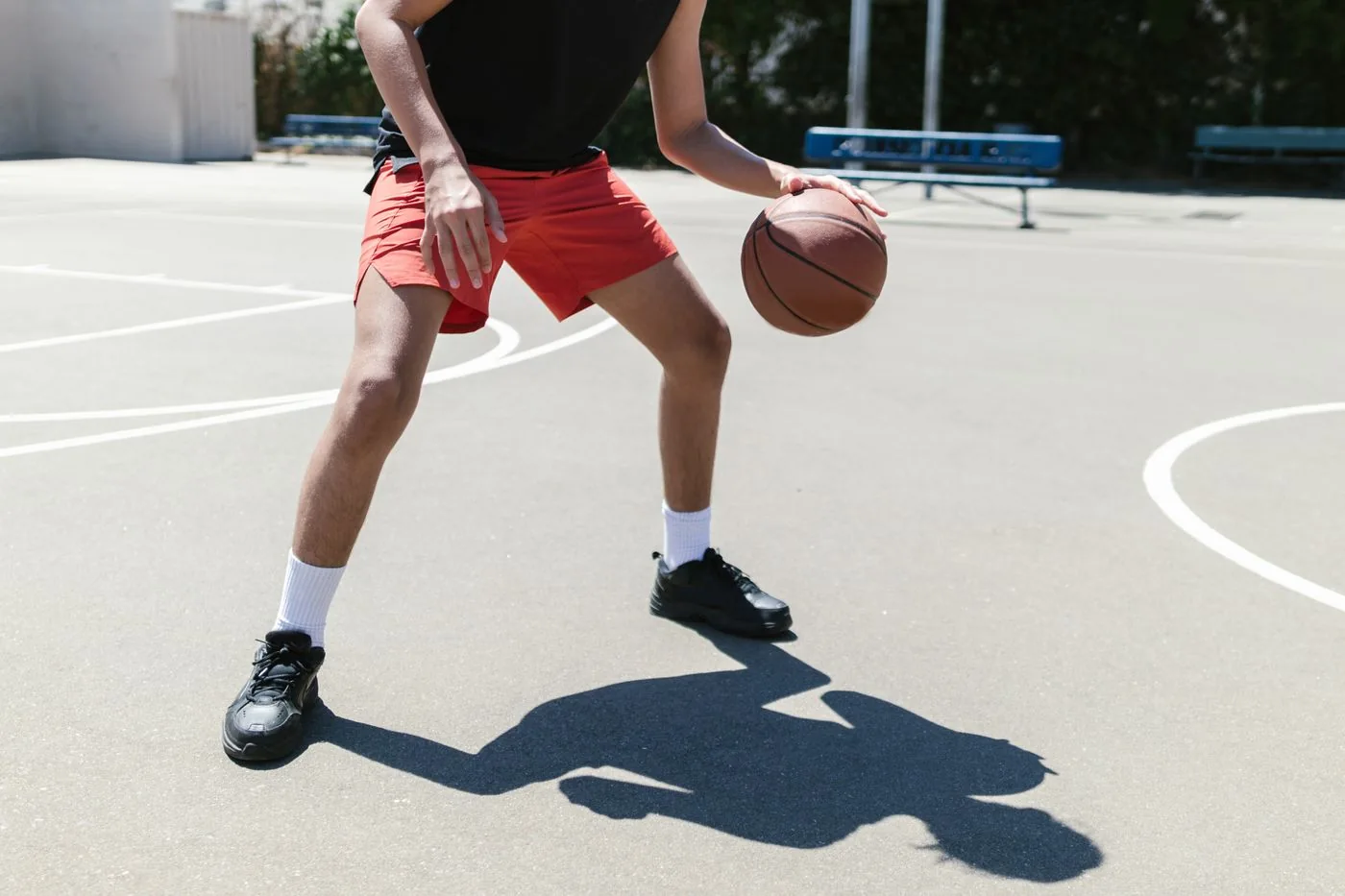
Defenders respond to rhythm. If every dribble and step arrives at the same speed, they can move with you even when the handle looks busy. Changing pace gives a simple move a useful contrast: slow enough to observe, then faster when a lane opens. The goal is controlled timing, with a clear path and a ball position that lets your feet accelerate without leaving possession behind.
Build two recognizable gears
Choose a clear stretch of court between two lines. Travel the first part at an easy walking dribble, then move through the second at a comfortable faster pace. Keep the faster section short. You should feel a difference without needing an uncontrolled sprint. On the next trip, change speed at a different point. If the faster bounce gets too far away, make the first accelerating step smaller and place the ball slightly ahead of your path. Control should survive the change rather than return only after it.
Let your body sell the slower rhythm
During the patient portion, stay ready to move instead of standing tall with straight legs. Your steps can become smaller and your dribble calmer while your balance remains available. Then push into the open route with purpose. A frequent mistake is trying to signal the slower moment with an elaborate pause that leaves the ball exposed. Use a modest rhythm change first. Watch a short video from the side if available: the difference should appear in the movement of your body, rather than only in the sound of the bounce.
Connect speed to a defender's choice
Have a partner shade one side as you approach slowly. They can either hold their position or step across your route. If the lane stays clear, accelerate through it. If it closes, keep your pace under control and choose another angle or pass. This prevents the exercise from teaching you to speed up at a memorized spot regardless of traffic. Ask the defender to begin with predictable, modest movement, then vary the timing. You should be able to explain what opened before you used the faster gear.
Know where the fast section ends
Add a stopping point several steps beyond the defender. Arrive there balanced enough to pass or make a short shot. Accelerating is useful only if you can manage what follows. If your last steps become hurried, shorten the route or lower the speed until the finish is organized. Take turns as the defender and notice how a small tempo change affects your own feet. That perspective often shows why one clean burst after a patient approach can do more than a string of dribbles at the same pace.
For ten approaches, say which lane opened before accelerating, and count only the repetitions that end with a controlled stop or pass.
Something unclear? Send a correction or question.