A public hoop may look familiar even when weather, wear or misuse has changed its condition. Before the run, look at the playing area and visible parts of the system from the ground. Your job as a visitor is to notice obvious concerns and report them, not to perform a structural test or repair equipment you do not maintain.
Read the site information
Check posted opening hours, permitted activities and any notice that the hoop is closed. Follow the facility's restrictions even if other visitors are already playing. A temporary closure may relate to work or a condition you cannot see.
Identify who manages the court and how to report maintenance issues. Parks departments, schools and private facilities may have different procedures. A clear location or court number helps a report reach the right place, especially when a park contains several hoops.
Look from a safe distance
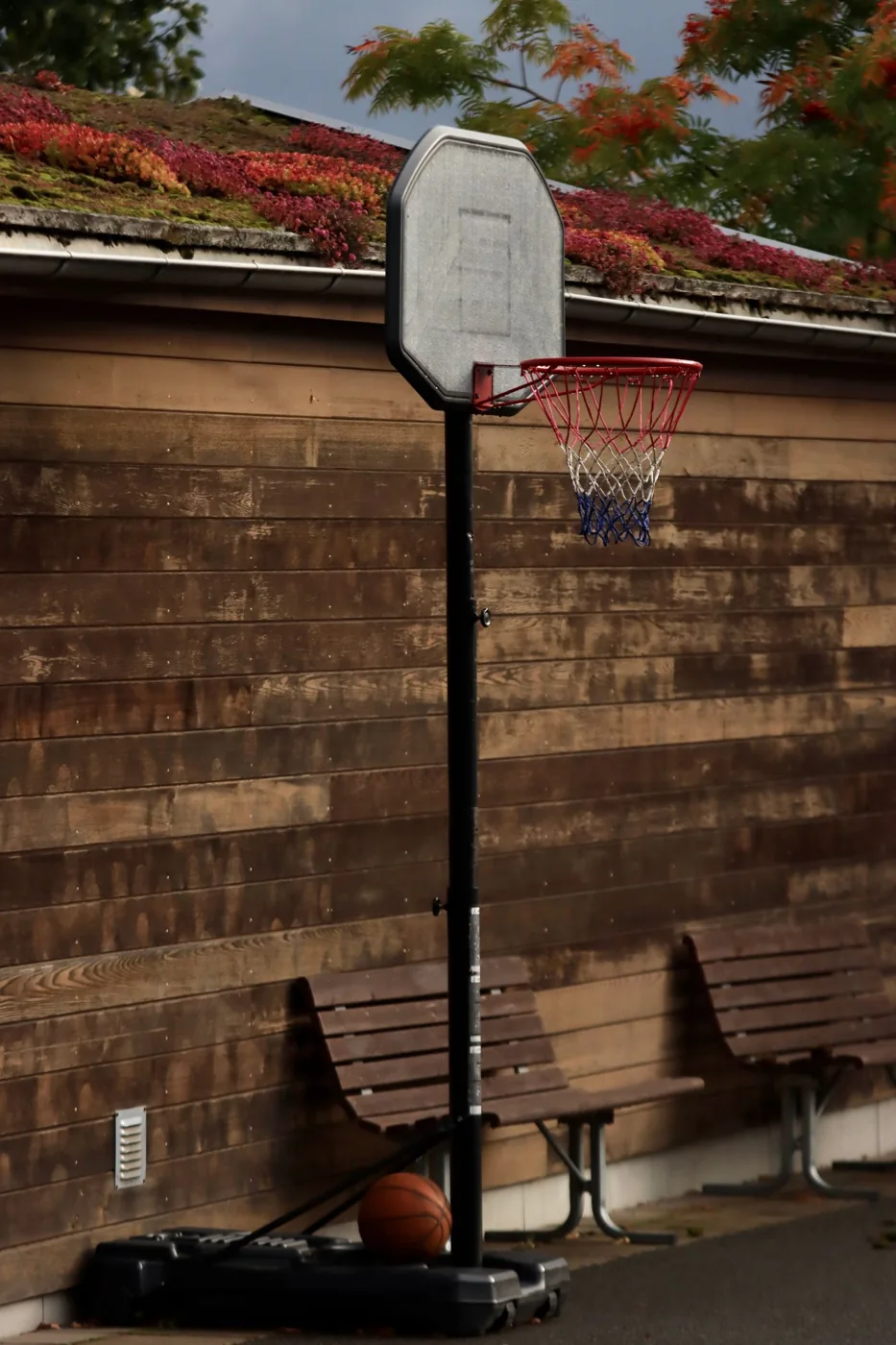
From the ground, check for obvious cracks, a bent or loose-looking rim, damaged backboard edges and visible separation around attachments. Look at the support and any padding for apparent damage or missing sections. Avoid standing beneath something that appears unstable.
Do not climb, hang from the rim or shake the system to investigate. Such actions can add load without telling you whether the assembly is sound. Manufacturer instructions and qualified maintenance determine appropriate inspection; a player's quick look cannot certify structural condition.
Check the court around the basket
Look for glass, loose stones, pooled water, lifted surface edges or other obvious obstacles in the landing and run-off areas. A playable-looking center court does not resolve a problem directly beneath the rim. Keep bags and bottles outside those routes.
Small loose litter can be removed when appropriate and permitted, but do not handle sharp debris with bare hands or attempt to repair the surface. Report issues that need equipment or staff attention. If the affected area cannot be avoided during play, use another court or change the session.
Treat portable systems separately
If the site uses a portable hoop, its base, positioning and operating condition depend on the exact system. Spalding's manual finder illustrates why model identification matters: portable and in-ground systems use different manuals. The owner should use the correct instructions for setup and maintenance.
Do not add makeshift weights, move a public system or adjust its mechanism without authorization. A hoop that appears tilted, leaking or displaced is a reason to stop and contact the responsible person. Familiarity with a driveway hoop does not make a different public model equivalent.
Report what you observed
Describe the visible issue plainly: which hoop, which part and what you can see. A photo from a safe permitted position may help the operator, but keep other visitors out of the frame where possible. Do not present your message as an engineering diagnosis.
Let the group know why you are leaving that hoop unused. Once a concern has been reported, the facility should decide when equipment returns to service. Choose a different available activity rather than assuming the absence of an immediate response means the problem has been cleared.
Notice obvious concerns, avoid testing or altering public equipment and let the responsible operator assess any suspected problem.
Further reference
Something unclear? Send a correction or question.