A basketball that feels excellent on clean hardwood may be a poor match for rough asphalt. Outdoor surfaces wear covers, collect dust and expose a ball to conditions an indoor-only model was never intended to handle. Before comparing colors or professional league logos, identify where you will use it most. The right purchase is a ball that suits that court and your game, at a price you are comfortable paying again when regular use eventually wears it out.
Read the intended-use label
Look for an explicit outdoor or indoor/outdoor designation. Rubber balls are a common starting point for outdoor play. Composite covers vary: some are made for both environments, while others are intended only for indoor use. The material name alone does not settle the question, so check the particular model's instructions.
An indoor leather game ball is not an automatic upgrade for a public blacktop court. Its purpose and care needs differ. If your week includes both a gym and an outdoor run, consider whether one dual-use ball suits you or whether keeping your indoor ball away from asphalt makes more sense.
Match the ball to the actual game
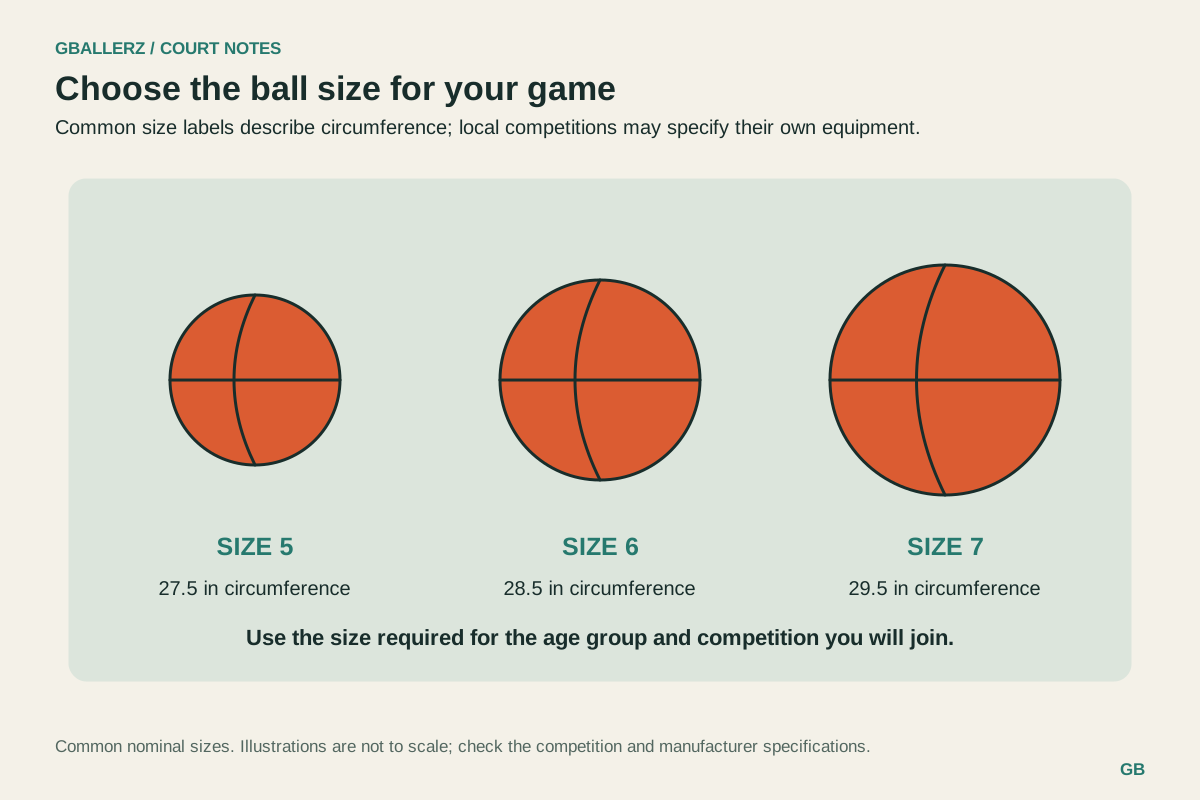
Choose size according to the group, competition or development program you play in. Check the organizer's specification rather than assuming everyone uses the same ball. A smaller ball may be appropriate for younger players; a formal three-on-three competition can also specify a different ball from a casual half-court run.
If possible, handle the ball before buying. Turn it in both hands, try a controlled bounce on a permitted surface and feel the channels. Deep grooves or an especially tacky cover can feel appealing initially without being essential to your shooting comfort.
Check grip in a realistic way
A dusty court changes the feel of almost any cover. When using a friend's outdoor ball, notice whether it stays manageable after several possessions rather than judging the first clean touch. Do not wet a shop display or deliberately abrade a new ball to simulate wear.
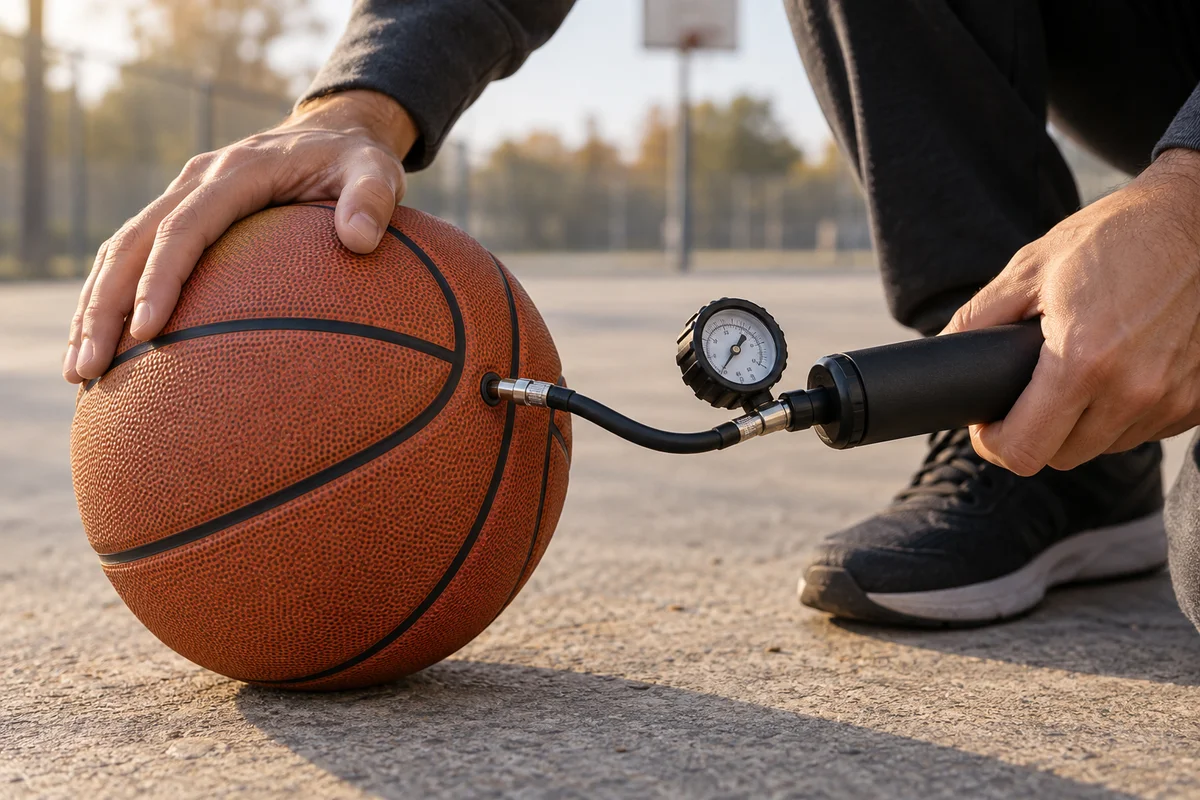
Inspect seams and the valve on arrival. A visible split, misshapen panel or valve that leaks should be addressed with the seller. Bounce depends on inflation as well as construction; use the pressure range printed on the ball and a suitable gauge instead of adding air until it feels extremely hard.
Spend for your frequency of play
For occasional casual games, a straightforward outdoor model may cover the job. A more expensive cover is worth considering only if its feel and intended use solve something you notice. Avoid paying for claims about durability without checking the surface designation and return terms.
Keep the receipt and note how the ball performs during the first few sessions. If the cover becomes slippery, first check for dirt and follow the maker's cleaning guidance. Store the ball away from prolonged heat and direct sun, and bring it inside after playing. Neither price nor a familiar logo makes a ball weatherproof.
Before buying, confirm three things on the exact model: permitted playing surface, the size your group uses and the manufacturer's inflation guidance.
Further reference
Something unclear? Send a correction or question.