A shoe can grip well at the beginning of a session and feel uncertain after several possessions. On an indoor court, fine dust can collect on the outsole and change the contact between the rubber and floor. That does not automatically mean the shoe is worn out or that a different tread pattern will fix the problem. Start with a controlled inspection on the sideline, then decide whether the court itself is suitable for play.
Pause instead of testing a hard cut
If your footing feels unreliable, step out of the active game. Do not use a full-speed change of direction as an experiment. Look at the floor where the problem occurred. A dusty area, a damp patch and a loose piece of debris require different responses; none is solved by tying your laces tighter.
Tell the court organizer or facility staff about a slippery section. Follow their cleaning procedures and keep others informed. Do not spray a household cleaner onto the playing surface or introduce a new substance without permission. Leave an unsafe area unused until the responsible person has dealt with it.
Look at the outsole
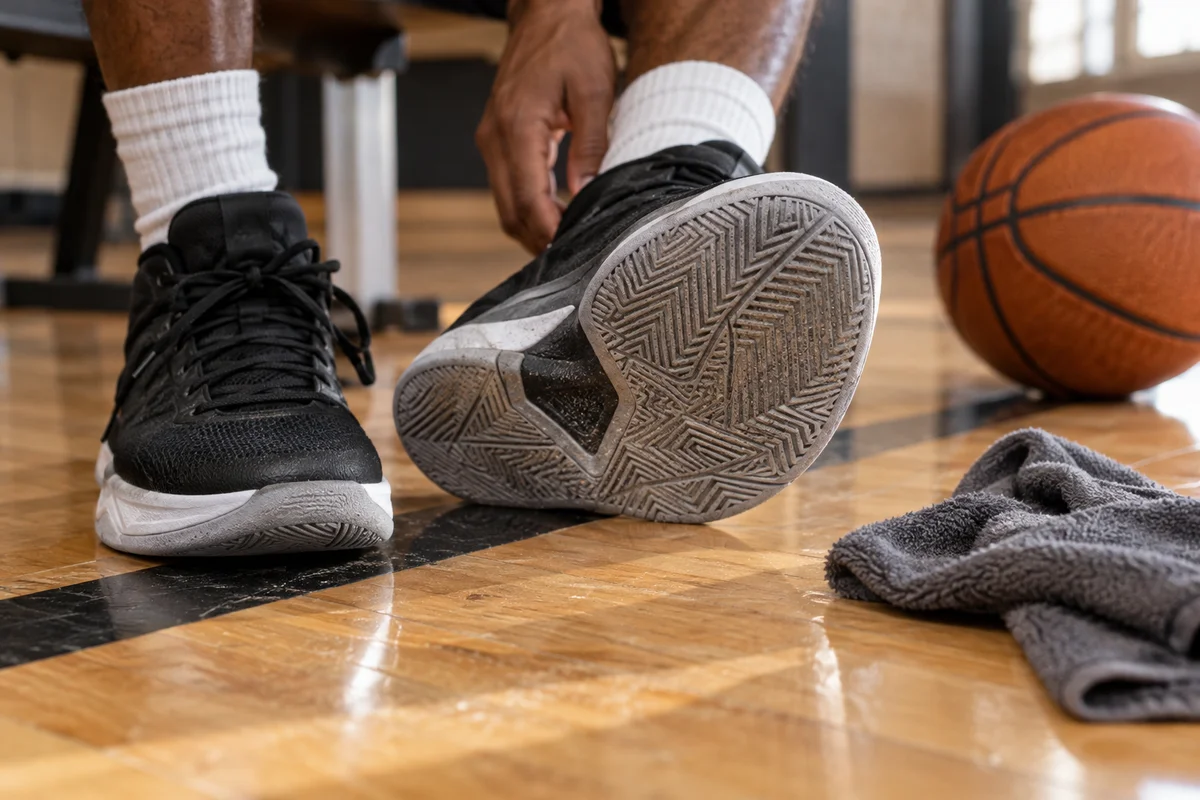
Check both shoes under good light. Loose dust can form a pale layer over otherwise intact tread. Remove it with a dry cloth or appropriate soft brush away from the playing area. If the manufacturer allows a damp wipe, let the outsole become completely dry before returning to the floor.
Embedded stones, split rubber or a smooth worn patch deserve separate attention. Inspect the forefoot and heel rather than looking only at the outer edge. A clean outsole with substantial physical wear should not be treated as a simple dust problem.
Compare like with like
After cleaning, walk and make gentle changes of direction in a clear, permitted area. If grip immediately becomes unreliable again, the floor may be adding dust faster than you can remove it. Ask whether the surface has been maintained recently; a squeaking sound is not a dependable measurement of traction.
When comparing two pairs, use the same clean, dry surface and similar movements. A result from a recently swept gym cannot tell you how either pair behaves on another facility's floor. Record the actual circumstances rather than declaring that a certain color of rubber always grips better.
Keep the solution simple
Keep indoor shoes separate from footwear used on dirt or asphalt when practical. Carry a small cloth and inspect your shoes before the run. Avoid improvised sticky coatings, saliva or repeated wetting; they add another variable and can transfer material to the floor.
If cleaning and a suitable surface do not restore predictable footing, stop using that pair for the session and investigate its condition. Replacement is a separate decision based on wear, fit and reliable use. A more expensive shoe cannot compensate for an unsuitable playing surface.
When traction changes, leave the run, inspect the floor and outsole separately, and return only when controlled movement feels dependable.
Something unclear? Send a correction or question.