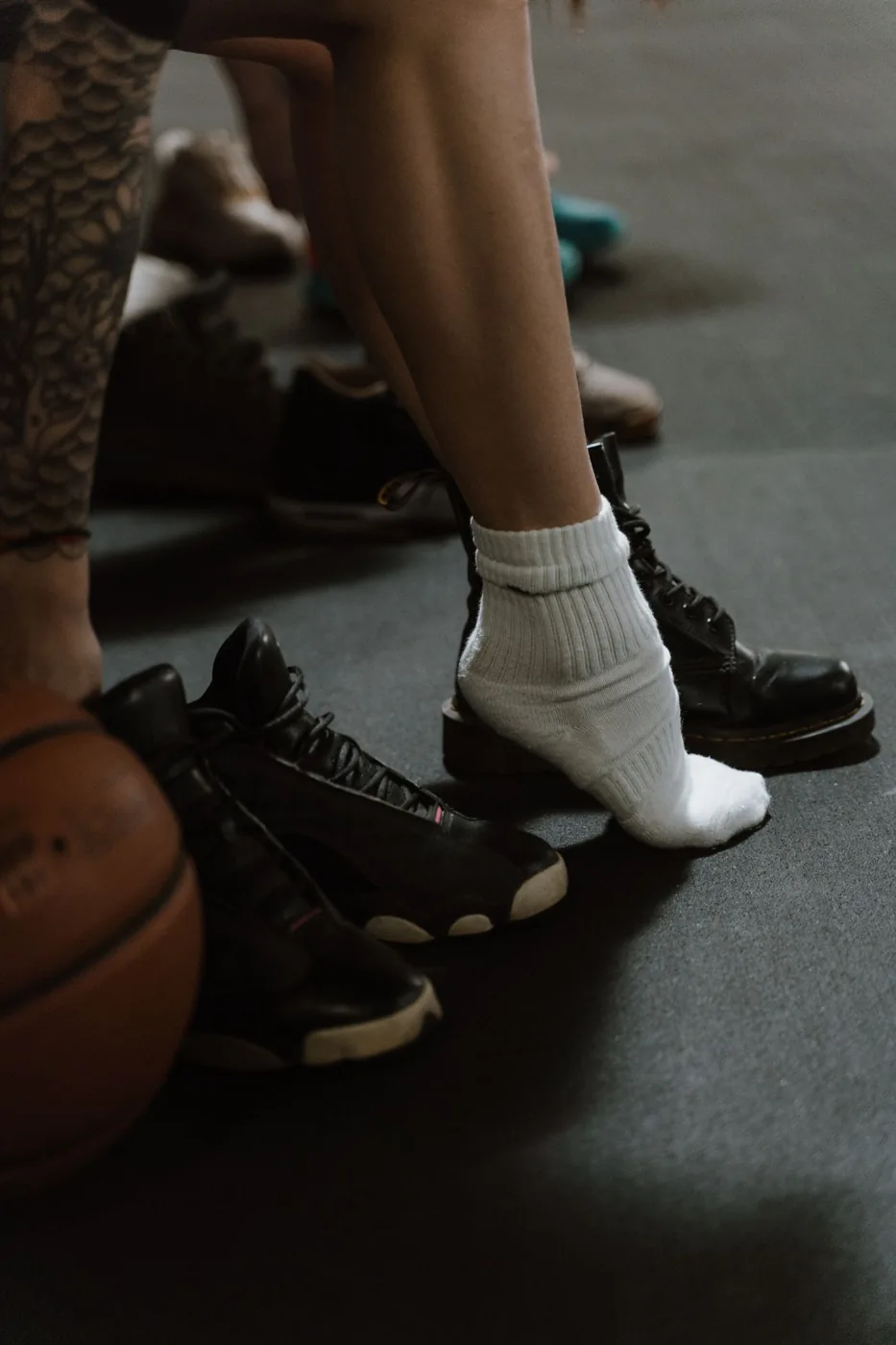
A new sock can change how an otherwise familiar basketball shoe feels. A bulky seam, extra cushioning or fabric that shifts under the foot may become noticeable during stops and turns. Begin with the pair of shoes you actually use, then judge whether the socks stay in place and remain comfortable through ordinary movement.
Match thickness to the available room
Try the socks with both basketball shoes properly laced. A thicker option can reduce space around the toes and over the instep. A thinner one may leave more movement inside a shoe that previously felt secure. Neither thickness is automatically better.
Do not use extra layers as a permanent way to rescue a poorly fitting shoe. If the foot moves excessively or feels squeezed, compare the shoe fit as well as the socks. The aim is a workable combination, not winning a debate about which sock style serious players should wear.
Check seams and fabric placement
Put the sock on carefully and smooth any obvious folds before lacing. Notice where the toe seam sits and whether extra fabric gathers beneath the forefoot or heel. A sock that looks right in the package may have a shape that does not suit your foot.
Stand, walk and take a few controlled lateral steps in a clear area. If you can feel a seam rubbing or the fabric moving noticeably, adjust once and repeat. If the problem returns, compare another size or construction instead of assuming you will forget about it in a game.
Choose a length that stays put
Crew, quarter and low socks can all be practical preferences when they remain in place. Check that the cuff does not slip beneath the shoe collar during movement. Also notice any concentrated pressure from a cuff that feels uncomfortably tight.
A taller sock does not automatically make the shoe more secure. Likewise, an invisible sock is not a good match simply because you prefer its appearance. Judge the contact between sock, shoe and skin, particularly around places the collar reaches when you bend or turn.
Read material claims with context
Fiber content and knit construction can help you compare products, but a label cannot guarantee how dry or comfortable your feet will feel. Your shoes, session length and conditions also matter. If possible, test one pair before buying a large multipack.
Describe your actual experience in useful terms: too warm, fabric bunching, cuff slipping or comfortably held. Avoid assuming a sock marketed for another sport cannot work, or that a basketball logo proves the best fit. The task is matching a particular item to your setup.
Pack a clean alternative
For a long session or a second run, a spare dry pair is a small addition to the bag. Keep it separate from used clothing so it remains ready. If the socks become uncomfortable, pause to check the fit instead of continuing with a fold or slipped heel.
Wash according to the care label and replace pairs that have holes, stretched cuffs or persistent bunching. Recheck the shoe combination when switching styles or brands. A repeatable sock choice also makes shoe try-ons more meaningful because you are not changing two parts of the fit at once.
Choose socks with your basketball shoes on, then prioritize a smooth fit, stable position and comfort over a single fabric or thickness claim.
Something unclear? Send a correction or question.