A ball feels flat, so someone gives it several hard pumps until the bounce looks lively. That approach can overshoot the intended pressure and make different sessions difficult to compare. Read the marking near the valve or the manufacturer's instructions, then use a suitable pressure gauge to make a controlled adjustment.
Find the recommendation for this ball
Look near the valve for the printed pressure instruction and its unit. If the marking has worn away, identify the exact model and consult the manufacturer. Do not assume a pressure borrowed from another ball, an online comment or a professional league specification applies to yours.
Treat the printed range as the starting authority for normal recreational use. Wilson's maintenance guidance explicitly directs users to the valve marking and warns against overinflation. If the manufacturer provides additional instructions for a particular construction, follow those too.
Prepare the needle and gauge
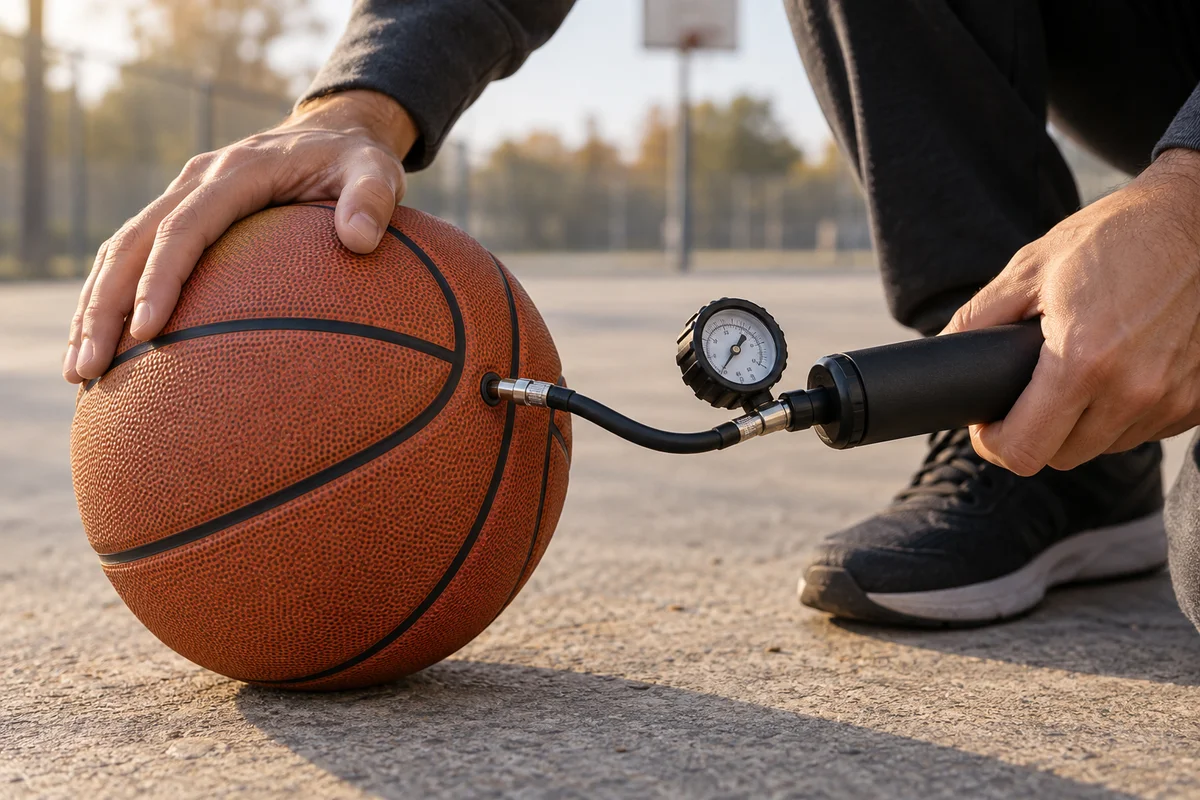
Use a ball-compatible needle that is straight and free from obvious damage. Follow the manufacturer's lubrication guidance; Wilson advises moistening the needle before inserting it straight into the valve. Avoid forcing a bent or dry needle at an angle.
Place the ball where you can support it without pulling the pump hose sideways. A gauge suitable for the ball's low pressure range makes small changes easier to read. A gauge intended for a much higher operating range may not give a useful level of detail for this task.
Make small adjustments
If you need to release air, use the appropriate valve procedure and remeasure gradually. Finish the adjustment before returning to play. Leave the needle stored safely rather than loose in the bag where it can bend or poke through other equipment.
- Measure first, then add air in short increments and check again.
- If the reading is already inside the recommended range, a different feel may come from the cover, surface or temperature rather than a need for more air.
- Do not keep pumping solely to reproduce someone else's bounce height.
Use bounce as a secondary check
After measuring, make a few controlled dribbles on a familiar, level area. You are checking whether the ball behaves consistently, not replacing the gauge with a universal drop test. A cracked court, different floor or different release can change what the bounce looks like.
Let a ball moved between very different temperatures settle in the playing environment before making a final comparison. Record the conditions if you are troubleshooting. Repeatedly changing pressure indoors and immediately judging it outside can make it harder to understand what is actually happening.
Notice a recurring loss of air
If the ball regularly feels soft again, note the gauge reading and how much time has passed instead of guessing. Check for an obvious cover problem or valve issue without poking or attempting an improvised repair. Consult the manufacturer's support if the loss seems unusual.
Keep a simple note of the model, stated range and last measured setting if several people share the ball. That avoids a cycle in which every player adds air according to personal preference. Consistent measurement makes the equipment easier to maintain and your practice feedback easier to compare.
Read the ball's own range, adjust with a suitable gauge and stop using extra air as a cure for every change in feel.
Further reference
Something unclear? Send a correction or question.