Dust, damp grass and a crowded equipment bag can leave a basketball unpleasant to handle. Cleaning should remove the dirt without creating a new problem for the cover or valve. Start with the manufacturer's care instructions for the exact model, especially when switching from an outdoor rubber ball to a premium indoor cover.
Begin with the least aggressive method
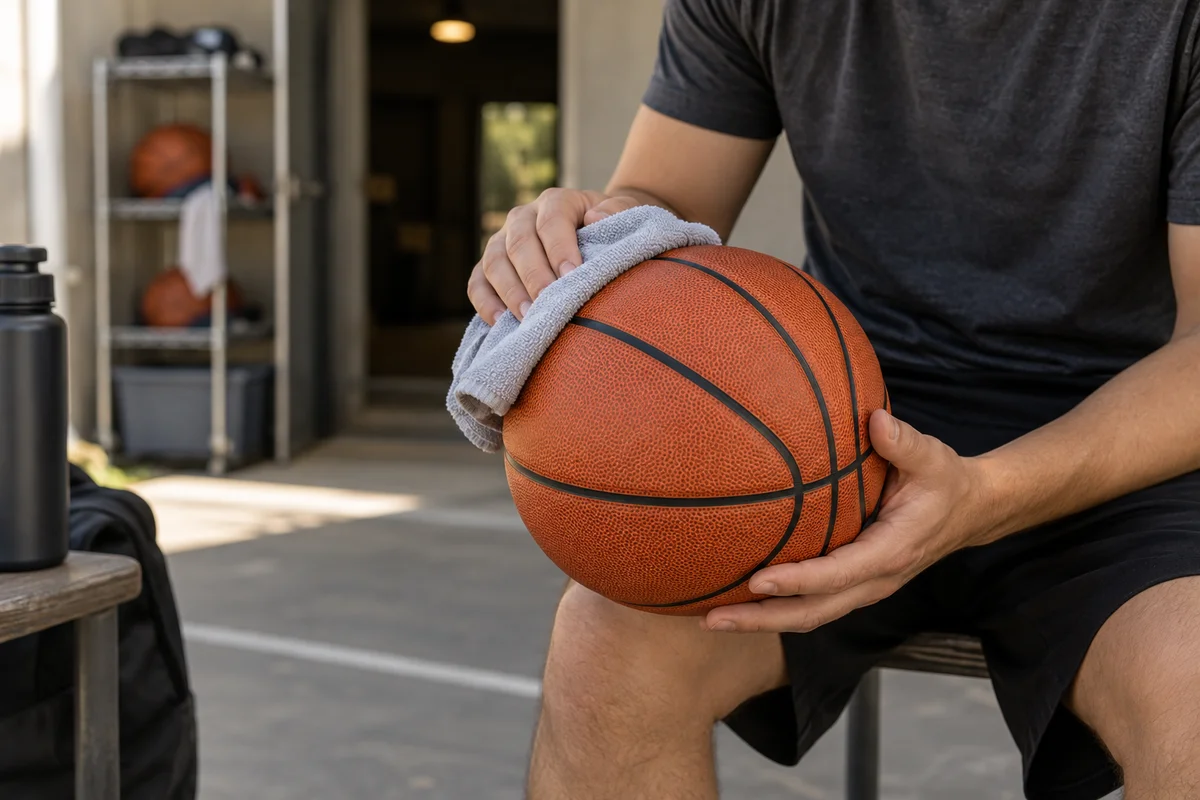
Wilson's maintenance guidance recommends wiping the surface with a soft cloth, using a damp wipe for stubborn dirt and following with a dry cloth. It also warns against solvents. Check whether your own ball has more specific care requirements before adding a cleaning product.
Do not assume a household spray is suitable because it works on a floor or countertop. A basketball cover is a different material. If the first gentle wipe leaves a mark, identify the material and ask the manufacturer rather than escalating to a strong cleaner or abrasive pad.
Pay attention to grooves and the valve
Use the cloth to remove loose dirt from the channels instead of digging at them with a sharp object. Keep the work controlled near the valve. You are cleaning the cover, not trying to open the ball or force debris through a small opening.
Avoid unnecessary soaking. A damp cloth gives you control over where moisture goes, while a bucket makes it harder to protect different parts of the ball. For a shared ball, let everyone know it is being cleaned so it does not go straight back onto a dusty court before the surface dries.
Dry with patience
For a wet ball, Wilson advises wiping away dirt and moisture, then drying in a ventilated area without a hair dryer. Its storage guidance also cautions against prolonged direct sunlight and proximity to heat. Fast heating is not a substitute for allowing the ball to dry normally.
Choose a clean spot where the ball cannot roll into a walkway or pick up fresh grit. Check it before putting it in a closed bag. If it still feels damp, give it more time rather than surrounding it with sweaty clothing that keeps the whole compartment moist.
Give the ball a predictable home
Keep it away from sharp tools, keys and objects that can puncture or scrape the cover. A ball tossed beside gardening equipment is harder to protect than one returned to the same clear storage spot after each session.
If you own indoor and outdoor balls, keep them distinguishable. A simple label on the bag or shelf can prevent the indoor model from becoming the default driveway ball. Storing each with its intended gear is easier than discovering the mistake after the cover has already been used on pavement.
Build the routine into packing up
Before leaving the court, remove obvious loose dirt and check for moisture. At home, inspect the surface while you empty the bag. This catches a wet ball early and keeps sand from spreading into shoes, clothing and the pump compartment.
If the cover has changed texture, begun separating or lost air unexpectedly, document the problem and consult the maker. Cleaning cannot restore every form of wear. A small routine helps you distinguish ordinary dirt from an equipment problem instead of applying stronger products to damage that needs a different response.
Follow the model's care guidance, wipe gently, dry with ventilation and store the ball away from moisture, heat and sharp objects.
Further reference
Something unclear? Send a correction or question.