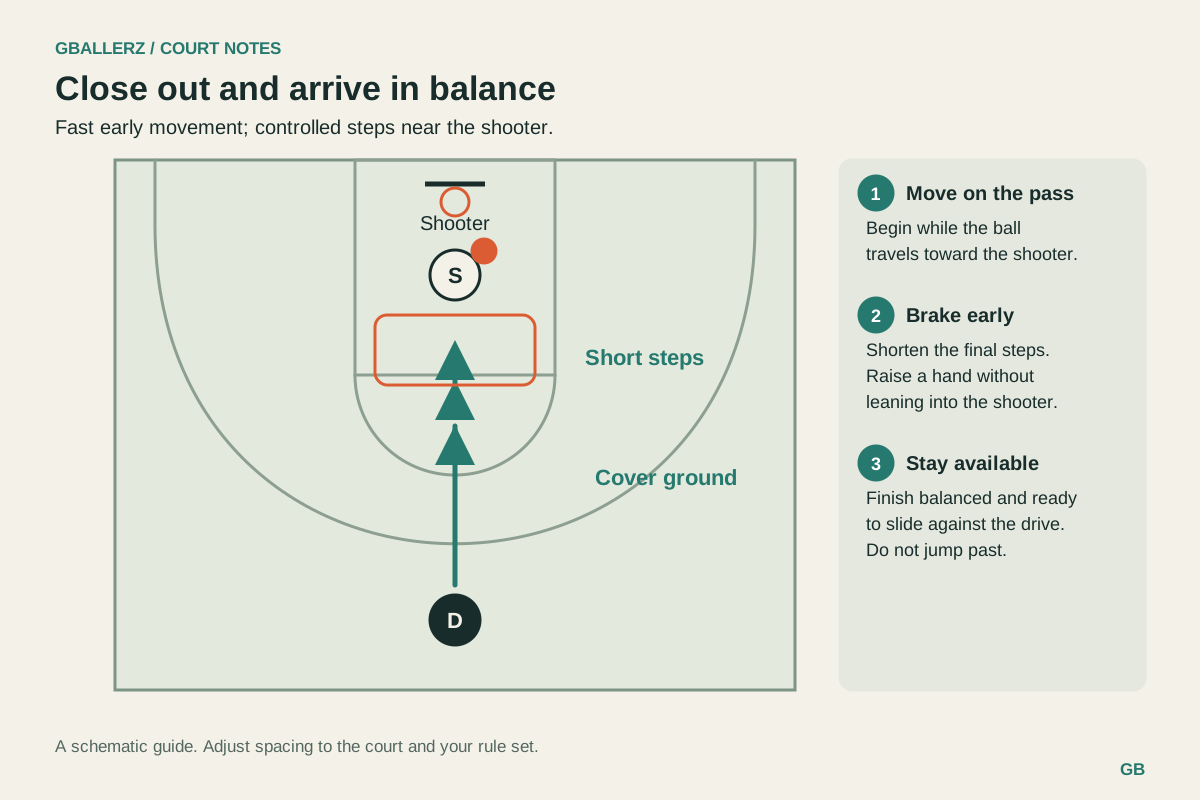
A closeout is the movement from a help position or passing lane toward an opponent who can shoot. Running hard toward the ball is only part of it. You need to slow down before arrival, raise a hand without crashing into the shooter and remain ready to move sideways. If your momentum carries you past the player, the closeout has removed you from the next action even when the first shot is delayed.
Choose a realistic starting distance
Put a partner at a comfortable shooting spot and begin several steps away. On their signal, move toward them with purpose, then shorten your steps as you get near. Stop at a distance where you can show a contest without reaching into their body or landing space. Begin while the partner simply holds the ball. You are learning the braking point. If you consistently arrive too close, start slowing earlier instead of adding an awkward sideways jump at the end of the approach.
Raise a hand while keeping a base
Bring a hand into the shooter's view while keeping your feet available. Avoid throwing both arms high and straightening so much that you cannot respond to movement. The exact hand position depends on the angle and your team's approach, but control and respect for the shooter's space remain essential. Have the partner lift the ball as if beginning a shot. Stay grounded in the first sets and practice a visible contest. A dramatic leap is unnecessary while you are still learning where to finish the closeout.
Add one driving option
Let the partner choose to hold the ball or take a slow first dribble to one side. Arrive in balance and slide with that first movement. Agree on the allowed side and pace before starting, then introduce the opposite direction later. If you can contest the held ball but cannot follow the dribble, your arrival may be too upright, too close or still moving forward. Adjust one of those factors rather than trying to recover with a reach.
Connect the closeout to a pass
Use a third player to pass to the shooter so the defender reacts to ball movement instead of a spoken countdown. Start moving as the pass travels, while keeping the route clear. The shooter can catch and hold, shoot under an agreed light contest, or begin a controlled drive. Short repetitions help you compare your arrival positions. Reset after each action so neither player practices collisions while tired or out of position.
Review the ending
Count whether you finished balanced, respected the shooter's space and could make the next defensive movement. Those observations reveal more than whether the shot happened to miss. Ask the offensive player whether your hand affected the view and whether you left an obvious driving lane. Use the answer to adjust your distance.
Practice six closeouts to a held ball, then six with one controlled drive option, judging the position you arrive in rather than the speed of your first steps.
Something unclear? Send a correction or question.