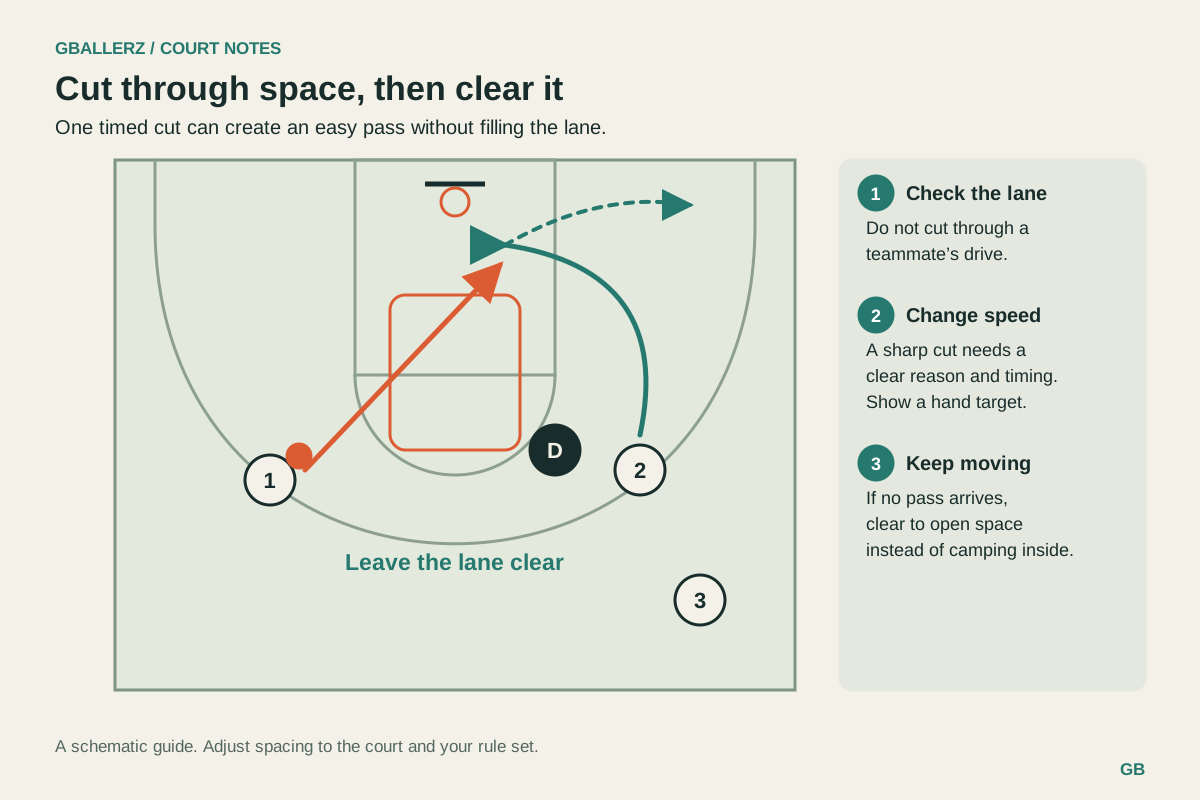
Cutting can turn a quiet off-ball possession into an easy catch. It can also block a teammate's drive if you sprint through the lane at the wrong moment. Before moving, check three things: where the ball is, where your defender is looking and whether the space near the basket is already occupied.
Cut when the passer can see you
A teammate facing the basket with a controlled ball has a better chance of finding your cut than someone retreating under pressure. Make eye contact if possible, then move decisively. A half-speed drift often allows the defender to recover without forcing any decision.
If the passer is trapped and looking away, first become a safe outlet. Running behind their back toward the rim may remove the only simple pass they had. Your movement should solve the current possession rather than fulfill a rule that everyone must cut regularly.
Use the defender's position
When a defender leans strongly into the passing lane, a backdoor cut can use the space behind them. Take a controlled step toward the ball if it helps reveal their commitment, then change direction toward the basket. Show a target once you are in the passer's view.
When the defender watches only the ball, a direct cut across their blind side may be enough. You do not need a dramatic fake every time. Keep your path clear of other players and avoid reaching or pushing to manufacture separation.
Check the teammate already attacking
If the ball handler begins a drive, do not cross directly in front of them on the way to the rim. Hold your space or move to a different passing window. A drive and a cut can work together, but they need complementary routes.
For example, when a drive comes from the right wing, a player near the opposite baseline may time a short movement behind the helping defender. That movement is different from charging into the driver's landing area. Watch the defender and leave the finish space clear.
Leave after the opportunity passes
If the pass does not arrive, continue through to an open area instead of stopping beneath the rim. Standing there lets your defender remain in the lane and complicates the next drive. Clear the path so the possession can develop.
Avoid circling straight back into the same crowded route. Move to an open perimeter position, face the ball and become available again. A cut can help by shifting a defender even when you never touch the ball, provided you finish in a useful place.
Use a three-player timing drill
The drill should test both the cutting moment and what happens afterward. Swap roles regularly so the passer learns which timing is easy to recognize. Discuss whether the cut created a window, whether the pass was visible and whether the lane remained usable afterward.
- Put a passer on the wing, a cutter on the opposite side and a defender with the cutter.
- The defender alternates between denying the pass and watching the ball.
- The cutter chooses a route based on that position rather than on a fixed countdown.
Cut into a visible opening, keep the driver's route clear, and leave the lane when the catch is no longer available.
Something unclear? Send a correction or question.