The most useful shoe-care step may happen before you reach for a cleaner: take the pair out of the closed bag when you get home. Damp shoes left with used clothing are harder to manage before the next run. A short routine that matches the materials can keep the pair ready without aggressive washing or hurried heat.
Start with the manufacturer's instructions
Check the care advice for the exact shoe, especially if the upper combines mesh, leather, suede or decorative finishes. Nike generally recommends hand cleaning rather than machine washing and advises air drying. Material-specific guidance should take priority over a homemade recipe shared for a different pair.
Do not assume a white shoe needs bleach or that every stain should disappear in one treatment. A small mark is less troublesome than damage caused by an unsuitable cleaner. Use the mildest permitted approach and test cautiously where the maker's instructions allow it.
Remove the loose dirt first
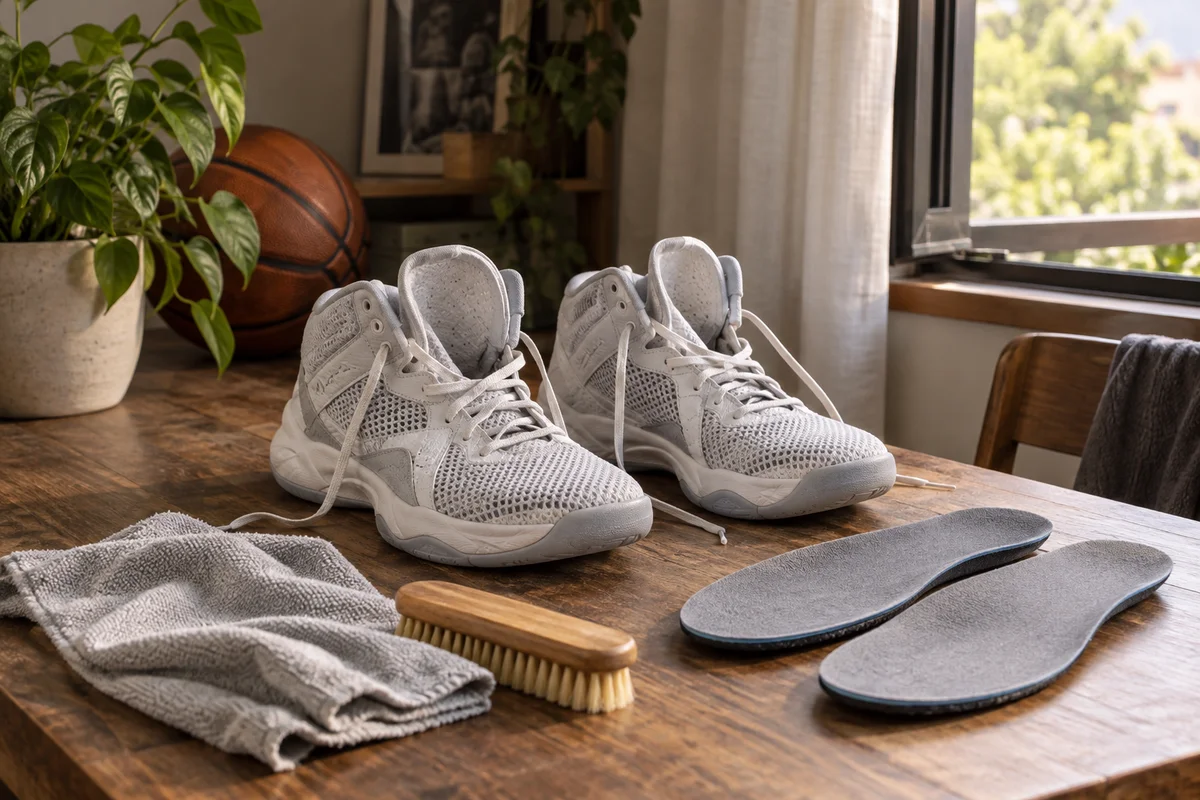
Work away from the playing floor. Use a suitable soft dry brush to remove loose surface dirt, then inspect the outsole for trapped grit. Avoid sharp tools that can cut the rubber while you try to free a small stone.
Loosen the laces and clean accessible areas gently with the approved method. A lightly damp cloth may be enough for routine marks; a deeper clean should follow the product's care instructions. Do not soak the entire shoe by default when only one small area needs attention.
Let drying take its time
Blot excess moisture gently and set the shoes in a ventilated place at room conditions. Remove an insole only if it is designed to come out, and let it dry separately when appropriate. Keep laces loose so the interior is not unnecessarily closed.
Avoid using a heater or hair dryer to meet a deadline. Nike's shoe-cleaning guidance recommends room-temperature air drying. If your pair is still damp before the next session, choose another suitable dry pair or adjust the plan rather than treating strong heat as a reliable shortcut.
Use a small after-game sequence
The routine works best when it begins as soon as you unpack. Keep a clean cloth and brush where you store the shoes so you do not need to search for equipment each time. Check the pair before returning it to the bag.
- Empty used clothing and take the shoes out of the bag.
- Brush away loose dirt and check for visible damage.
- Open the shoes for ventilation and follow any model-specific drying guidance.
- Pack them again only after the pair and removable parts are dry.
Keep cleaning separate from repair
As you wipe the pair, inspect seams, lacing points and the sole attachment. Cleaning gives you a regular opportunity to notice changes. A separating sole or torn eyelet needs an assessment of the shoe's condition rather than another round of scrubbing.
If an odor or stain persists, consult the manufacturer about a suitable treatment for those materials. Avoid coating the pair in a succession of products. A consistent routine is easier to evaluate, and it reduces the chance of confusing cleaner residue with a change in the shoe itself.
Follow the materials' care instructions, clean gently and allow room-temperature ventilation before repacking the pair.
Something unclear? Send a correction or question.