A short clip can show whether your feet were ready for a catch or whether a dribble change happened before the turn. Useful filming does not require a phone beside the rim or an elaborate production. Define the movement you want to inspect, choose an appropriate view and keep people, equipment and consent in mind before recording.
Ask before including other people
Check the venue's filming rules and get permission from anyone you intend to record. In a shared public space, a wide view may capture people who are not part of your drill. Adjust the framing, choose a quieter permitted time or skip filming when you cannot keep the recording appropriate.
Be particularly careful around children and organized youth sessions; follow the organizer's consent procedures. Agreement to practice with you is not automatic agreement to appear in a public post. If you want to share the clip later, obtain permission for that use too.
Choose the question and camera view
A side view can make the sequence of foot contacts easier to examine. A wider front or angled view may better show spacing and body direction. Select the view for one task rather than recording a distant full court and hoping every detail will be visible.
Frame the complete movement, including the start and finish. If checking a layup approach, include the feet and ball before the final steps. A close-up of the release cannot answer a question about earlier footwork. Make a short test clip before repeating the drill.
Place the phone beyond the activity
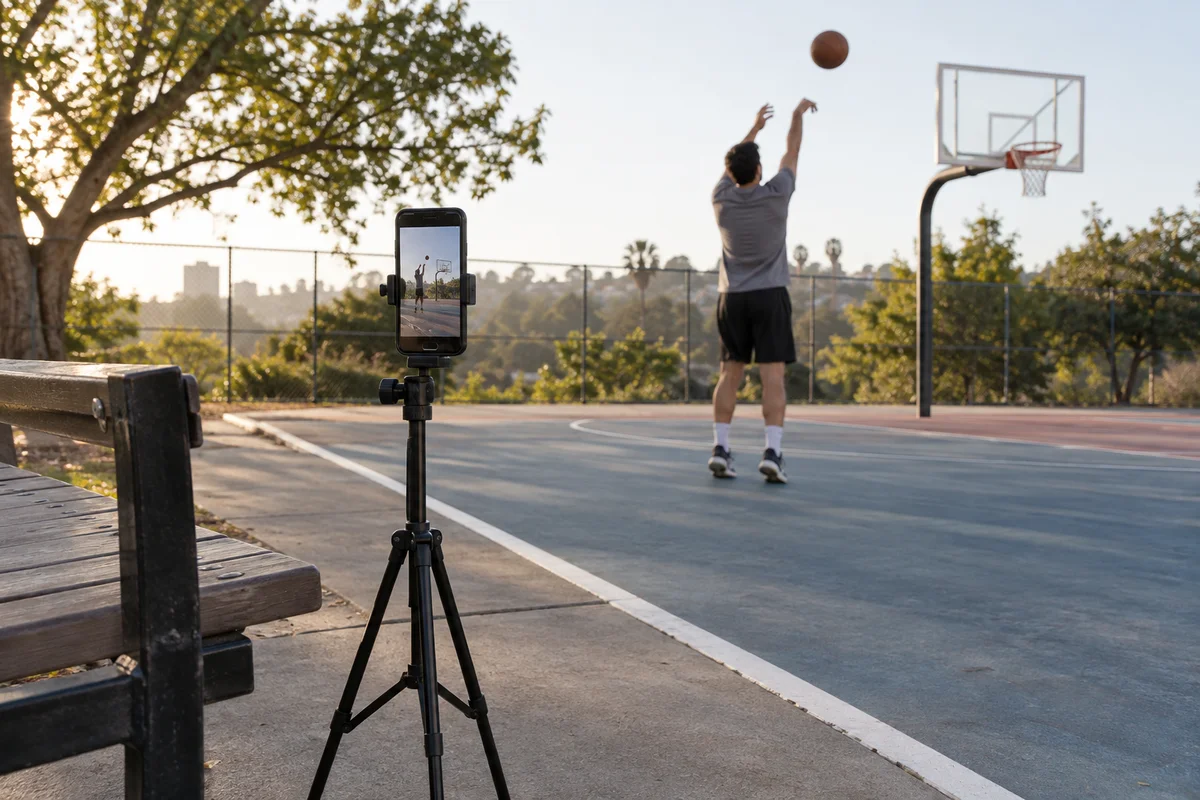
Use a stable, permitted support outside the playing boundary and away from run-off areas, walkways and likely loose-ball routes. A phone or tripod just beyond a painted line may still be in the path of a player slowing down. Keep clear space, not merely technical compliance with the line.
Do not attach equipment to a hoop, climb a structure or place the phone where someone must dodge it. If a suitable position is unavailable, have a willing person film from a clear location or wait. No practice clip needs a device in a landing area.
Record a small useful sample
A handful of representative repetitions is easier to review than a long unbroken recording. Tell your partner when filming starts and ends, then check the clip away from active play. Do not walk backward into the court while watching the screen.
- State the question you want the clip to answer.
- Confirm permission, framing and a clear equipment position.
- Record several ordinary repetitions at the intended pace.
- Move off the activity area before reviewing.
- Choose one observable adjustment and record a second short sample.
Interpret the clip with care
Camera angle, distance and frame timing can hide details. A clip may suggest where to look without proving every rules judgment or mechanical explanation. If you are unsure about a rule-dependent sequence, consult the actual competition's rules and an appropriate coach or official.
Keep the original purpose narrow: notice foot position, timing or a passing angle you can change. Avoid treating one awkward repetition as your entire game. Save only useful clips, respect the people recorded and remove unnecessary footage rather than collecting a camera roll you never review.
Film one defined task from a permitted clear position, review a small sample and turn the observation into one practical change.
Something unclear? Send a correction or question.