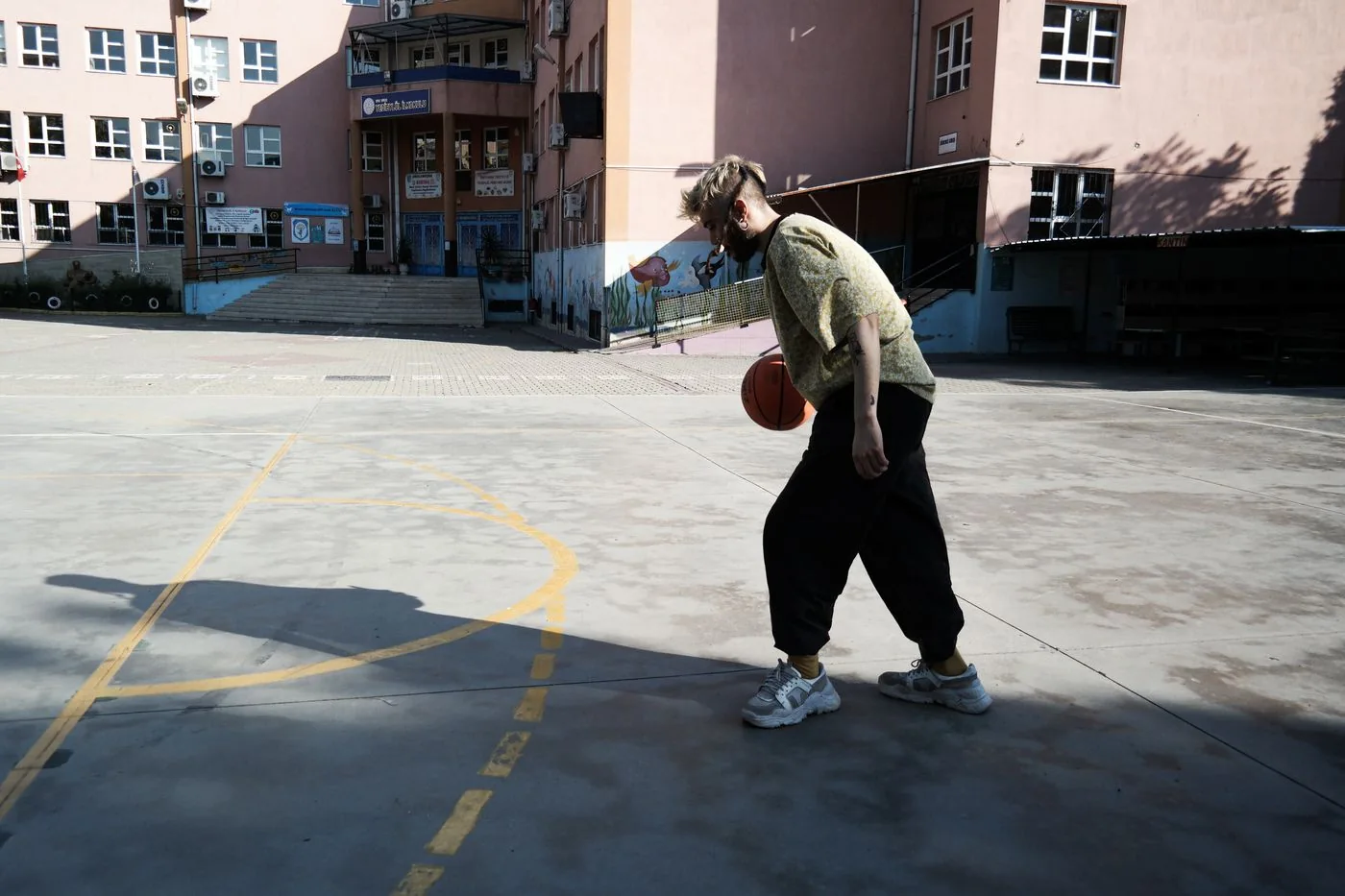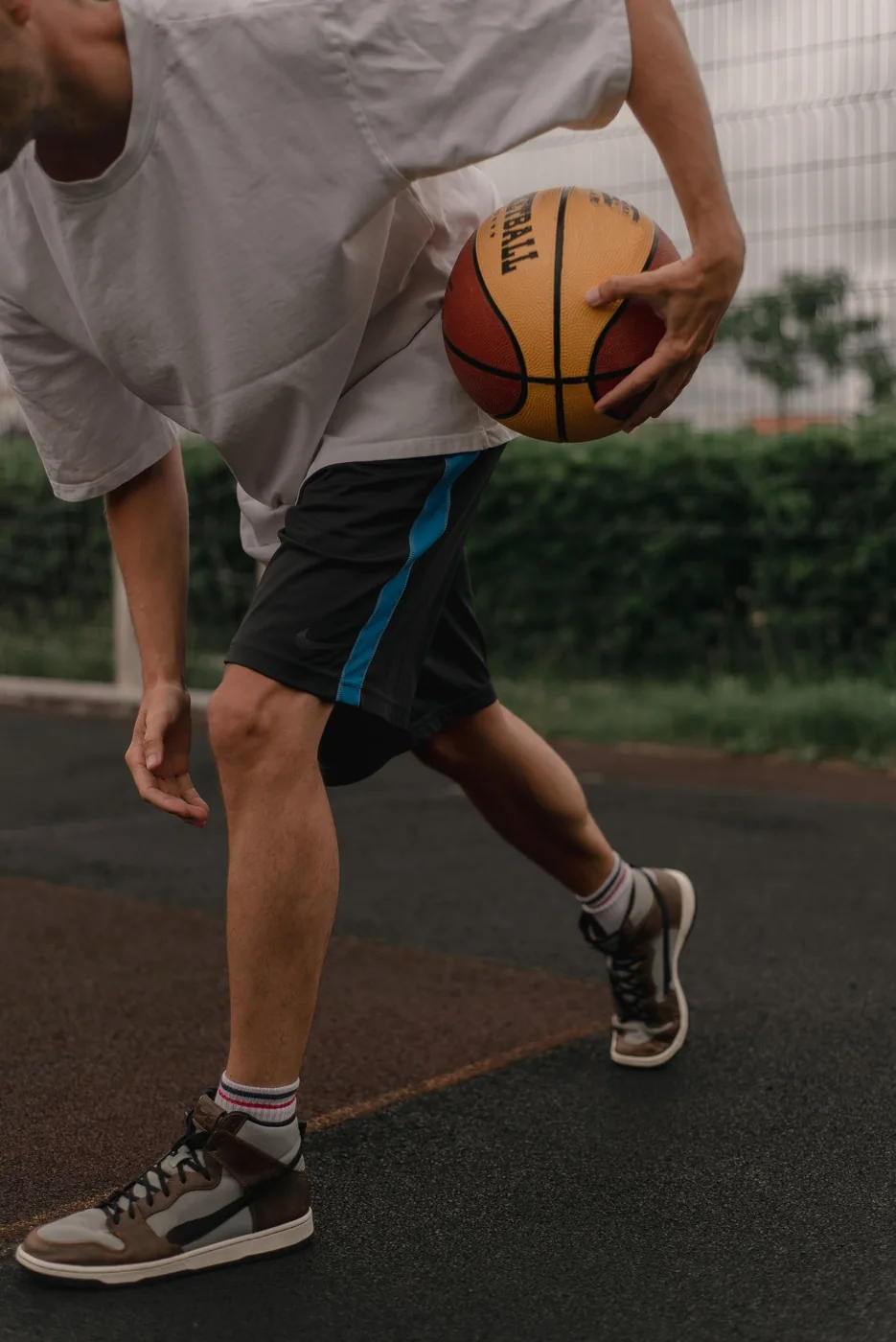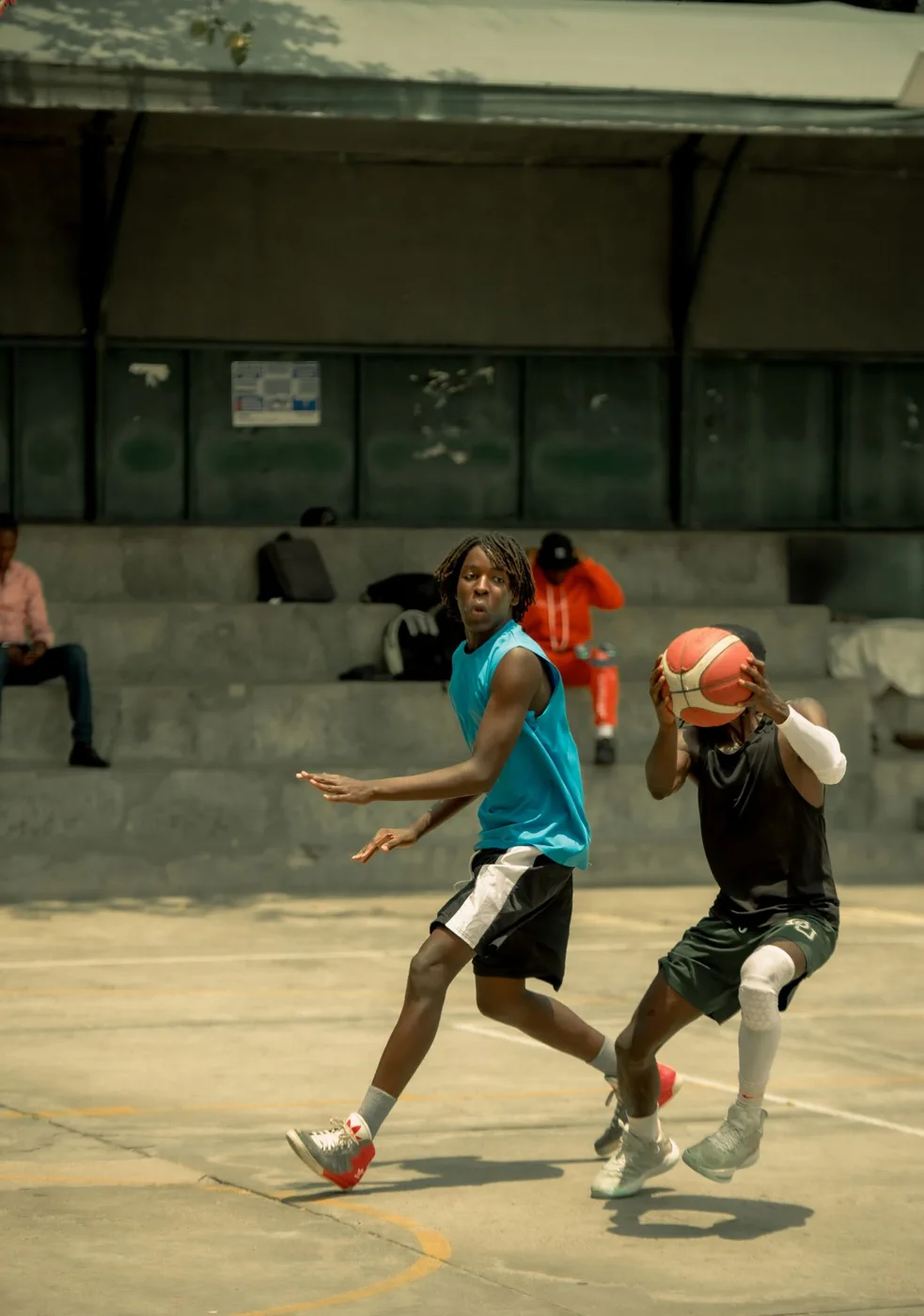
A defender near the basket can make a routine finish feel urgent. The common response is to speed up the last steps, throw the ball early or lean into a crowded space. Useful practice introduces pressure gradually and gives you more than one possible ending. A controlled finish might be a shot from a clear angle, a stop and pass, or a retreat when the route is already occupied.
Add a person before adding contact
Begin with a partner standing outside your route, hands visible and feet still. Approach the basket from a familiar side and complete a calm finish. Their presence should change what you see without forcing you to collide or contort the shot. Move their position gradually nearer the shooting window while preserving a clear landing area. If the partner's location blocks the route completely, choose another action. The purpose is to learn a decision in response to pressure, not prove that you can complete a layup through any arrangement of bodies.
Secure the ball through the approach
Keep the last bounce close enough to gather without reaching into the defender's space. Bring the ball under control with both hands before the final release, using your body position to help shield it. Avoid swinging the ball widely across the defender or leading with an elbow to create room. A partner can point to an exposed ball without trying to knock it away at first. Adjust the gather location and route. Simple protection with a clear angle is easier to repeat than a dramatic scoop chosen only because the original approach became crowded.
Make the finish depend on a cue
Ask the partner to choose between two modest actions: remain beside the route with a hand up, or step into the approach early and stop. Finish in the first situation if you have room; stop under control and pass to an outlet in the second. Agree on the movement and spacing before starting. Avoid late lunges, airborne contact or attempts to undercut a shooter. The drill succeeds when you see the cue early enough to choose, even if several repetitions end without a shot.
Keep score for the whole possession
Record three things: whether you chose an open route, kept control and finished or passed in balance. A made basket after a wild collision should not be the practice standard. If you keep rushing, move the decision point farther from the hoop and slow the approach. When the exercise becomes comfortable, let the defender move more naturally within agreed limits. Review misses in context. A good decision followed by a soft miss requires a different correction from a forced attempt into a defender who had already closed the lane.
Run eight controlled approaches with a partner offering two clear defensive cues, and count sound decisions and balanced endings before you count baskets.
Something unclear? Send a correction or question.