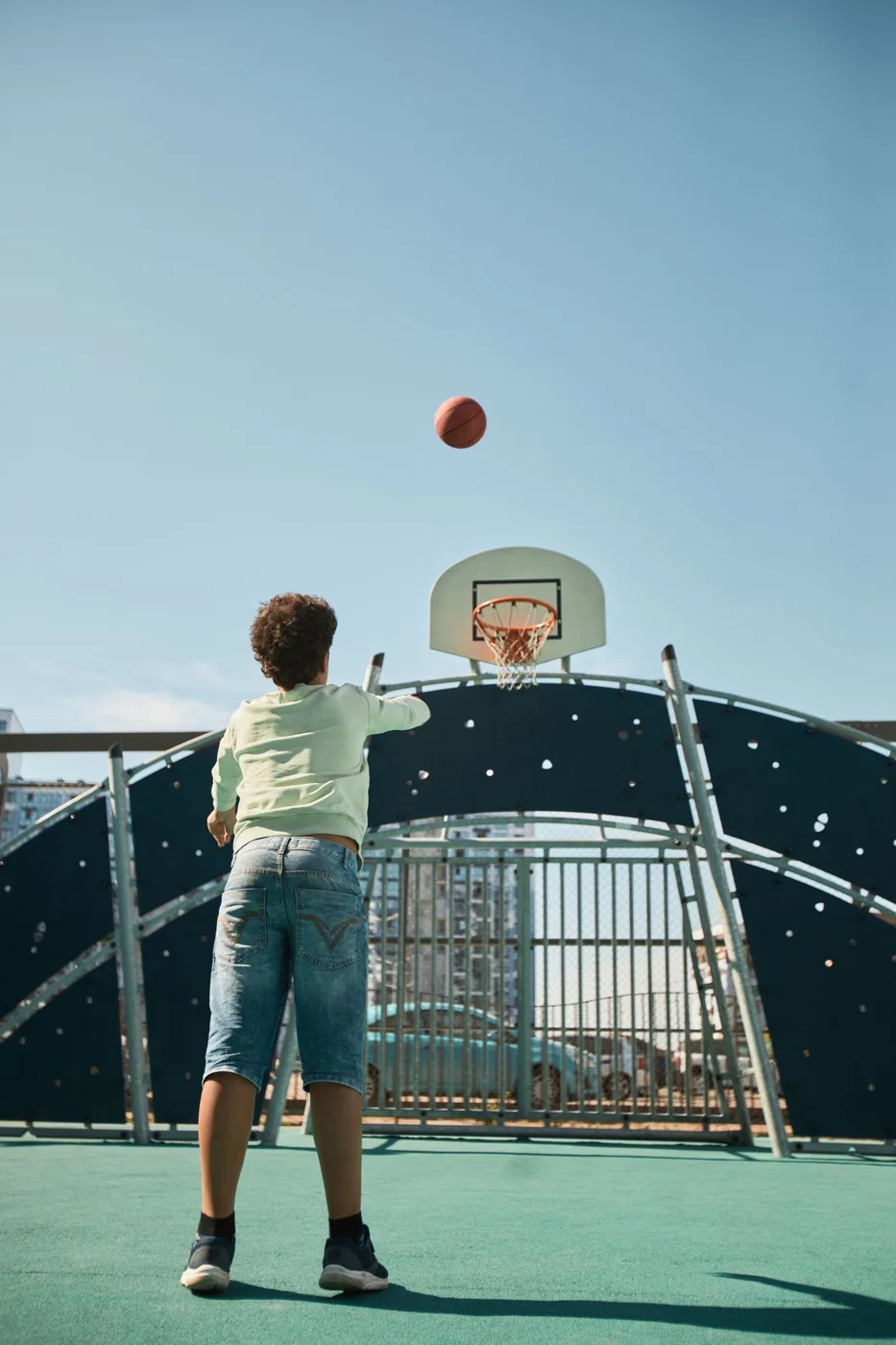
A catch-and-shoot attempt begins before the ball reaches your hands. Your location, body angle and readiness determine how much work remains after the catch. If you wait to organize your feet until the ball arrives, the shot may become a hurried sequence of extra shuffles. Practice the preparation with easy passes first, then add the small movements that help you arrive at a real opening.
Begin inside your comfortable range
Stand at a spot where you can shoot without straining, facing generally toward the basket. Keep your knees softly bent and your hands ready to receive. Ask a partner to pass toward your upper torso. Watch the ball into your hands, bring it into a comfortable shooting position and finish balanced. The first goal is a clean connection between catch and shot. If the ball regularly hits your chest before your hands react, hold the set at an easy speed and improve your receiving preparation before worrying about the release.
Choose a footwork pattern deliberately
You can arrive through a small one-two step or a compact hop, depending on the pass and your comfort. Practice each slowly enough to understand where your feet land. With a one-two, organize the approach so the second foot completes a stable base. With a hop, aim to land in balance without drifting into the passer's space. Game rules govern when you may move your feet after gaining control, so learn the relevant rules with a coach or official if the sequence is unclear. Do not add unplanned adjustment steps after a settled catch.
Let the pass change your preparation
Ask for several passes slightly to either side within a reasonable catching range. Move your body to receive them instead of twisting your upper half while your feet stay fixed. When the pass is too low or too far away for a comfortable immediate shot, secure it and reset. Catch-and-shoot practice should not teach you to fire every ball regardless of balance. A useful repetition may end with a controlled catch and a decision to pass, especially when the reception pulls you out of your normal shooting position.
Arrive from a short relocation
Start a few steps away, move to the shooting spot and show your hands before the pass arrives. Slow down enough to organize your feet as you reach the opening. Alternate arriving from the left and right, because one approach may feel much easier. Count balanced attempts, and note whether the difficult side produces extra steps or sideways finishes. Finally add a partner walking toward you with a raised hand. Decide early whether the shot remains available, rather than speeding up the whole movement just because someone is approaching.
Film six catches from each direction and check the feet at reception, the number of adjustment steps and whether your finish stays over your base.
Something unclear? Send a correction or question.