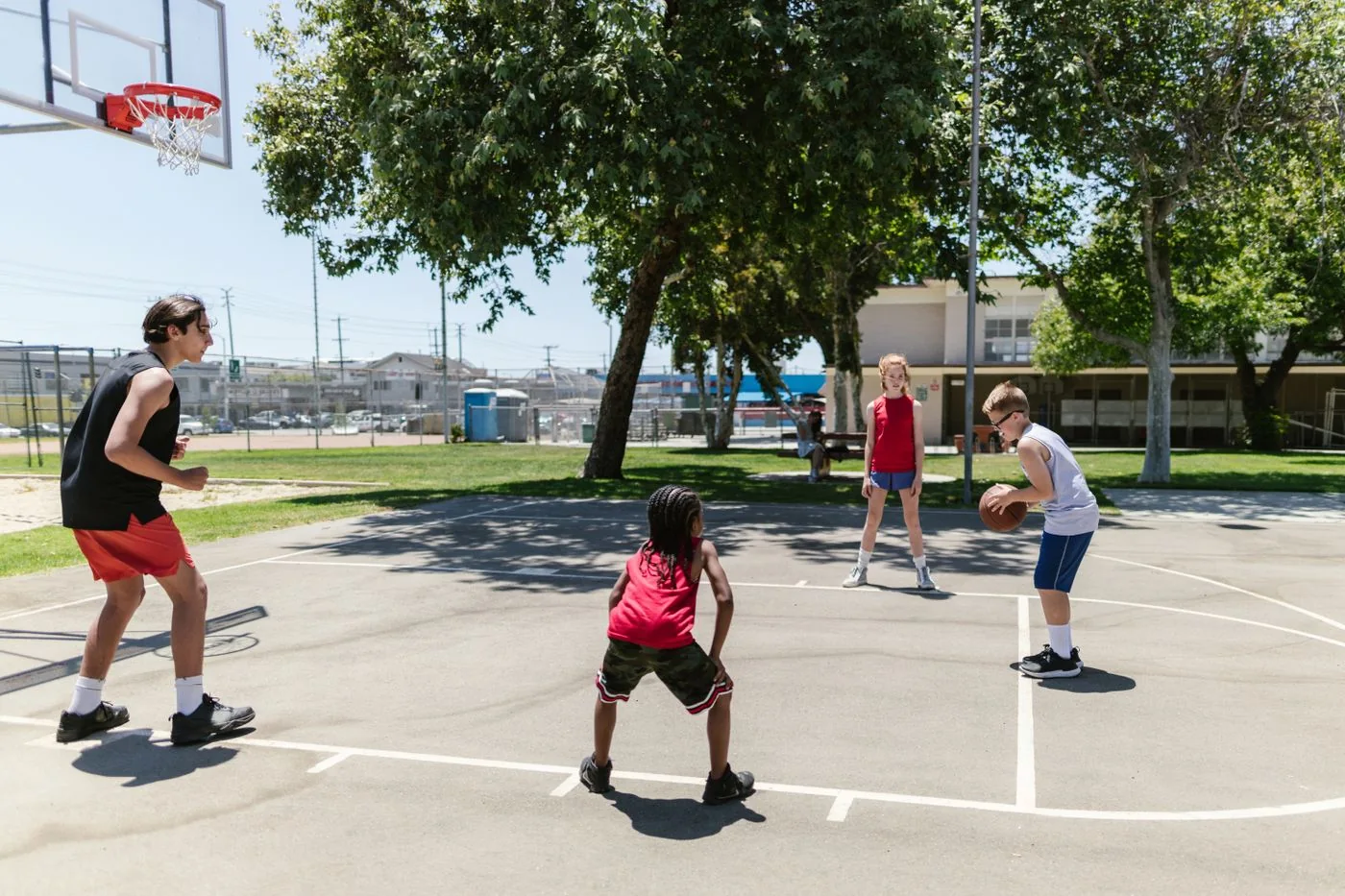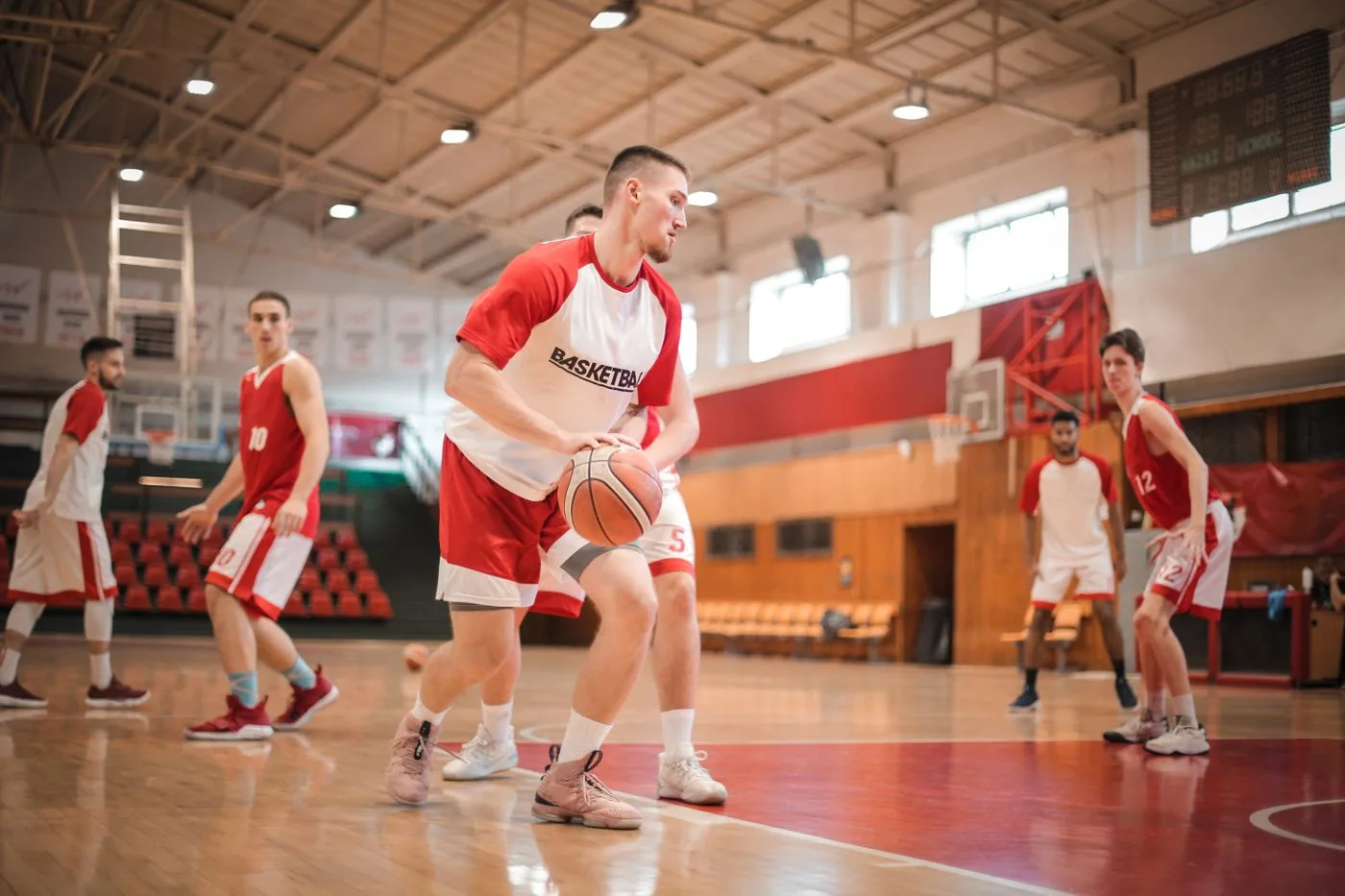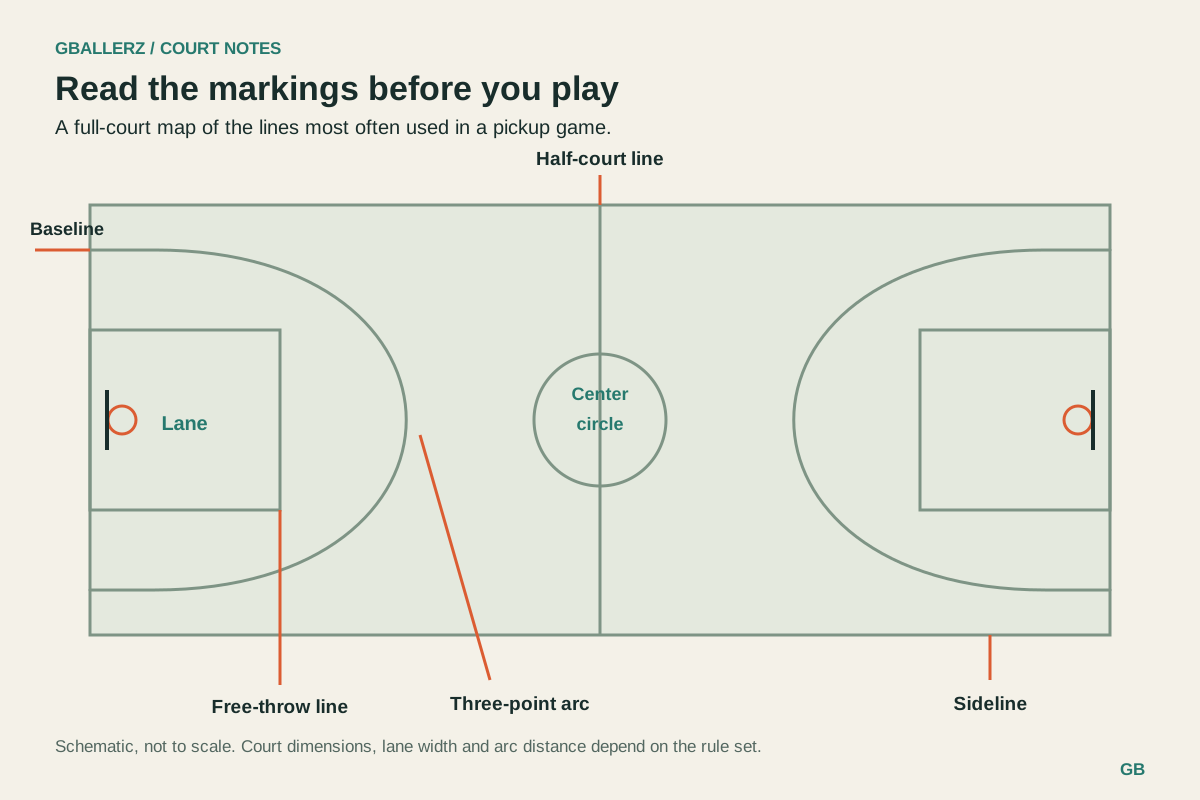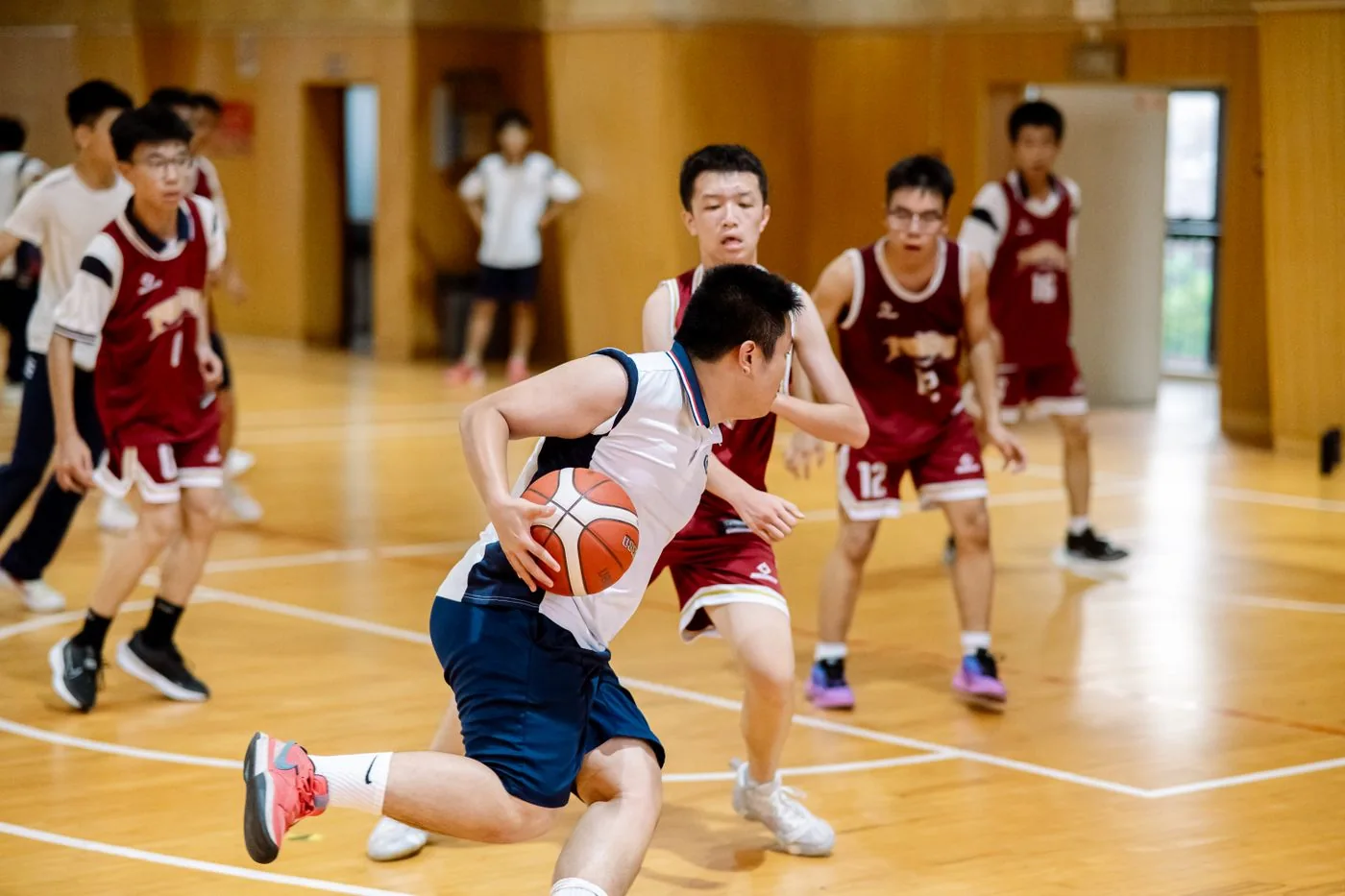
A teammate beats the first defender, and the rest of the offense moves toward the basket at once. The promising drive becomes a cluster of feet and reaching hands. Useful support usually means adjusting around the drive: clear the finishing route, make the helper choose and be ready for the pass that follows.
Identify the driver's path
Watch which shoulder the ball handler gets past the defender and where their next dribble is taking them. If you are standing in that route, move out early. Waiting until the driver reaches you forces them to change direction while protecting the ball.
Do not run behind the driver calling for a pass they cannot comfortably see. Find a position in front of their field of view or to the side with a clear angle. The best supporting location depends on the direction of the drive, not a fixed spot for every possession.
Create separation from the helper
If your defender steps toward the ball, move so a pass can reach you around that help. From a corner, a small adjustment along the baseline or up the sideline may reveal the window. Avoid assuming that standing absolutely still is always the best spacing.
Move within a range you can use after the catch. A wide-open location is less valuable if the only available action is a desperate long shot. Give the driver a target that can lead to a balanced shot, another pass or an attack on the recovering defender.
Make a baseline option visible
A baseline drive can put the ball handler close to the edge with defenders on the inside. A teammate on the far side can become valuable by staying visible beyond the rim area rather than hiding directly behind a defender.
Do not stand so close to the basket that the driver's finish, your catch and a defender's contest all occur in the same place. Maintain room to receive with control. If the driver goes under the basket without an opening, a perimeter outlet may be more useful than another player arriving inside.
Prepare the catch before the ball leaves
Turn your chest toward the passer, show your hands and organize your feet. A kick-out pass often arrives while a defender is recovering quickly. If you catch looking at your own defender, you may lose the advantage before you can see the next option.
Read the recovery rather than automatically shooting. A hard closeout may open a short drive; a controlled recovery may leave the next pass as the best choice. Keep the advantage moving without starting a new sequence of unnecessary dribbles.
Practice the drive and two outlets
Use a driver and two teammates, one near a corner and one above the lane. Begin without defenders. The driver alternates between a middle route and a baseline route while the others adjust to distinct passing windows.
Add one helper who chooses which outlet to leave. Stop the repetition if both outlets drift to the same place or enter the finish area. The learning target is the relationship between the three players: one attacks, one offers a reachable release and one preserves another option.
Support the drive with clear, usable windows; do not turn an open lane into a crowded meeting point.
Something unclear? Send a correction or question.