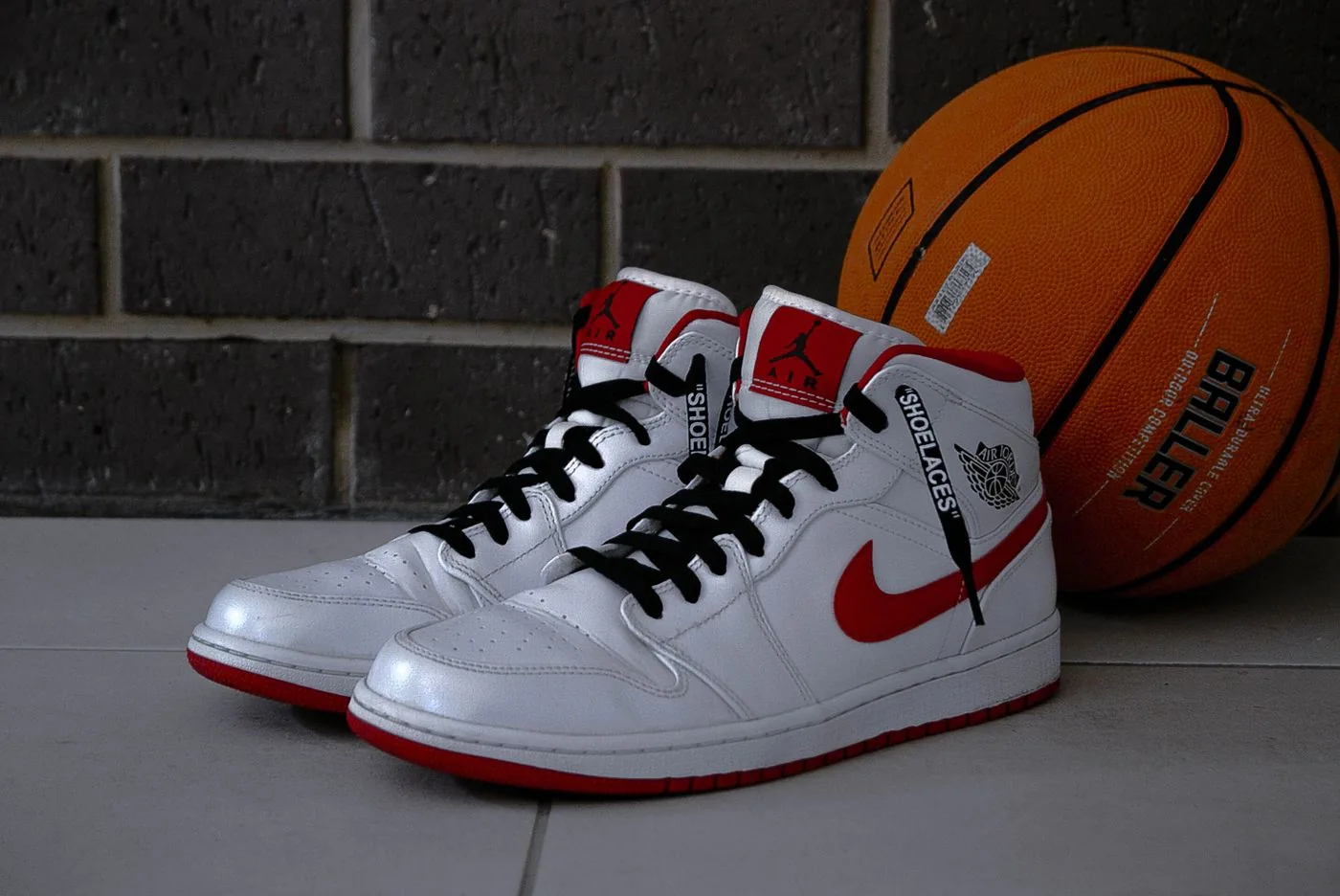
The high-top versus low-top question often becomes a shortcut for judging basketball shoes. Yet two pairs with similar collar heights can fit very differently, and a tall collar does not guarantee that the heel stays securely in place. Start by trying the complete shoe. The useful question is whether you can move comfortably over a dependable platform, with your foot held where it should be. Collar preference comes after that basic assessment, not in place of it.
Check the inside before the silhouette
Put on both shoes with your usual playing socks. Settle the heel into the back, then lace the shoe from the lower eyelets upward rather than pulling only at the top. Check for heel movement, pressure over the instep and crowding around the toes. Do not size down simply to eliminate slipping if that leaves the forefoot cramped.
A high collar can feel snug while the heel still lifts inside the shoe. A low collar can leave the ankle exposed while the heel counter holds the foot comfortably. Pay attention to the actual movement of your foot, not just the fabric touching your ankle.
Notice where the collar contacts you
Bend into a comfortable basketball stance and walk through a gentle turn. Check whether the collar rubs, presses into a particular spot or limits movement you normally use. Some players like the feel of material around the ankle; others find it distracting. Either preference is a starting observation rather than proof of better performance.
If you use prescribed or professionally recommended support equipment, bring it to the fitting and follow the relevant guidance. Do not assume that every brace fits inside every high-top, or that changing collar height replaces advice specific to your situation.
Evaluate the rest of the platform
Look at outsole condition, the width of the base and how the upper holds the foot during a small lateral shift. A tall upper attached to a poorly fitting platform is still a poor fit. Similarly, a low-top that lets the foot slide sideways may not suit you even if it feels light.
Keep comparisons fair: the same socks, similar lacing and the same permitted test area. Ask about indoor trial options and return terms. Running or jumping on a shop floor without permission provides little useful information and can damage merchandise or create a hazard.
Make a personal choice without a promise
Choose the pair that fits securely, suits the surface you play on and feels comfortable through ordinary basketball movement. Use collar height to refine that choice. Do not buy a painful pair because someone says it is the only appropriate style for your position.
No shoe category makes basketball risk-free. Avoid treating a collar as protective equipment with a guaranteed outcome. If a shoe consistently causes discomfort, stop using it for play and address the issue. Fit, condition and a suitable court remain relevant whether the shoe finishes below, around or above your ankle.
Try high-tops and low-tops using the same fit checks, then choose collar height as a comfort preference within a secure, suitable shoe.
Something unclear? Send a correction or question.