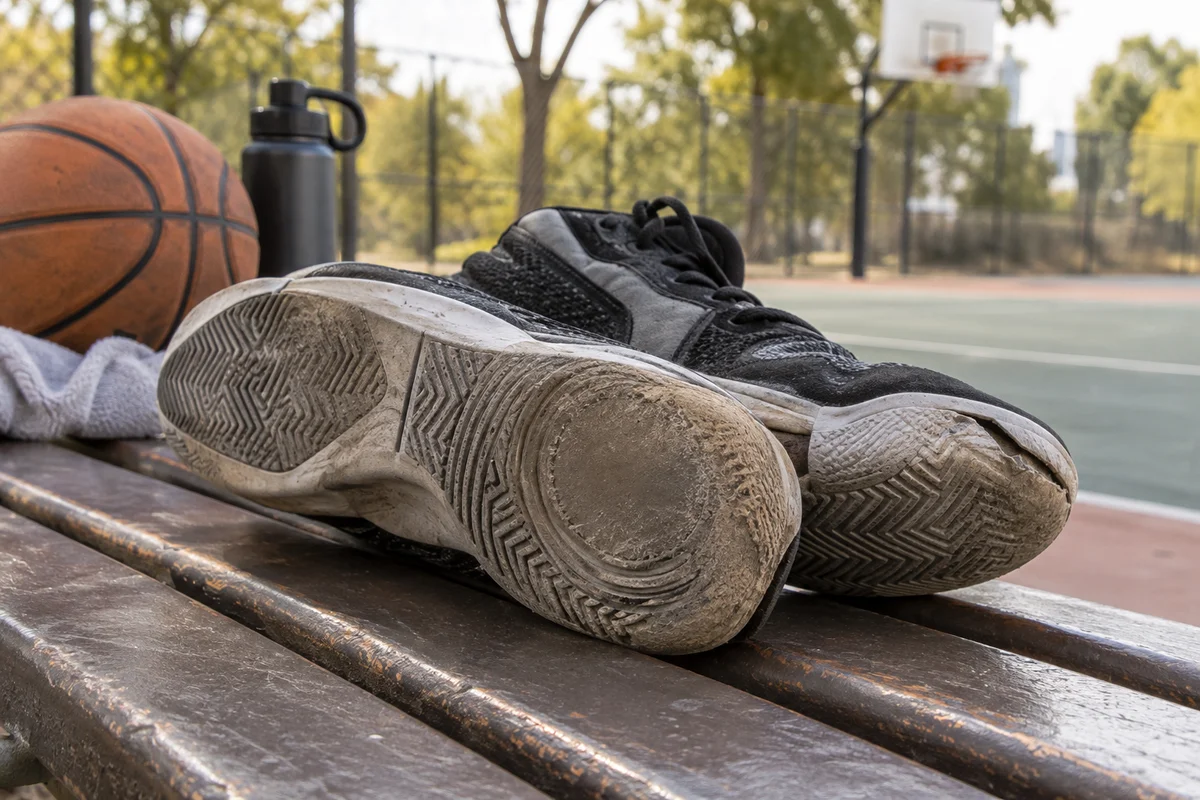
A familiar pair can become easy to trust long after its condition has changed. Conversely, a scuffed upper does not automatically mean a shoe is finished. The replacement decision should consider outsole wear, separation, foot hold and changes during ordinary play. Start with an inspection in good light rather than a dramatic test on the court.
Inspect the outsole and foot hold
Clean away loose dust so you can see the actual tread. Compare forefoot, heel and outer edges on both shoes. A smooth patch where you regularly stop or pivot deserves more attention than superficial discoloration on the sidewall.
Look for material coming away from the shoe as well as tread that has worn down. If a piece lifts, splits or catches on the floor, take the pair out of play while you assess it. Do not count on a quick improvised repair to restore the original construction.
Inspect eyelets, seams and the areas where the upper meets the sole. A damaged lacing point can change how the shoe secures your foot even when the rest of the upper looks presentable. Check the heel area for obvious deformation or breakdown.
Try the shoes with your usual socks and normal lacing. If the foot now slides inside a previously secure pair, establish whether the socks, lacing or shoe condition changed. Pulling the laces painfully tight is not a useful solution to a shoe that no longer holds you comfortably.
Separate shoe wear from court conditions
A dusty gym or damp outdoor patch can make an intact shoe feel unreliable. Stop and inspect the surface as well as the pair before deciding the outsole has failed. Comparing two sessions on completely different floors does not isolate the shoe.
When conditions are clean and suitable, notice ordinary controlled movement. If you feel repeated slipping, unusual shifting or a new uneven feeling, step out rather than using a harder cut to investigate. You do not need a spectacular failure to justify pausing a session.
Make the replacement decision specific
There is no single number of months that fits every basketball shoe. Surface, frequency, movement and the exact construction all affect what you see over time. Keep a note of when the pair entered regular use and review the same wear areas during cleaning.
A changed feel can be difficult to interpret, so use concrete observations. 'The right forefoot tread is smooth' is more useful than 'these shoes feel old.' If you are unsure about separation or a manufacturing issue, send clear photos to the maker or retailer and ask about the exact model.
Plan the next pair without rushing
When replacement becomes necessary, use what you learned from the old pair. Note the surface you played on, where wear developed and whether the fit stayed comfortable. Those details make a better shopping brief than simply buying the latest version.
Check the new pair indoors under the seller's return conditions before wearing it outside. Give it a controlled introduction rather than assuming familiarity with the brand means identical fit. Keep the old pair out of your basketball rotation if the reason for replacement makes it unsuitable for play.
Replace based on observable condition and dependable fit, and stop using a pair for play when damage or repeated problems make its behavior uncertain.
Something unclear? Send a correction or question.