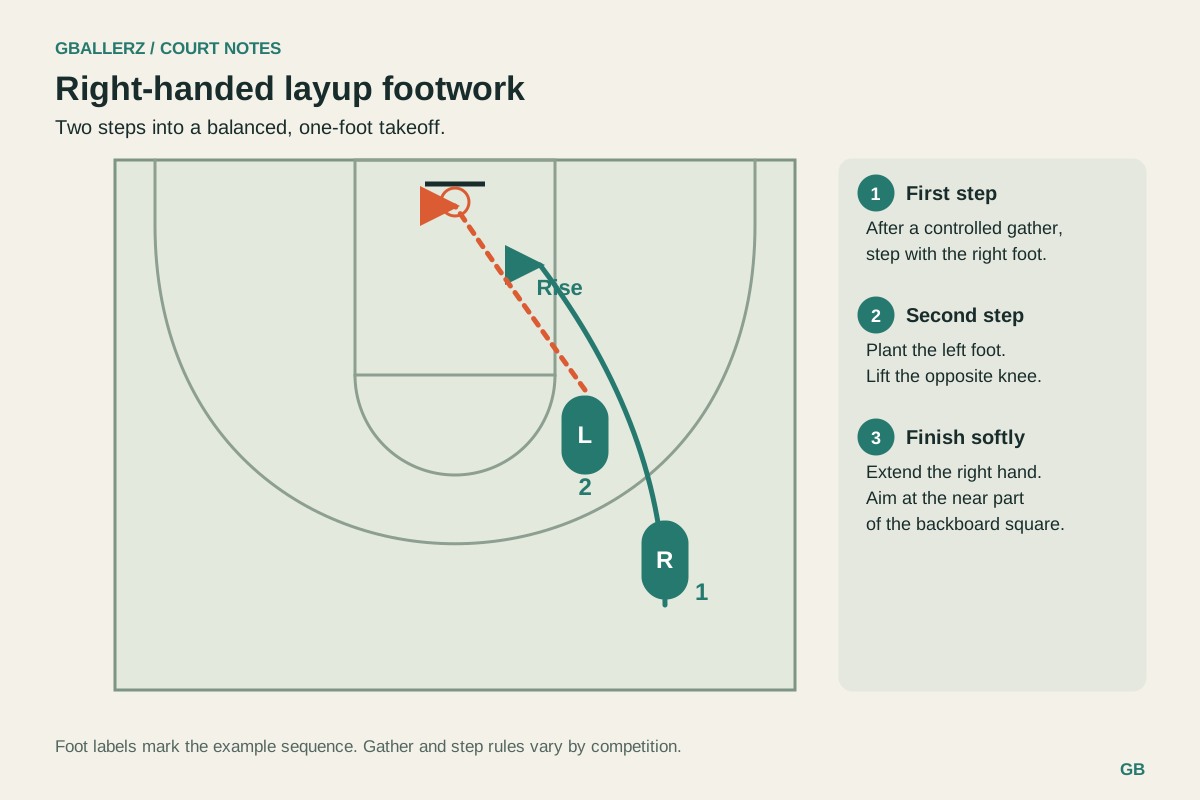
The familiar right-handed layup is easier to learn when you separate the approach from the finish. Starting far away with a fast dribble adds problems before the last steps feel comfortable. Begin near the basket, use the right hand for the release and practice the conventional right-left step rhythm at walking pace. Your objective is to arrive beside the hoop in balance, with enough room to lift the ball toward a clear target.
Walk through without a dribble
Start on the right side of the lane, facing the basket at a modest angle. Without a ball, rehearse a right step followed by a left step, then lift upward from the left foot as the right knee comes forward comfortably. Keep the movement small. You are learning the order, not trying to jump high. Finish in a clear landing area without crossing under another player. If the sequence feels confusing, say the steps aloud while walking before adding the lift. A slower correct rhythm is a better starting point than a fast guess.
Add a gentle release
Hold the ball and begin close enough that the finish requires little force. Use the rehearsed final steps and lift the ball with your right hand, with the left hand helping secure it until the release. From this angle, choose a suitable spot on the backboard that guides the ball toward the hoop. Keep your eyes on that target as the ball rises. Avoid throwing from below your chest while your feet continue rushing forward. If control disappears, move closer and make the release softer before changing the entire footwork sequence.
Connect a short dribble approach
Move the starting point back only a few steps and approach with a comfortable right-hand dribble. Gather the ball before completing your final steps in the sequence allowed by the rules you play under. Because control and gather details matter, have a coach or knowledgeable player watch if you are uncertain about traveling. Keep the approach slow enough that you can repeat the same finish without adding a shuffle. The ball should come securely into your hands, rather than bounce so far ahead that you chase it into an improvised last step.
Vary the angle after the rhythm settles
Try a slightly wider approach, then one closer to the lane. Notice how the target on the backboard and the amount of forward movement change. Keep the same general step rhythm while choosing a comfortable release for each angle. Count attempts that use the intended hand, organized steps and a controlled landing, alongside the number made. If you make a basket after a tangled approach, acknowledge the score without treating it as a model repetition. Finish the session with a few easy attempts that restore the clear sequence.
Practice the right-left rhythm without a ball, add a close finish, then connect only a short dribble approach after both parts feel organized.
Something unclear? Send a correction or question.