A left-handed layup can feel awkward because the release and the footwork are both less familiar. Trying to fix them at full speed often ends with a right-hand finish from the left side. Slow the task down. Work on a gentle left-hand release near the hoop, then connect it to the conventional left-right steps. Allow the unfamiliar side to have its own starting distance instead of demanding that it immediately match your stronger side.
Let the hand learn a small finish
Stand near the basket on the left side and hold the ball with the left hand supporting the release. Use the right hand to steady it before the finish, then send it softly toward an appropriate backboard target. You can begin without a full approach. Notice whether the right hand takes over at the last moment or adds a sideways push. Reduce the required distance if necessary. The first goal is a left-hand release you can control, even if the movement looks much less dramatic than your usual right-handed layup.
Rehearse the opposite steps
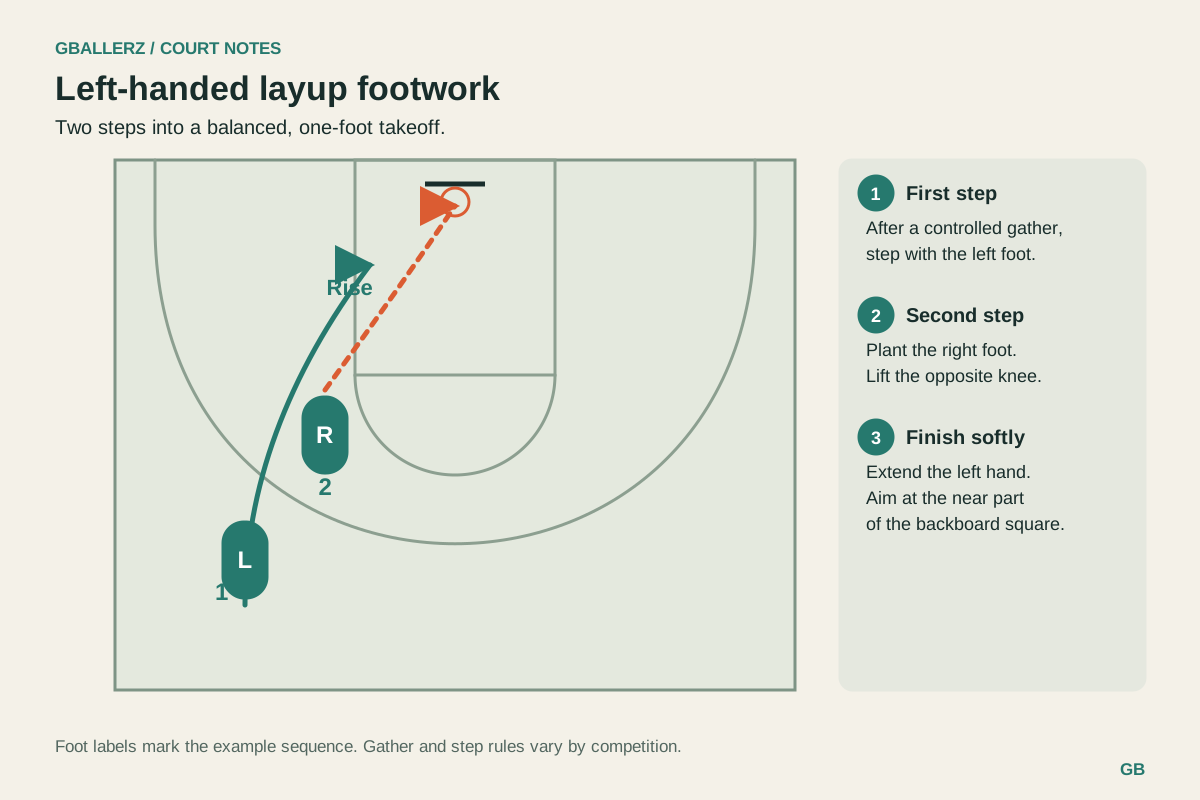
Away from traffic, walk a left step followed by a right step and lift gently from the right foot. Let the left knee come forward naturally. Repeat without a ball until the order no longer requires a pause to remember. Players often start correctly, then insert an extra small step because the stronger-side pattern takes over near the finish. Keep the approach short enough that you can hear or say the intended rhythm. Increase pace gradually only when the steps remain clear from start to landing.
Join hand and feet close to the hoop
Hold the ball, take the rehearsed last steps and finish with the left hand from a nearby angle. Use a soft attempt that does not require reaching across your face. Make small sets of four or five and pause to identify the awkward part. If the steps are organized but the ball flies sideways, return briefly to stationary releases. If the release is calm but the approach stutters, practice the walking rhythm again. Separate the problem rather than repeating the entire movement with the same unresolved error.
Add a reason to stay on the left
Introduce a short left-hand dribble from the wing, with a partner standing safely to the right of your route. Their position represents the space that makes a left-hand finish useful; they should not create contact while you learn. Gather and complete the final steps within your game's rules, asking for feedback if uncertain. Count the attempts that keep the left-hand release and a balanced landing. Later, remove the partner and vary the approach angle. You want a usable option when the left side is open, not a routine dependent on one exact starting mark.
Alternate a short set of left-hand releases with a short set of left-right approaches, then combine them from the nearest distance that preserves both.
Something unclear? Send a correction or question.