Holding the ball outside the boundary can make a short pass feel difficult. A defender blocks your view, teammates stand still and the count begins. The solution starts before you receive the ball: know the throw-in location, understand the applicable restrictions and arrange a first option with a simple alternative.
Know which restart you have
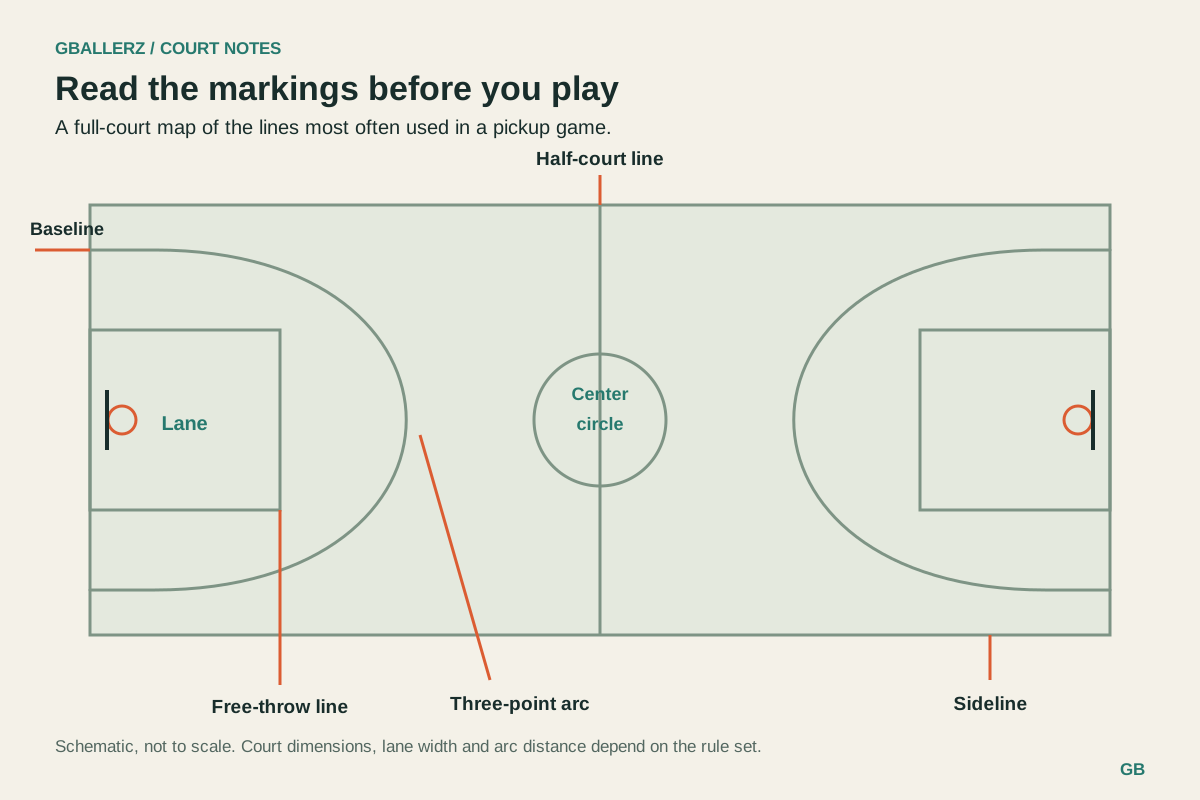
Throw-in restrictions depend on the rule set and the situation. NBA Rule No. 8 explains its out-of-bounds and throw-in framework, while Rule No. 10 includes the five-second throw-in violation. A designated-spot throw-in and a restart after a made basket do not always give the passer identical movement options.
In a league, follow the official's location and instructions. In pickup, confirm whether the group uses a sideline inbound or a check at the top. Do not assume that habits from one restart automatically apply to the other.
Look over the floor before accepting the ball
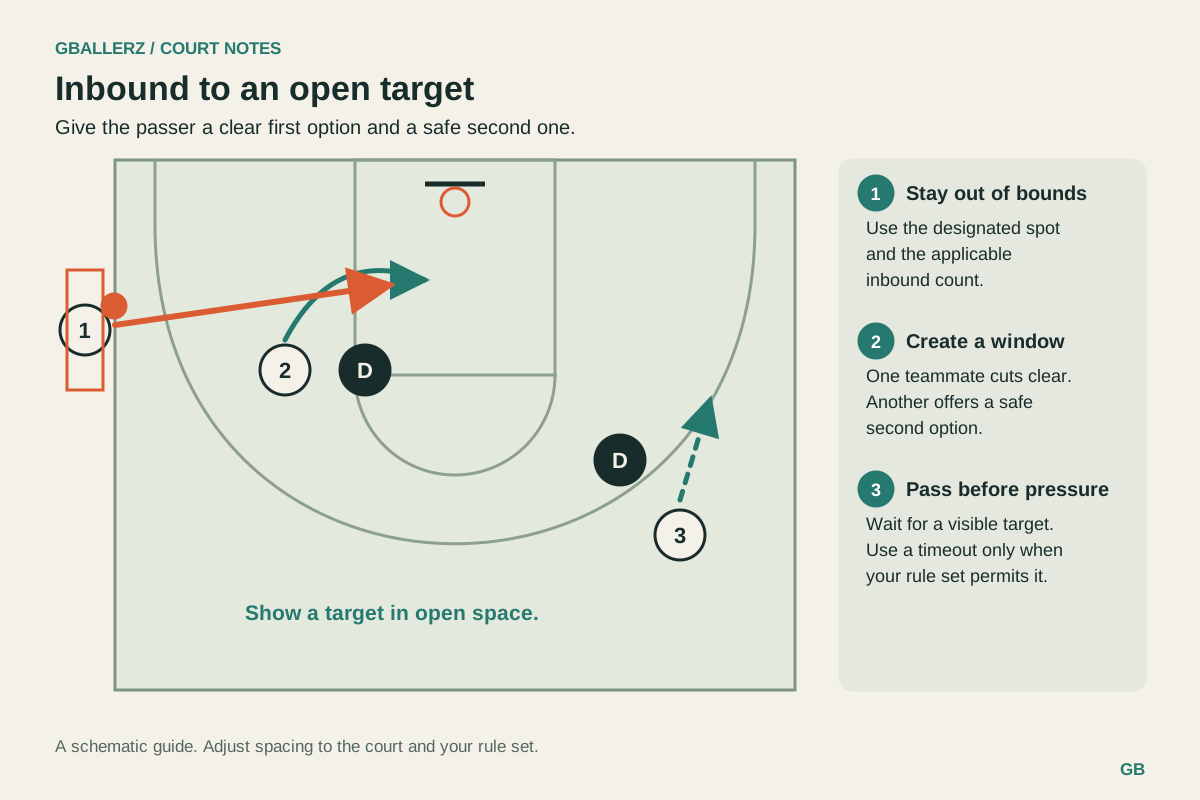
Find the receiver you expect and a second player who can become an outlet if that route is denied. Notice where the defense has placed its longest arms or strongest pressure. A calm glance before the count starts is more useful than a frantic search afterward.
Teammates can help by arranging different receiving angles. Three players standing in a straight line allow one defender to interfere with multiple options. Spread the targets so the passer can choose a clear route rather than throwing into a crowd.
Receivers need to earn the window
A receiver can change pace, move away briefly or cut across an open lane to separate from a defender. The movement should be visible to the passer and finish with a clear target. Repeatedly running directly at the inbounder may shrink the available space.
If the first cut is denied, continue into the planned alternative area rather than stopping and arguing for the ball. Another teammate can replace the vacated window. The offense needs a coordinated second chance before the passer runs out of time.
Use a pass the receiver can control
Do not force a high lob simply because it clears the nearest hands. Consider where the receiver will catch it and whether a defender can arrive first. A short bounce pass can fit some windows, but not when an opponent's foot or body already blocks its route.
Keep your eyes active and make the pass decisively when the opening appears. Extended pump fakes can consume the count without improving the angle. Once the ball is safely in play, enter the court through clear space and become an available return option.
Practice denial and the backup
Work with a passer, two receivers and two defenders. Establish one initial cut and one outlet, then have the defenders alternate which option they deny. Use the actual count and throw-in restrictions for your competition during the drill.
Track whether the pass arrives in a position the receiver can use, not merely whether someone touches it. If a repetition fails, identify whether the setup, timing, angle or placement caused the problem. A backup that everyone recognizes is more dependable than expecting one receiver to win every matchup.
Understand the restart, prepare two receiving windows and deliver the first clear pass the receiver can control.
Further reference
Something unclear? Send a correction or question.