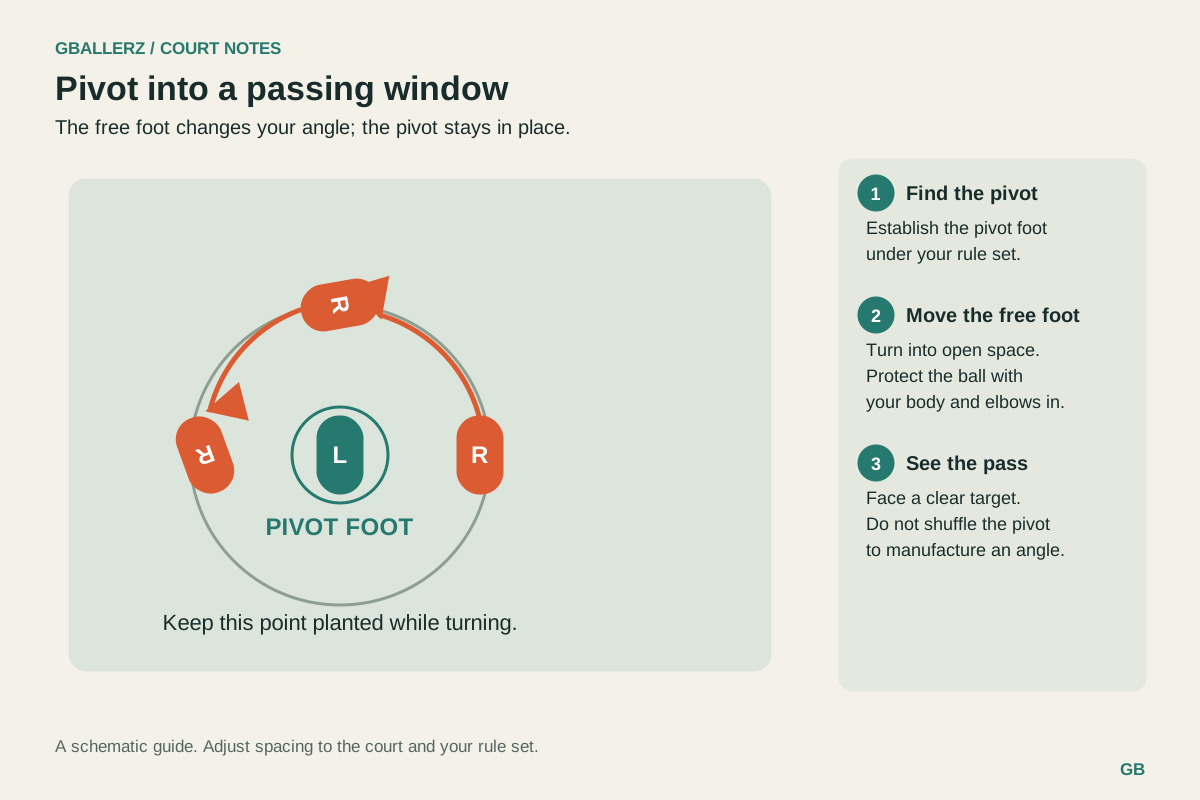
A defender in front of you may block the direct pass without blocking every angle. A pivot can move your body and the ball enough to reveal a receiver on the side. It works best when your feet are organized before you turn and you know which foot must stay planted. Confirm the applicable pivot rules for your game, then practice small turns that create a usable view instead of spinning simply to escape pressure.
Establish the base first
Receive a comfortable pass, settle into a balanced stance and identify your pivot foot under the footwork rules you are using. Keep that foot's contact point stable as the other foot moves around it. Begin with quarter turns rather than full rotations. Notice whether your torso stays over your feet or pulls you into an extra step. If the ball makes you lean, hold it closer to your body. The first success is a turn you can stop at any point, with your eyes available to find a teammate.
Turn toward a specific window
Have a partner stand in front with arms raised naturally, and place a receiver several steps to one side. Pivot enough to see a clear line around the defender, then deliver a simple pass. Do not force the ball through a tiny opening merely because you completed the planned turn. Adjust the receiver's location and repeat from both sides. You should notice that a modest step and body angle can reveal a large passing lane, while a big spin may turn your back on the teammate you need.
Keep the ball out of easy reach
Hold the ball securely and move it with your turn rather than extending it straight into the defender's hands. You may bring it to a comfortable side or above a nearby reaching hand when the space allows, without sweeping elbows through the defender. Ask the partner to point at exposed moments before adding gentle reaching attempts. If they can touch the ball during every turn, improve the distance and body position first. Faster movement is a poor substitute for keeping possession on the side the defender cannot easily access.
Choose between two receivers
Put one receiver on each side and let only one show hands on each repetition. Catch, scan and turn toward that usable option. Later, allow the defender to shade one lane before you begin. The exercise now includes a reason to pivot and a reason to stop turning when the window appears. Review repetitions where you spin too far or shuffle the planted foot. Reduce the turn size and restore balance. A pivot is successful when it improves the next action, not when it looks fast or includes the largest rotation.
Make ten catch-and-pivot passes to alternating sides, checking the planted foot and choosing the smallest controlled turn that opens the receiver.
Something unclear? Send a correction or question.