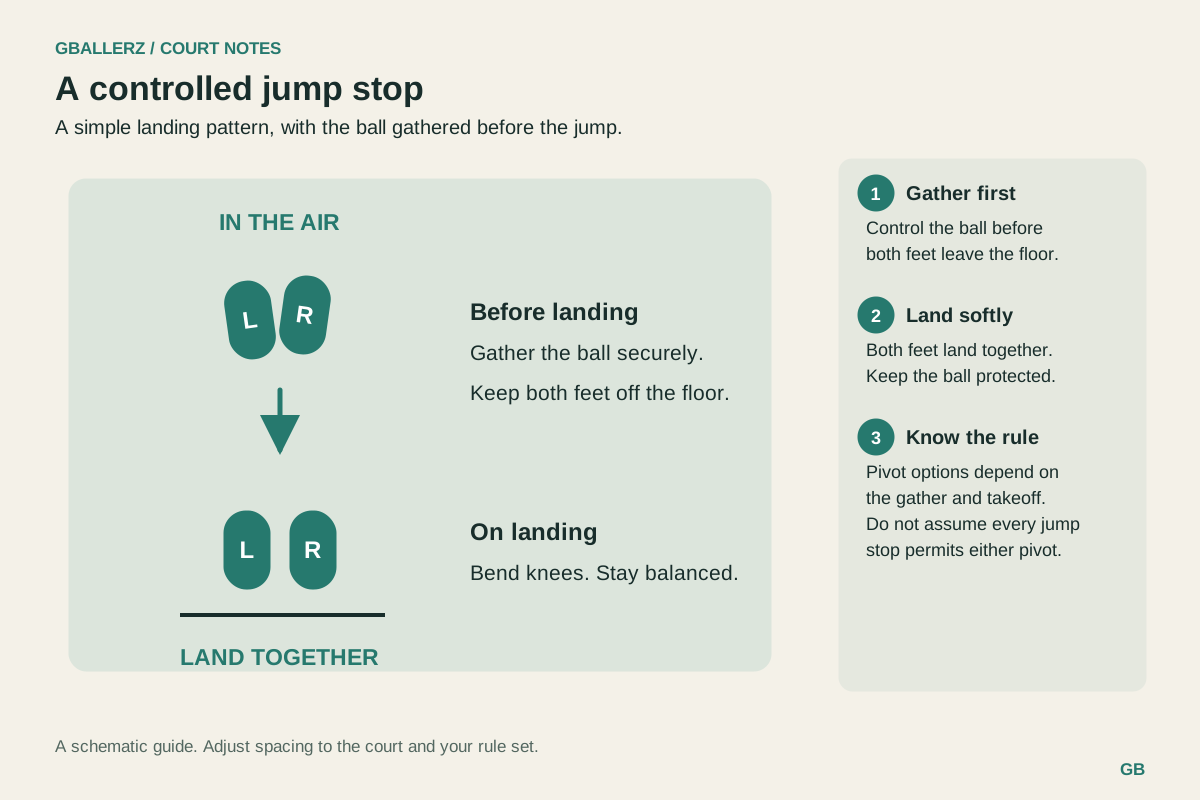
A jump stop can help you organize a catch or the end of a dribble, but the landing is useful only when you understand the footwork that follows. Different rule sets can treat gather and pivot details differently. Learn the version that applies to your game with a coach or official. In practice, begin with the physical task: a small, balanced landing with both feet arriving together and the ball secure.
Rehearse a quiet landing
Without a ball, take a short forward approach and make a small hop into a comfortable two-foot stance. Keep the landing low and balanced rather than jumping high. Your feet should provide a usable base, with room to turn your upper body without stumbling. Stop and check that you are not falling forward or collapsing into a very narrow stance. Practice from walking speed first. If the landing is loud and difficult to control, shorten the approach and make the hop smaller before trying it at a faster pace.
Add a catch you can manage
Have a partner deliver an easy pass as you approach the landing area. Secure the ball while completing the stop, then remain balanced long enough to see a target on either side. Begin without a defender. A common mistake is reaching far forward for the pass, which pulls the chest beyond the feet. Adjust the starting distance and pass placement so the catch belongs to the movement. The drill should not require a desperate lunge followed by a recovery step that changes the intended footwork.
Connect the end of a dribble
Use a short, comfortable dribble approach, gather and land under control in the sequence permitted by your rules. Ask someone knowledgeable to watch the timing if you are uncertain. Once you have stopped, avoid automatically bouncing again; decide on a shot, a legal pivot or a pass. Set two receivers at different angles and look for the one showing hands. This makes the stop a decision point. Holding the ball while reciting footwork is a starting exercise, but eventually the balance needs to support a real continuation.
Protect the space around the stop
Place the landing area away from the basket at first so nobody is tempted to jump into a crowded finish. Add a passive defender in front, then practice stopping short of their position and passing around them. Keep the ball close enough to control, with elbows in a natural position rather than swinging through people. If you routinely land too near the defender, begin the stop earlier. A good stop creates options and preserves space; it should not be an emergency collision used because the approach had no clear destination.
Practice small no-ball landings, then easy catches, and have your gather and pivot options checked under the rules you actually use before adding speed.
Something unclear? Send a correction or question.