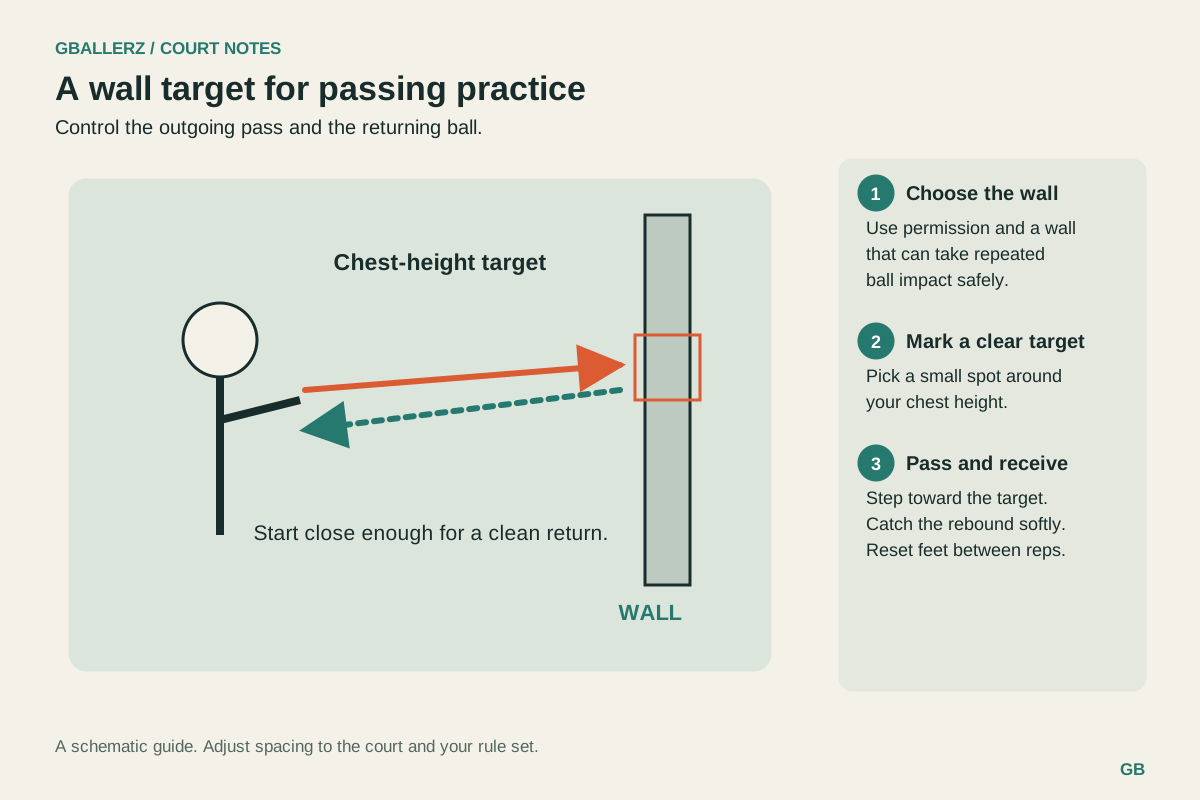
Wall passing gives you repeated touches without a partner, but the setup matters. Choose a permitted, sturdy wall away from doors, windows, pedestrians and active games. A clear target and a manageable distance make the rebound informative. The wall cannot tell you whether a pass helps a teammate move or shoot, so use this work for placement and receiving, then add partner practice when possible.
Check the space and surface
Use a wall where ball contact is allowed and will not damage property or disturb other people. Check for rough projections, fixtures and uneven sections that can deflect the rebound. Leave enough clear floor space behind and beside you. Begin with a few gentle passes to understand how strongly the ball returns. If the rebound is erratic or the area is shared with people crossing through, find another location. A convenient wall is useful only when you can send and receive repeatedly without surprising someone or chasing the ball into traffic.
Make one small target
Use an existing visual feature or a removable marker only where permitted, at roughly the height of a teammate's comfortable receiving hands. Stand close enough to hit it consistently with a controlled chest pass. Count ten attempts and note where the misses land. If most drift to one side, inspect your release direction and body angle rather than immediately moving the target. Keep the pass firm enough to return but soft enough to catch calmly. The target should make accuracy visible, not encourage maximum throwing force.
Practice receiving as carefully as sending
Show your hands before the rebound arrives and absorb the catch comfortably. Secure the ball instead of batting it straight back without control. After several stationary repetitions, take a small side step between passes and re-establish balance before the next release. Watch the flight so the rebound does not surprise you. If you regularly catch near your face or below your knees, adjust the target, distance or force. The wall work should produce a useful receiving window, rather than normalize awkward catches that happen because the setup never changes.
Vary the task with a clear purpose
Try a few bounce passes if the floor and wall produce a predictable return, using a different target height as needed. For another set, receive, make a controlled pivot and pass back from a new angle. Respect the footwork rules you play under. Avoid rapid, uncounted repetitions that turn sloppy as you tire. Finish by comparing your first and last ten chest passes from the same spot. Note accuracy and clean catches separately. When you next work with a partner, ask whether the improved placement also gives them an easier next action.
After checking permission and space, complete two ten-pass target sets with a short receiving drill between them and record misses by direction.
Something unclear? Send a correction or question.