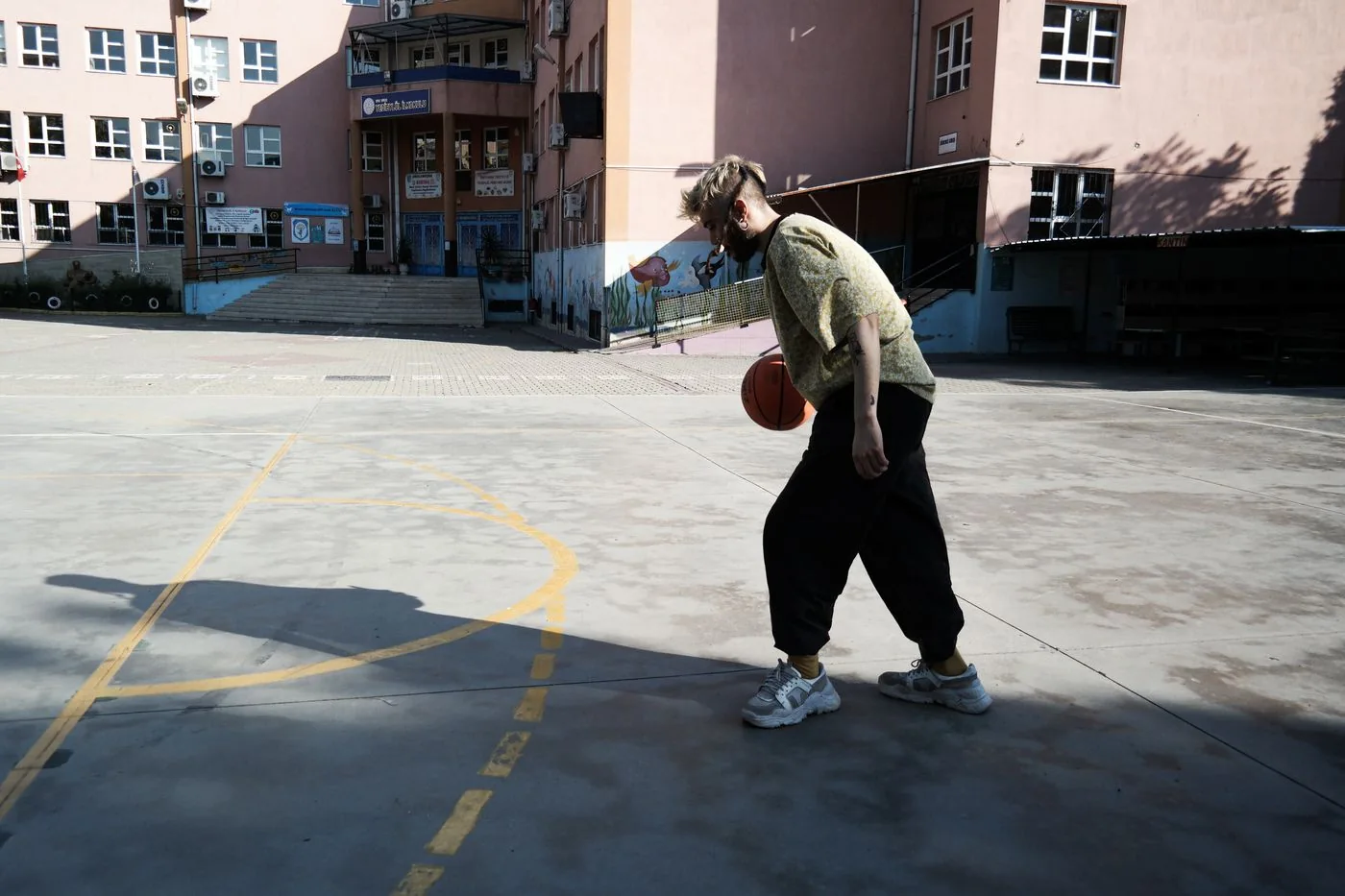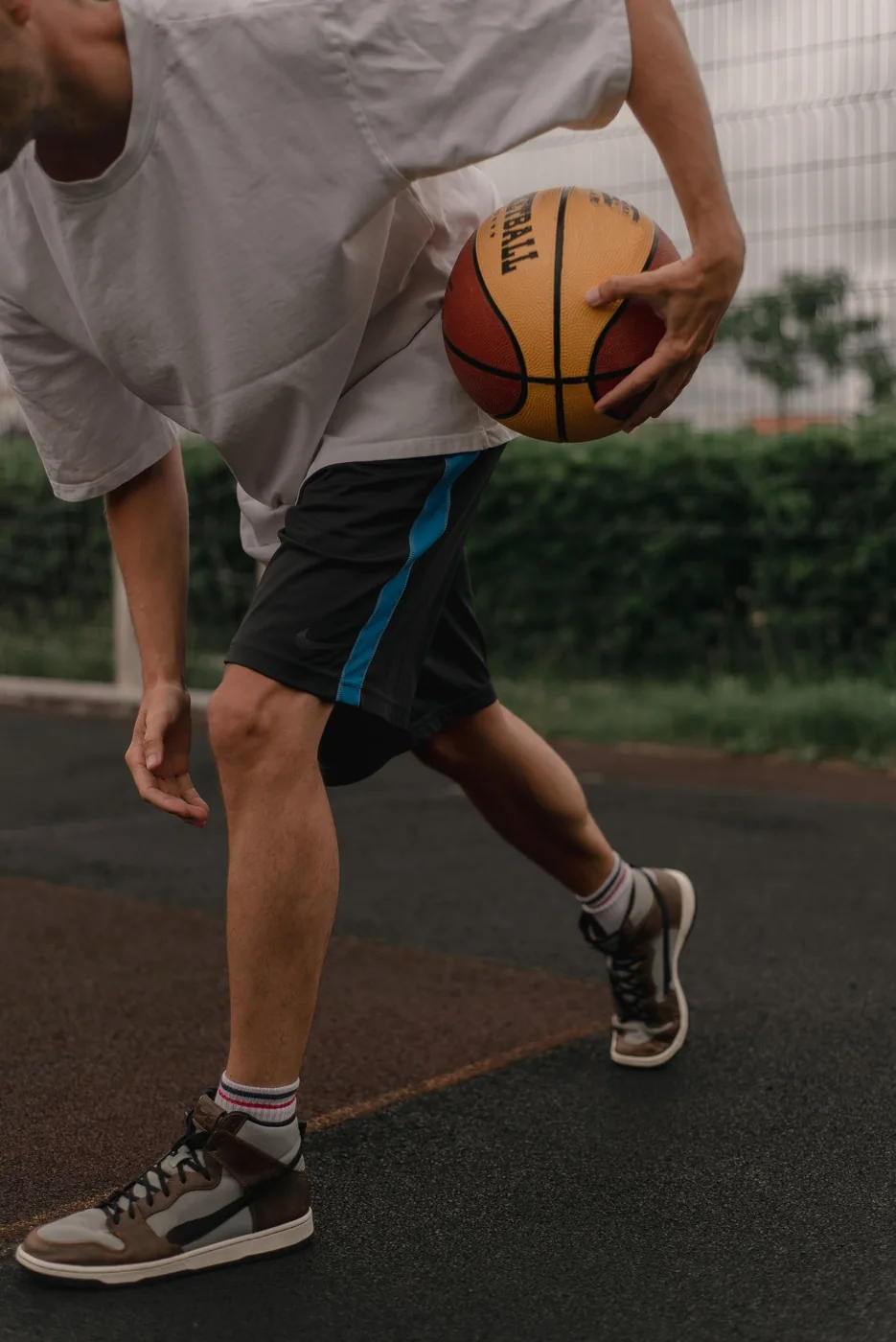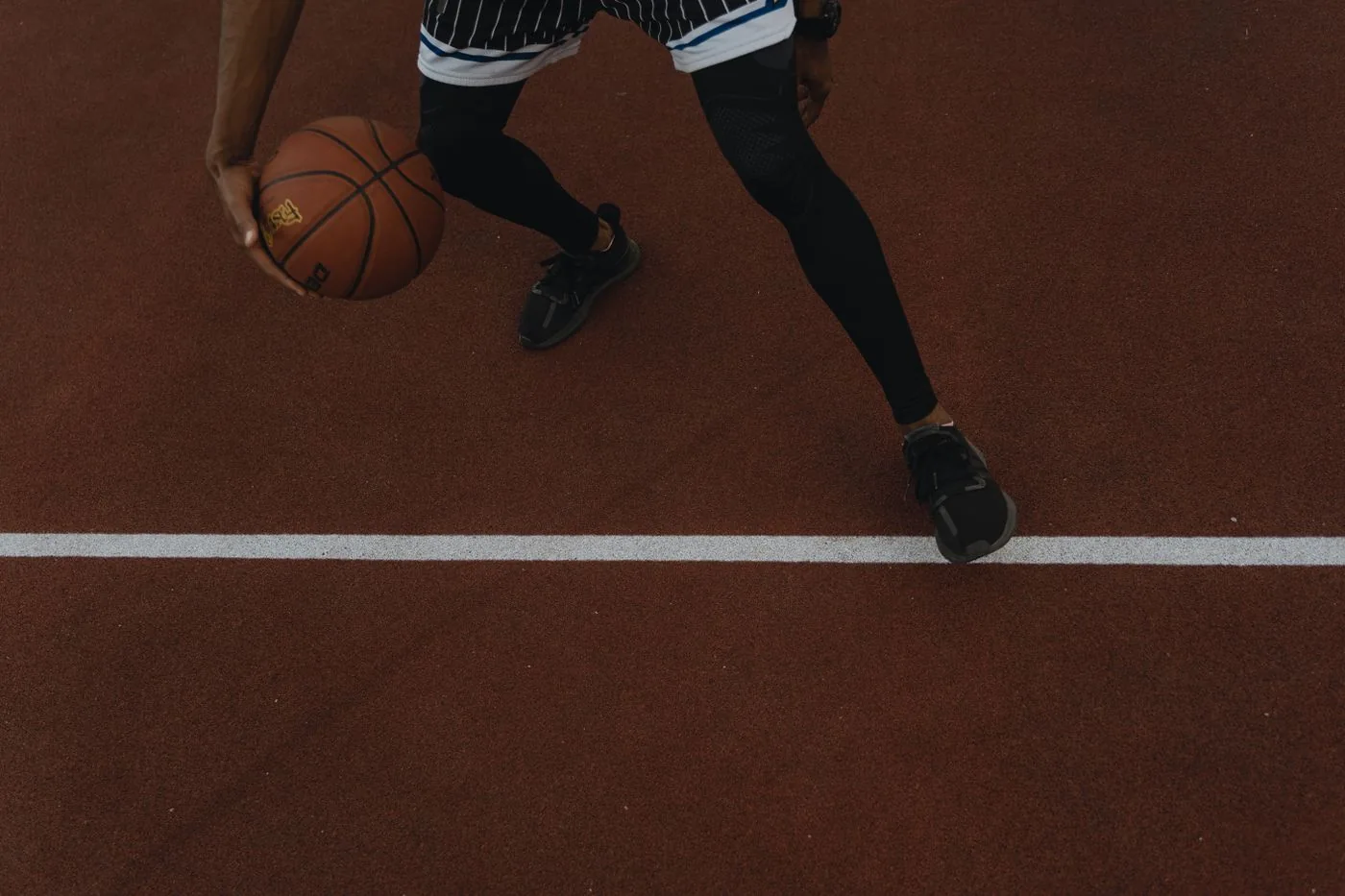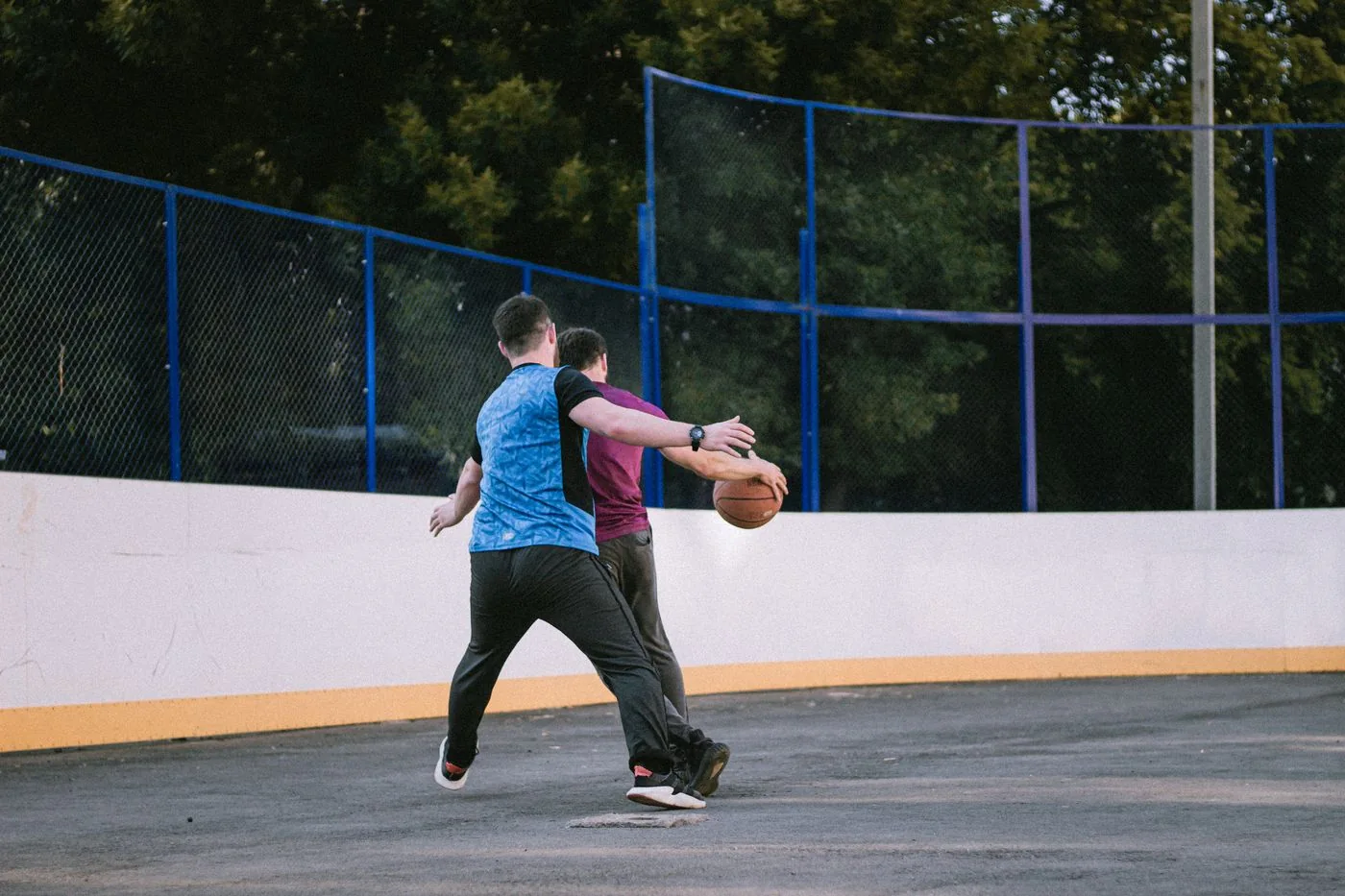
Protecting a dribble starts with putting useful space between the defender and the ball. Your body can occupy that space without your free hand shoving the defender away. When pressure increases, many players reach with a stiff arm or turn completely blind to the court. A better practice task is to keep a controlled bounce on the far side, maintain a view of an outlet and move away before the defender crowds the ball.
Choose the far side
Ask a partner to stand at arm's length to your right while you dribble with your left hand. Turn slightly so your torso lies between their position and the bounce. Keep your feet free to move; do not lock yourself sideways into a narrow stance. Have the partner walk slowly around you, and move the dribble to the side with more space. Begin without reaching attempts. This makes the relationship clear: protection comes from the defender's location, rather than from automatically keeping the ball in your favorite hand.
Use a relaxed free arm
Keep the non-dribbling arm bent in a natural position near your body. It can help you feel where a nearby person is, but it should not extend into a push or become a moving barrier that displaces them. If the drill requires force to keep the defender away, increase the starting distance and improve the angle. Practice with an observer who can call out a straightening elbow. Correct that habit early, while the pressure is light, so the arm does not become your main response under stress.
Move out of the squeeze
Set a narrow pressure area on the wing using court markings. Enter it with a partner shading you from one side, then use a controlled backward or diagonal dribble to regain room. Look toward the middle of the court as you move. Retreating a little can make a pass possible and keep the defender from setting the terms of every step. Avoid drifting toward a sideline simply because it is behind you. Decide where there is space before taking the escape dribble, and stop if the route is occupied.
Finish with an outlet
Add a second partner several steps away with a clear passing lane. The defender may reach gently for exposed bounces while you protect the dribble and find the receiver. End each repetition with a catchable pass. If you turn your back so completely that you cannot locate the outlet, open your stance earlier or retreat to a better angle. Count possessions that end with control and a useful pass. A long stretch of shielding that leads nowhere is less valuable than a short escape that reconnects you with a teammate.
Work through eight pressure-and-outlet repetitions, checking that your ball position and feet create separation while your free arm remains relaxed.
Something unclear? Send a correction or question.