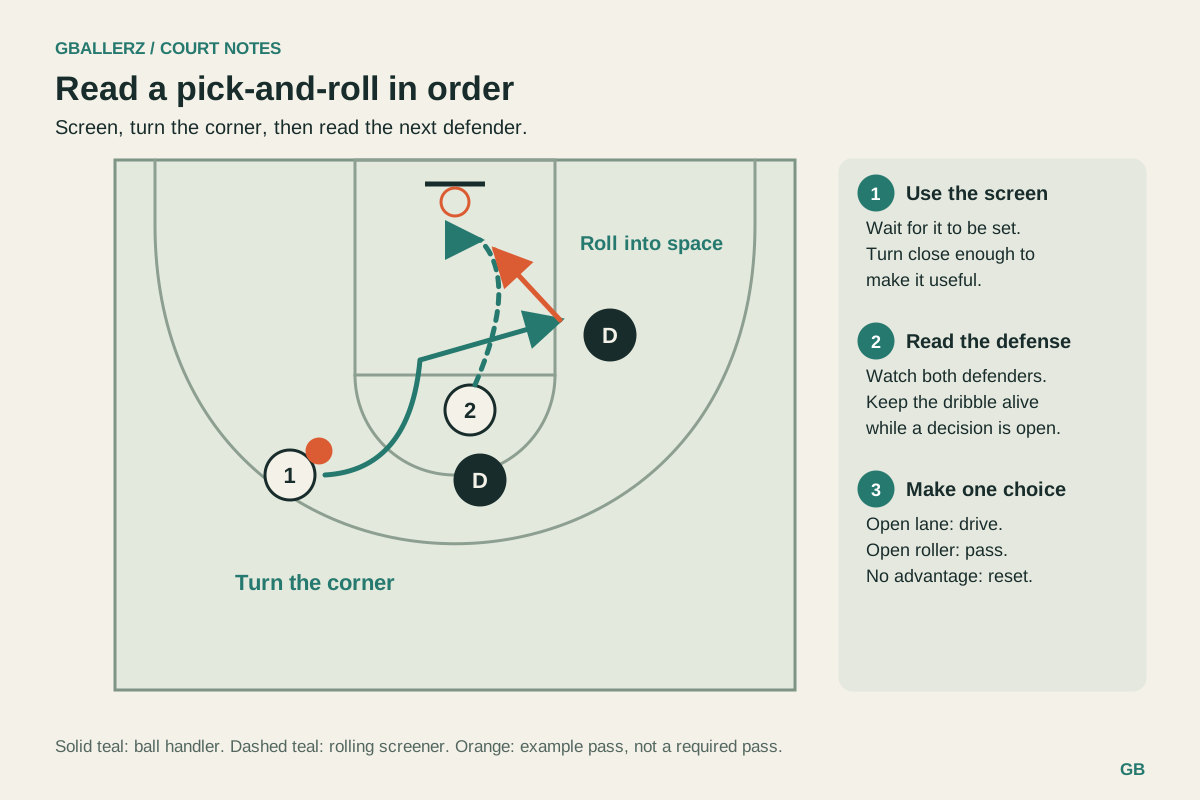
A teammate screens for you, then rolls toward the basket. Throwing the ball to them automatically is tempting, particularly when they call for it. But the screen may have opened your own path, or a third defender may be waiting in the lane. A basic pick-and-roll becomes manageable when you read one choice at a time.
Prepare the space before starting
The other offensive players need clear passing windows away from the immediate screening action. If someone stands in the rolling lane, their defender can help without giving up much. Begin with room between the handler, the screen and the basket.
Tell the screener which side you expect, then give them time to establish a legal position. Keep your dribble alive as you approach. Picking it up beside the screen removes your ability to change direction and makes it easier for two defenders to surround the ball.
Watch your defender's route
If your defender trails behind the screen, you may have a brief advantage toward the lane. Stay under control and look at the next defender rather than celebrating that the first one is behind you. A controlled advance preserves both the shot and the passing option.
If the defender goes well under the screen, there may be room for a shot within your reliable range. If that is not your shot, keep the possession moving. You can use a new angle or pass; taking an unfamiliar jumper just because it is technically open helps the defense.
Read the screener's defender next
If that defender steps up toward the ball, the roller may become available behind them. Look for a pass you can deliver without throwing through an outstretched arm. A bounce pass, short pass or pass around the defender can fit different angles.
Keep an exit when both defenders commit
If the defender stays back near the basket, rushing into their body is not required. You may have a controlled short shot or space to continue probing. If both defenders pressure you, retreat or release the ball early to an open teammate rather than squeezing between them without a clear gap.
Remember the defender away from the ball
The rolling teammate is not necessarily open just because their original defender left. Another defender may have rotated from the corner or opposite wing. Follow that movement with your eyes. The better pass may go to the player whose defender is now protecting the basket.
The roller can help by catching in a short open space and making the next decision. They do not always need to sprint all the way to the rim. An earlier catch can turn two defenders on the ball into a manageable advantage for everyone else.
Practice two choices before adding five
Use two offensive players against two defenders in a limited area. Ask the defense to choose between trailing with a defender back or sending both defenders toward the ball. The handler names what happened after each repetition, then explains the chosen pass or shot.
Add a third offensive player and helper only when the first reads feel clear. Judge the repetition by whether the decision matched the defense, not whether a difficult shot happened to fall. That distinction keeps the drill focused on recognizing useful options.
Read the ball defender, then the screener's defender, then the helper; let those movements determine the next action.
Something unclear? Send a correction or question.