Standing beside a defender does not guarantee a useful screen. The ball handler needs an angle to use, the screener needs time to establish position, and everyone needs space to move without a surprise collision. Begin with a cooperative walking-speed exercise before adding the pressure of a live possession.
Choose the angle and establish legal position
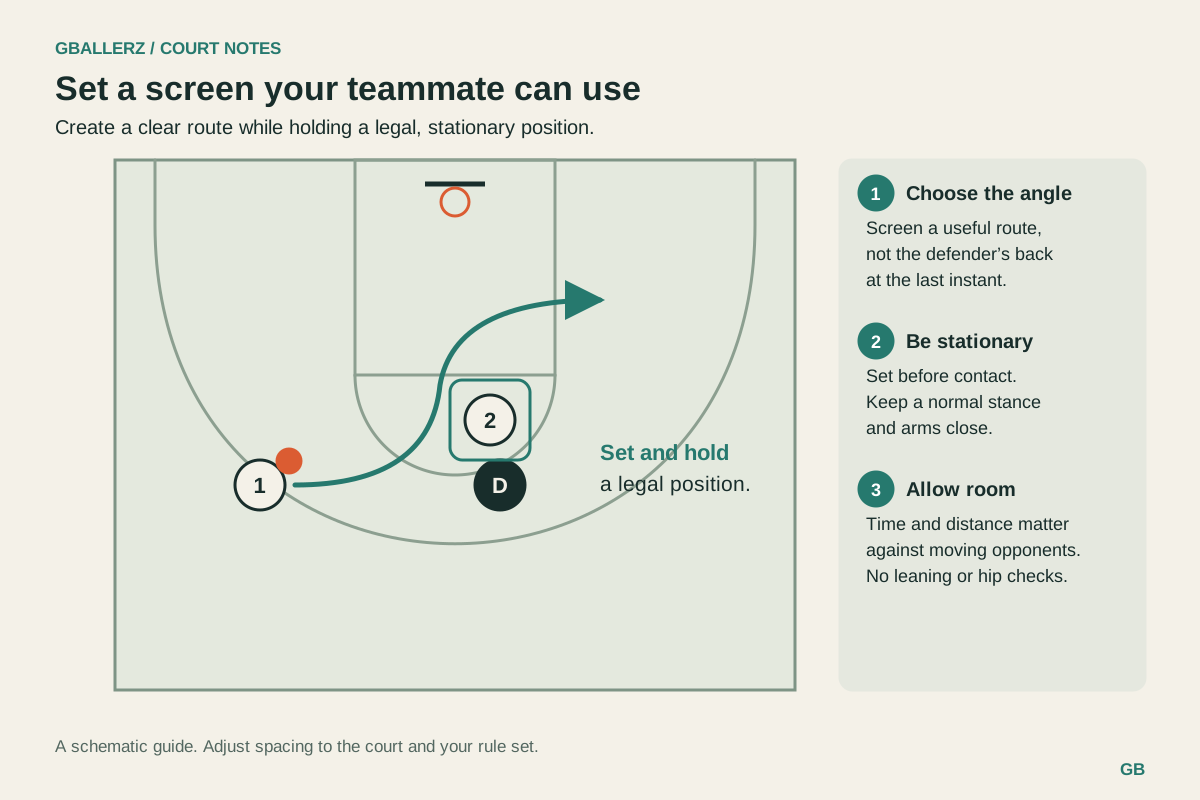
Identify which defender you intend to delay and where you want your teammate to go. A screen on the ball might open a route toward the middle. An off-ball screen might help a teammate reach the wing for a pass. The target should be clear before you approach.
Approach at a controlled speed and give the teammate a visible signal or short call. A screen that arrives after the teammate has already driven often contributes only another body in the lane. The useful moment is when the receiver can still choose and use the route.
NBA screening guidance distinguishes the defender's ability to see the screen and the room required for a moving opponent to avoid it. Legal screening is more than briefly stopping your feet. Time, distance and contact matter; the applicable competition's rulebook governs the exact judgment.
For practice, use a stable stance with arms close to your body and allow a clear avoidance route. Do not lean, extend a hip, spread an elbow or step sideways into the defender to salvage a missed angle. If the defender evades you, accept it and move to the next action.
Give the ball handler a readable shoulder
The ball handler should wait until the screen is established, then approach close enough that the defender cannot easily squeeze between both offensive players. That does not mean aiming for a collision. Keep control and read the defender's route.
If the defender takes away the expected side, forcing the original plan can create congestion. The handler may use the other direction or pass. The screener should not slide along with the defender while maintaining contact. Repositioning for a new screen requires establishing a new legal position.
Do something useful after the screen
Once the teammate has used the screen, turn to see the ball. Roll toward an open area, move out for a pass or hold space briefly according to the team's plan. Do not remain as a stationary obstacle after the useful screening moment has passed.
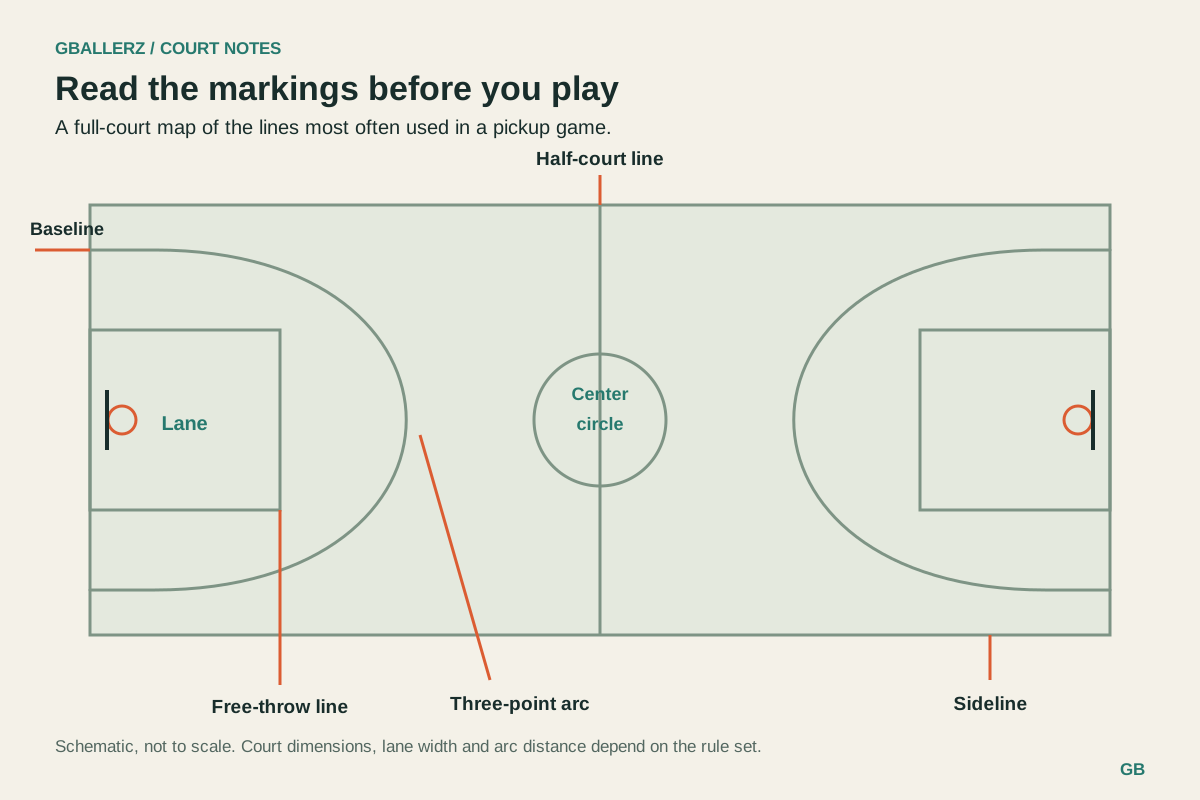
A roll is valuable only if the lane can receive it. If another teammate already occupies the rim area, a short opening near the free-throw line may offer a better catch. Present your hands and expect the pass without demanding it on every repetition.
Progress from walking to reading
Begin with a handler, screener and defender moving at walking speed. The defender chooses to trail or avoid the screen, and the offense identifies the resulting space. Repeat from both sides of the floor before adding a second defender.
Stop any repetition that turns into pushing or surprise contact. Review whether the screen was early, whether the handler left enough time and whether the next movement cleared the area. The goal is an advantage created by positioning, not proof that you can knock someone out of the play.
Set the angle early, respect the defender's space, and prepare a useful next action after the screen.
Something unclear? Send a correction or question.