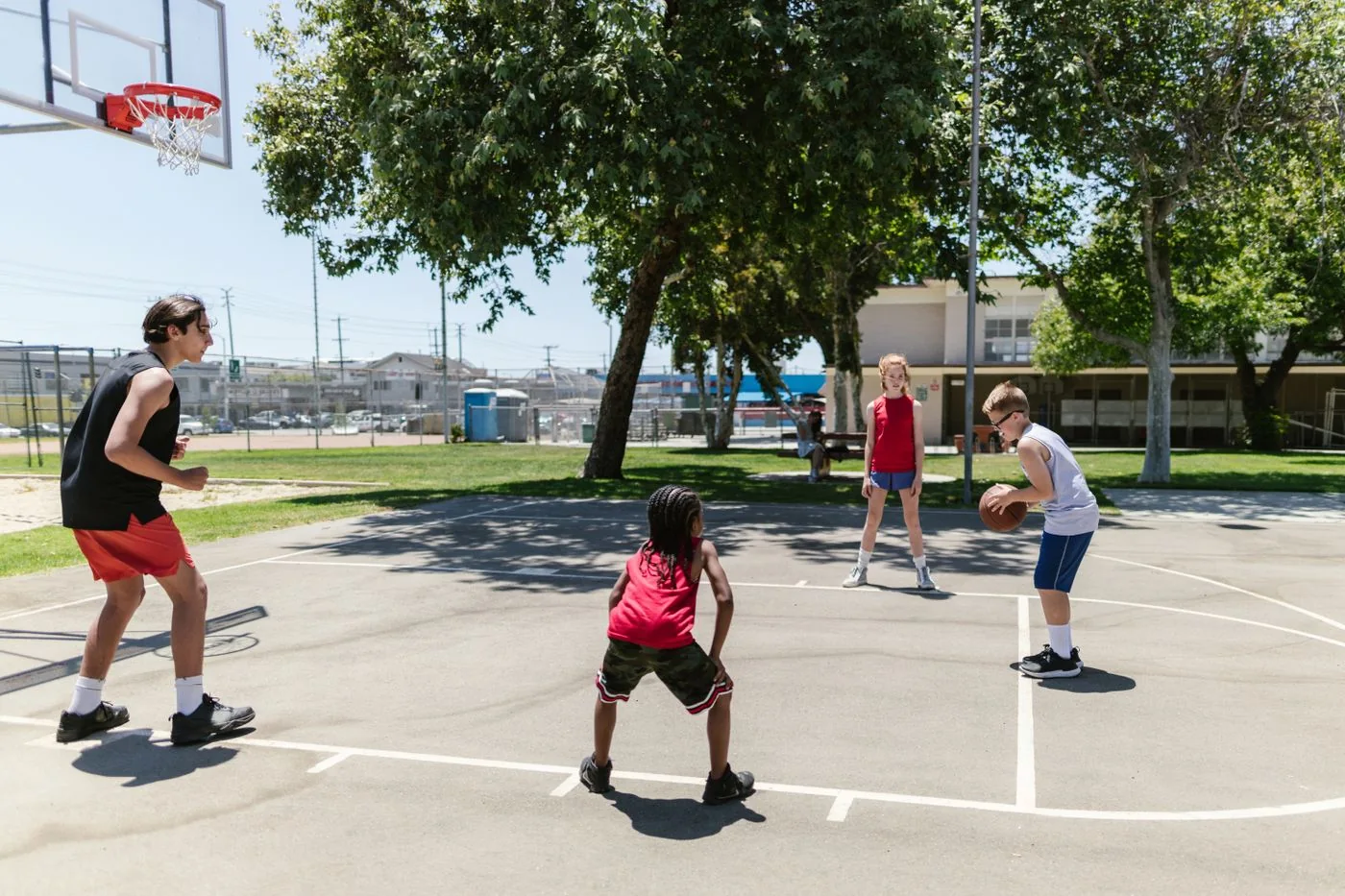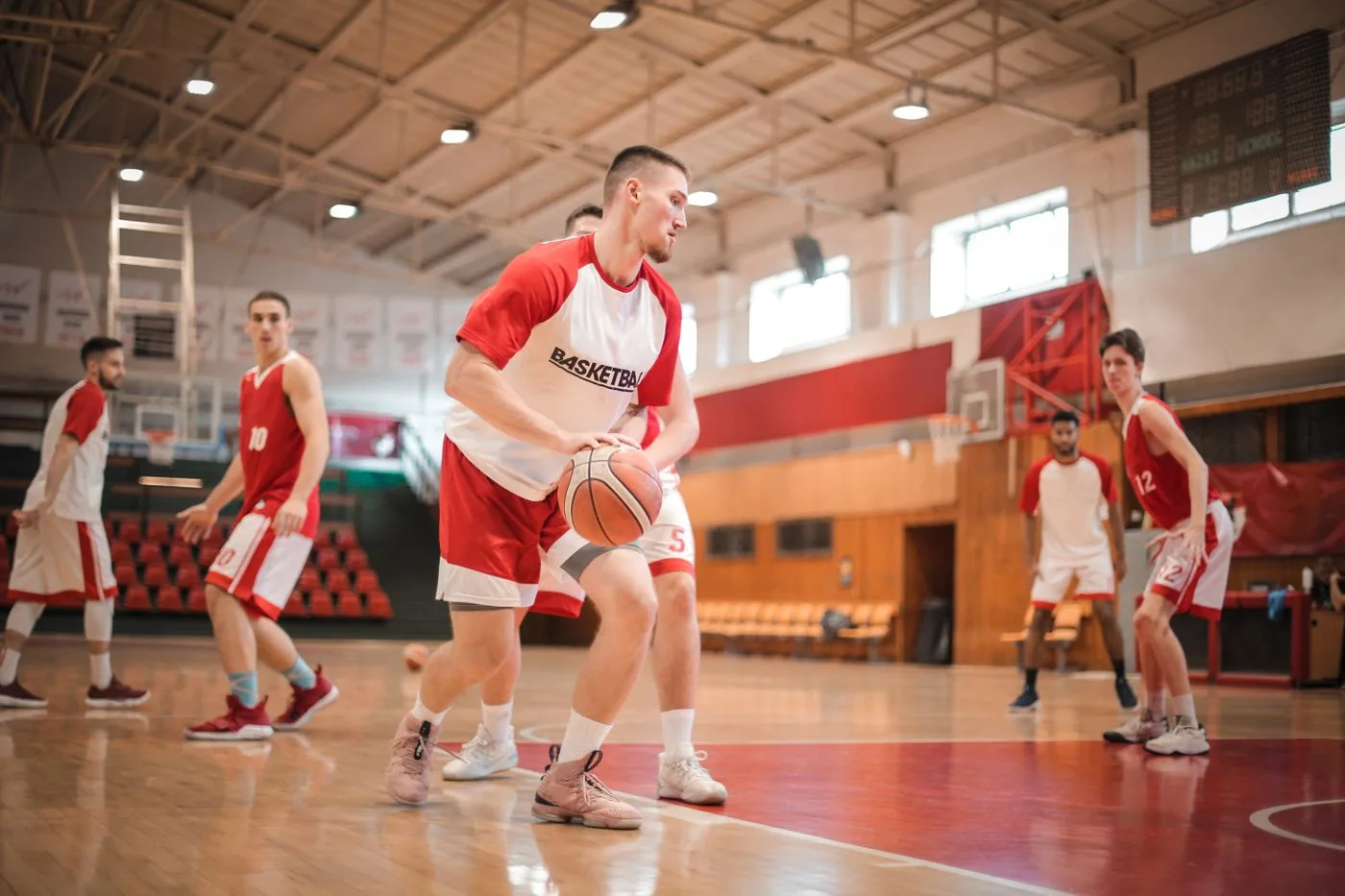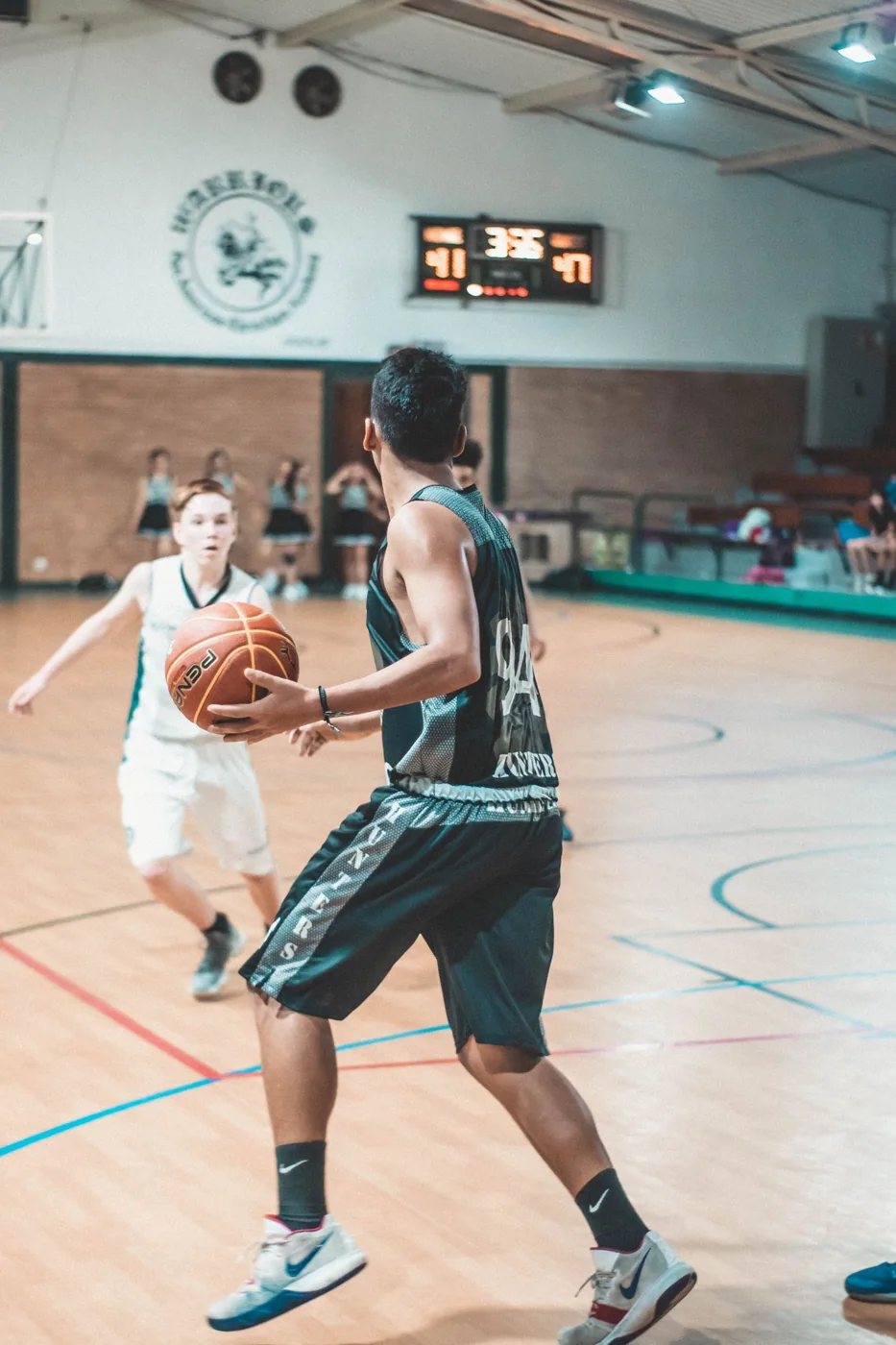
Your player passes, and you watch the ball travel across the court. A moment later, they cut behind you for a catch near the rim. Off-ball defense asks you to keep two sources of information: what the ball is doing and where your assignment is moving. Your stance and position can make that task much easier.
Open your view
Turn your body enough that you can see both the ball and your player without making a full rotation each time. Think of a triangle with you at one corner and the other two points at the ball and your assignment. The triangle changes as the possession moves.
Do not interpret that picture as a rigid angle you must hold. When your player cuts, the basket and passing lane become urgent references too. Adjust your feet and head rather than freezing in a textbook pose while the play develops around you.
Choose a useful distance
If your player is one short pass away, staying within a practical recovery distance matters. If the ball is far away, you may move closer to a help position while retaining awareness of the assignment. The team's defensive plan should guide those choices.
The distance also depends on the player's threat. A strong shooter demands a different recovery margin from someone positioned well outside a range they use. Avoid drifting so far toward the ball that you have no realistic route back when the pass comes.
Check the player without staring
Use quick checks of the assignment while keeping the ball in your wider view. Watch for their first movement toward the basket or into a new passing window. A cutter gains an advantage when you notice them only after they have already passed you.
Do not substitute grabbing their jersey or extending an arm to stop movement. Position yourself to respond with your feet. If they move behind your sight line, turn and reconnect quickly rather than continuing to stare at the ball while guessing where they went.
Move with the pass
A pass gives you a brief opportunity to adjust before the new receiver starts an attack. As the ball moves, update your position in relation to your player and the basket. Waiting until the receiver begins dribbling makes every defensive shift late.
Keep your route clear of teammates. If the assignment crosses to another area, communicate rather than assuming someone else will take them. In a switching defense, the exchange needs to be explicit; in a stay-with-your-player scheme, keep tracking through the movement.
Practice with a passer and cutter
Use a ball handler on the wing, one off-ball attacker and one defender. The ball handler can hold or pass, while the attacker alternates between relocating outside and cutting inside. The defender's aim is to see the start of both actions and remain able to respond.
Begin without scoring, then allow the attacker to finish after a catch. Review whether the defender lost sight of the player, chose an unworkable distance or reacted late to the pass. Correct the specific cause rather than telling them vaguely to pay more attention.
Build a changing view of ball, player and basket, and use each pass as a cue to update your position.
Something unclear? Send a correction or question.