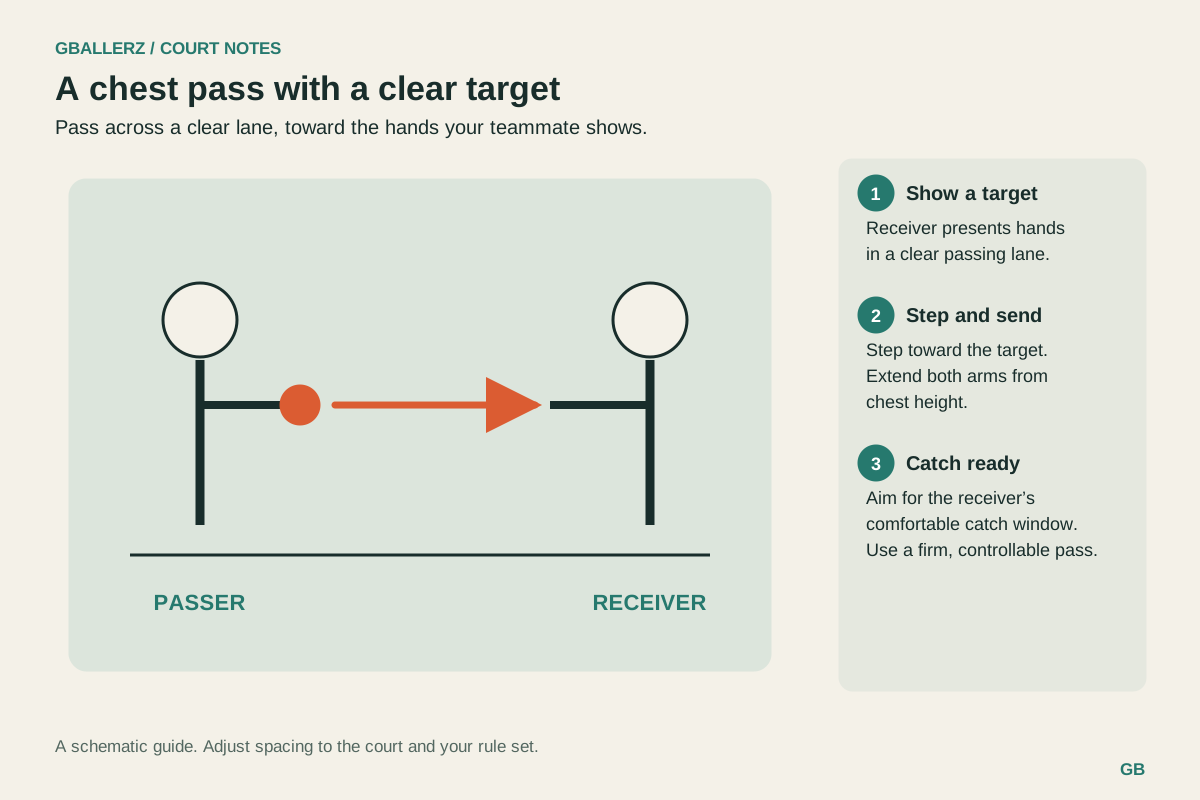
A chest pass is more than a forceful throw with two hands. It needs a clear lane, a target and enough pace to reach a teammate without making the catch difficult. In practice, pay attention to the receiver's next action. A pass that pulls a shooter away from an opening or hits a moving teammate behind the shoulder may reach the right person while still making the possession harder.
Agree on the target
Stand a comfortable distance from a partner with a clear route between you. Ask the receiver to show their hands in front of the upper torso. Hold the ball securely, step into the pass if the space and your footwork allow, and extend toward that target with a controlled release. Your hands should finish generally toward the receiver rather than sweeping outward. Begin with enough pace to make a direct flight. If the receiver has to brace against a hard impact, reduce the force before increasing the distance.
Let the receiver grade the delivery
After each small set, ask where the ball arrived: inside the hand target, too low, too high or to one side. A simple caught-or-dropped count misses important detail because a skilled receiver can rescue many poor passes. Try five deliveries aimed at the same window, then change the distance by a small amount. Keep the target consistent while you learn to adjust the force. If accuracy falls as distance increases, move closer until you can reproduce the line, rather than throwing harder and hoping the receiver compensates.
Add footwork without losing balance
Receive a pass, organize your stance and send it back without rushing. Next, catch after a small move to either side, using appropriate stopping and pivot footwork for your game. Keep your chest generally oriented toward the destination as you release. If you pass while falling away, the ball often drifts or slows. Restore a stable position first. Do not add a step after establishing a pivot just to create extra power unless that movement is permitted; a coach can help clarify the sequence you are practicing.
Recognize when the lane is closed
Put a passive defender between the two passers with hands comfortably raised. Choose whether a direct chest pass has enough space or whether you should pivot, change the passing angle or use another type of delivery. Avoid repeatedly firing into a blocked route simply because this is a chest-pass drill. Later, let the receiver relocate a few steps and show a new target. Count clean catches that allow an immediate next action. That criterion encourages appropriate pace and placement rather than celebrating a ball that arrives only after the teammate leaves their useful position.
Ask your partner to grade ten passes by location and ease of continuation, then adjust either distance or force while preserving the same clear hand target.
Something unclear? Send a correction or question.