Defensive slides help you move laterally while facing an opponent. They are useful over short distances when you can still keep your body between the ball and the basket. They are not a demand to slide slowly through every situation; once an opponent gets past, you may need to turn and run to recover. Practice the short slide carefully so you recognize both what it can do and when the situation has changed.
Start with a stance that can move
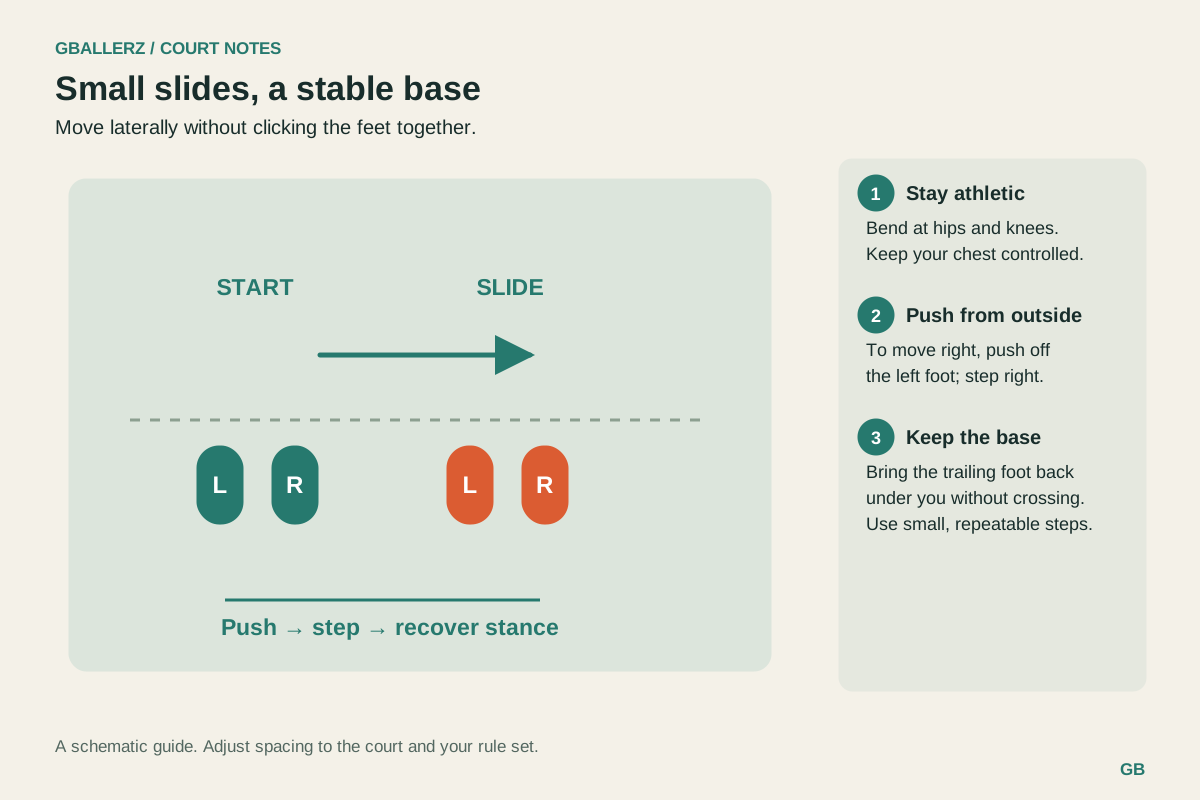
Place your feet comfortably apart, bend through the hips and knees and keep your weight available over your base. Avoid sitting so low that each step becomes a struggle. Hold your arms in a natural defensive position without tensing your shoulders. Test the stance by taking one small step left and one right. If your feet have to come together before you can change direction, begin from a slightly more stable width. You should be able to breathe, look ahead and respond, rather than simply hold a dramatic pose.
Move the near foot first
For a short slide to the right, move the right foot toward the space and let the left foot follow without colliding with it. Reverse the order to move left. Start with a few deliberate steps, keeping your head and torso relatively level. Avoid a long reaching step that pulls your balance beyond the lead foot. Use this brief progression:
- Slide two small steps toward one side and stop with your base intact.
- Return with two steps in the other direction, keeping the feet from touching.
- Let a partner point to a side so the next direction is not memorized.
Watch the body you need to contain
Have a partner walk laterally in front of you without a ball. Follow their torso rather than reacting to every hand movement. Keep enough space that a change of direction does not cause contact. The partner should vary pace modestly, with room to stop. If you repeatedly get caught leaning, shorten your first step and wait for a clearer movement cue. Add a ball only after this mirror exercise feels organized. At that point, the bounce should not distract you from the player's route through the space.
Know when to recover differently
In a short live exercise, let the ball handler move toward a marked destination at moderate speed. Slide while you can remain in front. If they get clearly past your hip, turn and run toward a recovery position instead of attempting huge sideways steps or reaching from behind. Reset and discuss what opened the lane. You might have arrived too close, leaned toward a fake or used a base that could not change direction. Finish with a slower mirror set that corrects that specific issue before increasing the pace again.
Use short mirror sets with a partner and keep track of whether a lost position came from stance, an oversized first step or reacting before the opponent moved.
Something unclear? Send a correction or question.