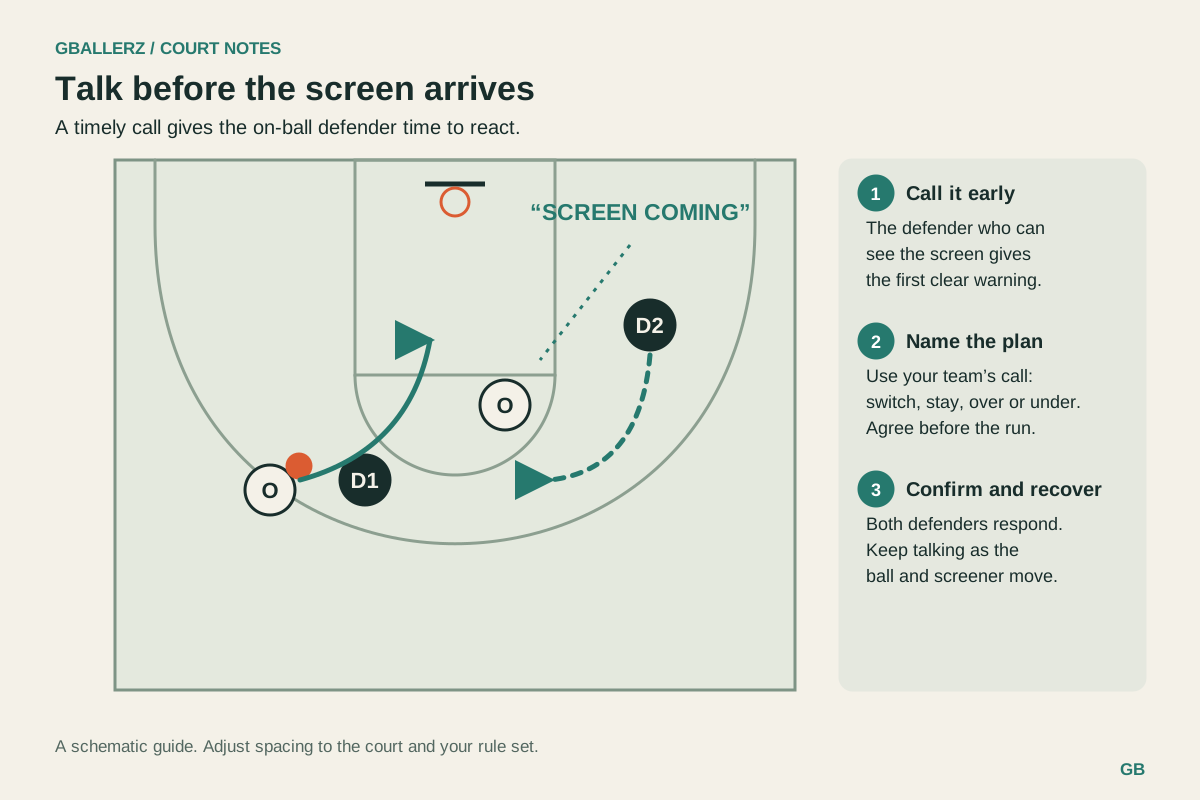
Hearing 'screen' after your shoulder hits someone provides information too late to use. A useful warning tells your teammate where the screen is coming from and what the defense intends to do. The exact words can vary by group, but timing and shared meaning should remain consistent throughout the game.
Choose words everyone understands
Before play, agree whether left and right describe the screened defender's perspective. Some teams use other court-based language; whichever system you choose, make it explicit. A teammate should not need to solve the caller's viewpoint while tracking a dribbler.
Separate the location call from the coverage call. Location identifies the incoming screen. Coverage tells the defenders whether to switch, stay attached, go under or use another planned response. Shouting several conflicting instructions at once can be less helpful than one short, agreed phrase.
The screener's defender sees it early
If you guard the player approaching to screen, you often have the clearest view of the action. Call while they are still moving into position. Continue tracking both your player and the ball so the warning is followed by useful support.
Avoid waiting to see whether the screen becomes a perfect one. An early warning still lets the ball defender adjust if the screener slips away instead of stopping. If the expected action changes, update the call briefly rather than assuming your first message covers everything.
The ball defender should respond
A short acknowledgment tells your teammate the information arrived. Then execute the agreed coverage with controlled movement. Hearing a warning does not mean you should turn your head completely away from the ball and search for the screener.
If the plan is to stay with the handler, maintain the route that the coverage requires. If it is to switch, make the exchange clear before both defenders follow the same attacker. Switching works through two coordinated responsibilities, not a single person shouting the word and abandoning the play.
Keep talking after the first contact
The screener may roll, move outside or set another screen. Identify that next action so the defense does not solve the initial problem and then lose the open player. The defender farther from the ball may need to warn about the roller or provide brief support.
Calls should describe what is happening. Avoid using communication time to blame a teammate for getting screened. A clear 'roller' or 'I have ball' can save the possession; an argument about who should have heard the first call cannot. Discuss mistakes after the play has stopped.
Practice at conversational speed
Use two attackers and two defenders. Have the screener approach from either side while the defense calls location and the chosen coverage. Start at a walking pace so everyone can confirm that the same words mean the same thing.
Add a slip or a second screen after the initial movement becomes clear. Review whether the warning was early enough and whether the defenders completed the exchange. Volume alone is not the target. A calm, timely call with a shared meaning is more useful than a loud description of an event that already happened.
Agree on the language, call the screen early and keep communicating until both defenders know their next assignment.
Something unclear? Send a correction or question.