Close-range shooting gives you a smaller task to observe. You can see how the ball leaves your hand and where it lands without using most of your effort just to reach the rim. The purpose is to build a movement you can repeat as distance increases. Standing close and flicking the ball carelessly still produces careless repetitions, so give each small set a question and a target.
Choose a manageable starting spot
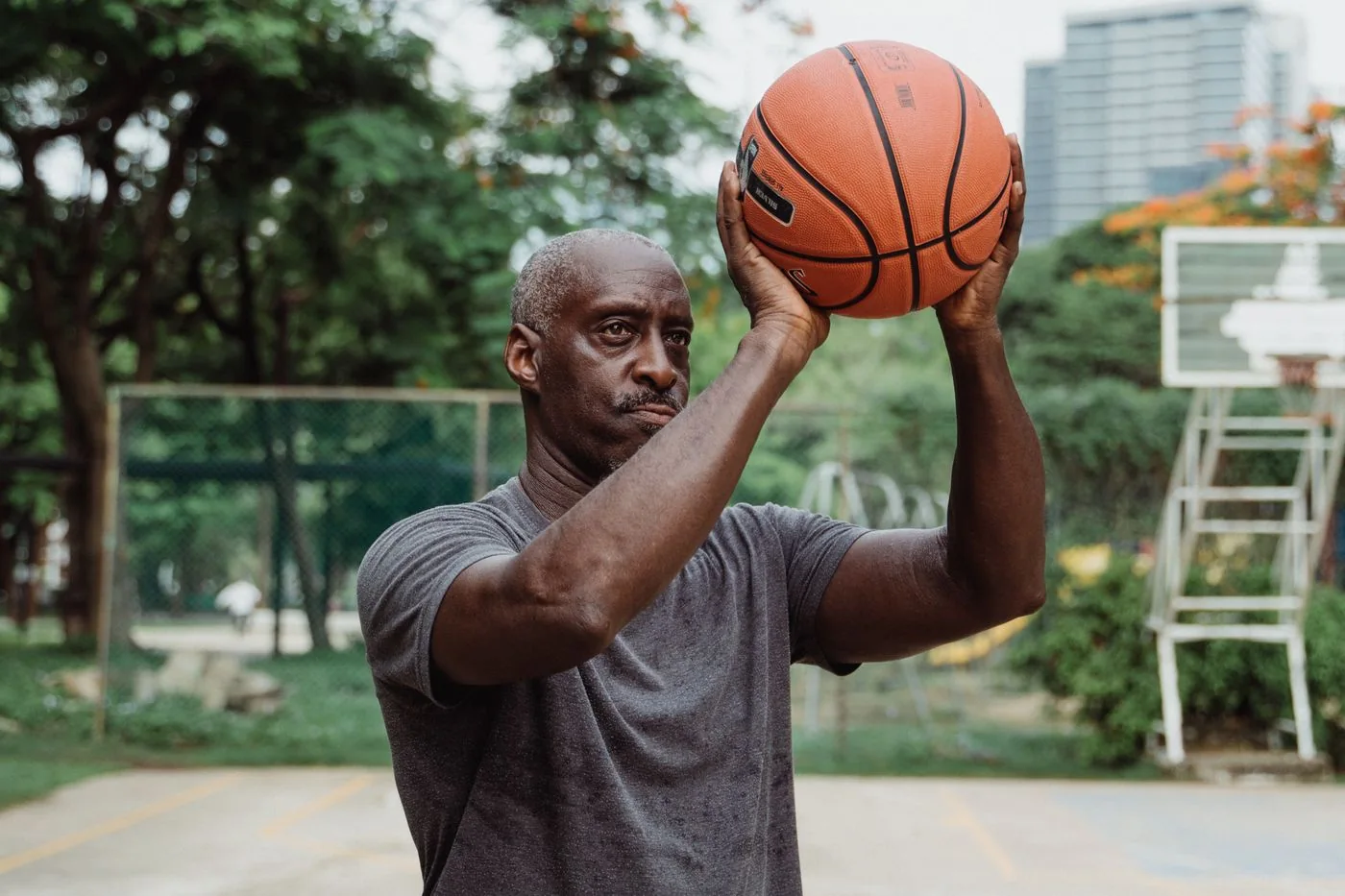
Begin a few steps from the hoop at an angle where you can see the rim clearly. Pick a distance that lets you send the ball upward without forcing your shoulder or heaving from your chest. Set your feet comfortably and let the ball rest in your shooting hand with the other hand helping it stay steady. Make several shots while noticing whether your balance finishes over your feet. If you regularly step sideways after releasing, reduce the distance and check your starting stance.
Observe one part of the release
For the first set, watch whether the support hand stays quiet as the shooting arm extends. For the next, notice the direction the ball leaves your fingertips. Choose one observation at a time; thinking about knees, elbow, wrist and follow-through during every attempt can make a simple shot feel crowded. A short recording from the front can help reveal obvious sideways movement. Use it to find a consistent pattern across several shots, not to judge your form from one awkward frame or to imitate another player's exact posture.
Separate straight shots from angled shots
Take a small set from directly in front, then another from each side. Aim for the rim on the straight-on set. On an angled set, you may deliberately use the backboard, but decide before shooting so the result answers a clear question. Record the intended target along with makes. A ball that banks in accidentally is a made basket, but it does not show that your chosen line was accurate. Moving around the hoop also keeps you from learning one unusually comfortable spot and calling it general control.
Step back only with a reason
After a balanced set, move back one small step and keep the same general rhythm. Look for changes that appear with the new distance: a lower release, a rushed support hand or a forward stumble. If those changes become frequent, return to the previous spot and rebuild the motion. You do not need to earn distance through a dramatic streak of makes. Consistent balance and a controllable ball flight are more useful signals than a few shots that happen to fall despite an obvious struggle.
Finish with a game-like catch
Use the final few attempts to receive a gentle pass or a self-toss, settle your feet and shoot from your comfortable range. This adds a small coordination demand without abandoning the close-range focus. Keep the set brief enough that you can remember the cue you chose at the start.
Choose three nearby shooting spots, make a small set at each and record one repeatable observation before increasing your distance.
Something unclear? Send a correction or question.