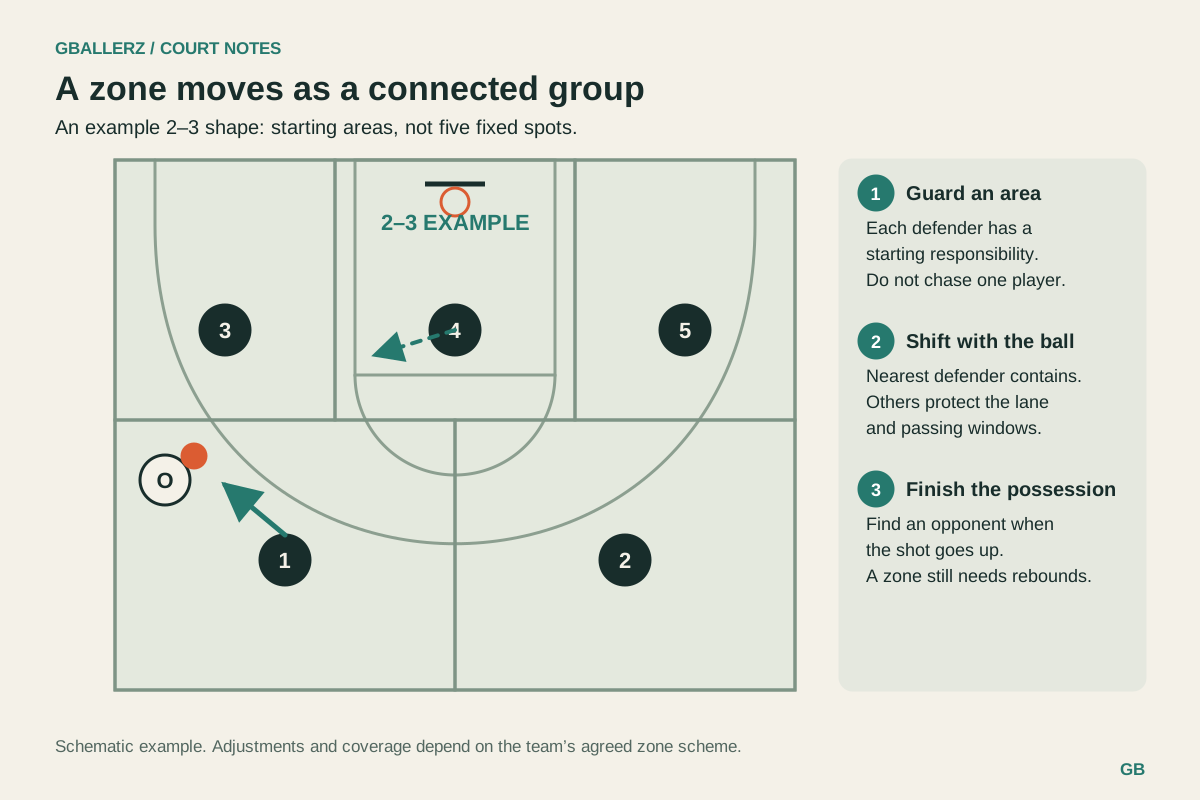
A two-three zone is easy to draw: two defenders above three defenders. It is harder to play well because the ball and attackers keep moving. The formation describes a starting relationship. Each player still needs to contest shots, track cutters, help teammates and find someone to box out when a shot goes up.
Begin with the team's responsibilities
Ask which defender takes the ball in each area and who provides support behind them. In a basic two-three shape, the upper pair often begin near perimeter threats while the lower line protects areas closer to the basket. Actual responsibilities change with the coach's system and the opponent's positioning.
Do not assume every two-three zone rotates identically. Some teams extend pressure, some protect the lane more conservatively and some adjust to a particular shooter. Clarify the plan instead of copying one diagram and calling every different movement a mistake.
Shift while the ball travels
When a pass changes sides, defenders need to move together. The player nearest the new receiver prepares to contest, while teammates adjust behind and beside them. Moving only after the receiver begins a drive leaves openings between the first defender and the support.
Keep a view of players entering your area. You are not excused from tracking a cutter because they started elsewhere. Communicate the movement and make sure a teammate has actually received the responsibility before letting the cutter go.
Protect the gaps without crowding
Attackers often look for space between defenders, including catches near the middle of the lane or short baseline areas. One defender may need to approach that catch while others cover the likely next pass. If everyone collapses on the ball, the offense can find an unattended shooter.
Name the next defensive job
A useful response keeps pressure on the ball and accounts for nearby threats. Talk about who has the receiver and who remains with the basket area. Reach from a balanced stance rather than swarming in with arms and bodies that the passer can easily avoid.
Rebounding still requires a person
After a shot, turn from area responsibility to locating an opponent and the ball. A player who starts farther away may be running into your space for a rebound. Waiting beneath the hoop and looking upward lets them build momentum without resistance.
Make legal position first, then pursue the rebound. Teammates should account for different opponents rather than all seeking the same convenient matchup. A zone possession can be well defended until the shot and still fail if nobody takes responsibility for the rebounders.
Learn with a slow ball reversal
Place five attackers around the perimeter and interior with five defenders in the chosen zone. Move the ball slowly from wing to top to opposite wing. Pause at each catch and identify the on-ball defender, support and possible cutter.
Then allow an interior pass and a shot. Finish every repetition with a rebound rather than stopping when the ball leaves the shooter's hands. If the group is playing a youth competition, check whether zone defense is permitted for that age division; teaching and competition guidelines can differ.
Treat the zone as coordinated coverage: shift together, communicate cutters and finish the possession by finding rebounders.
Something unclear? Send a correction or question.