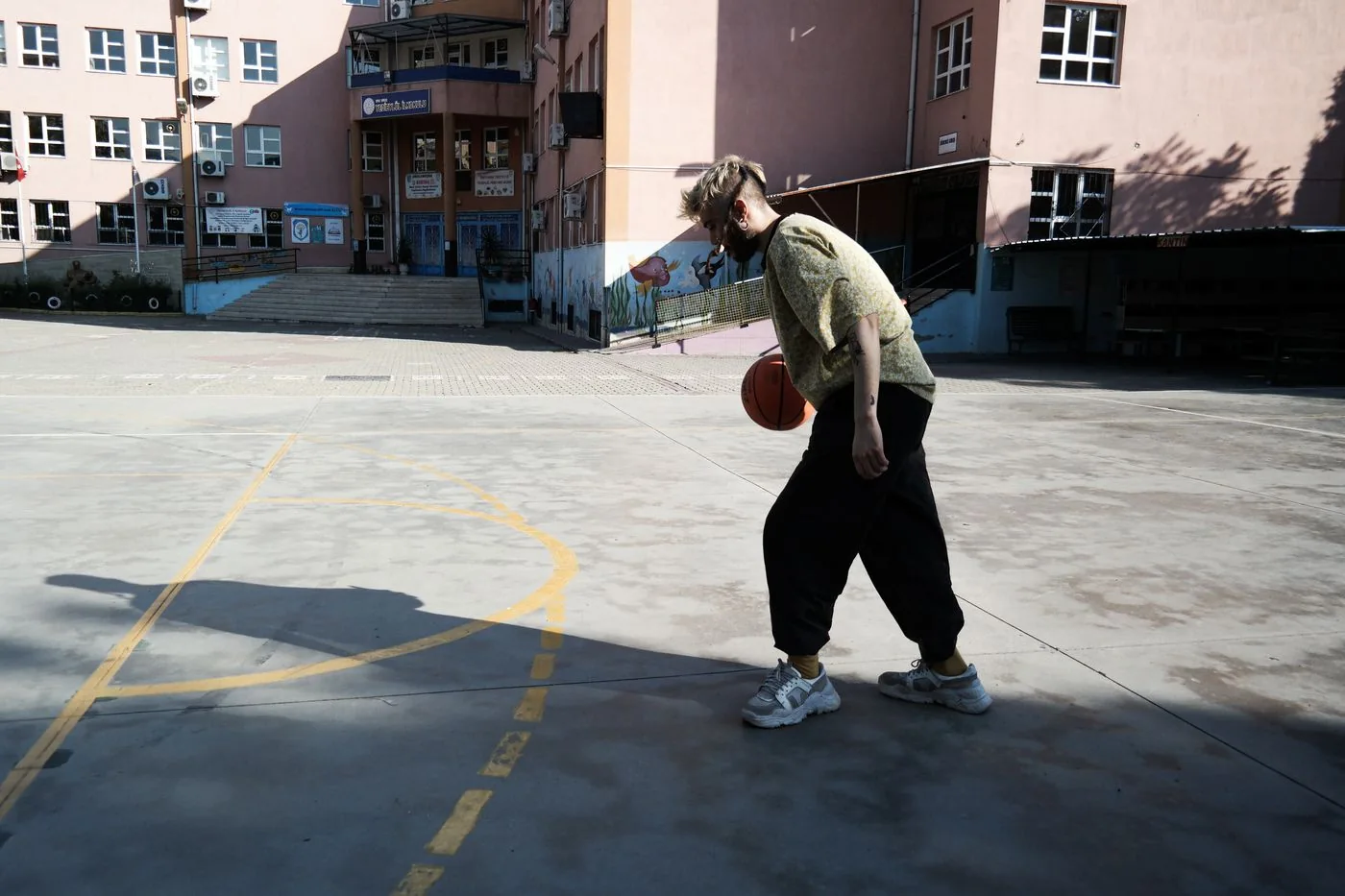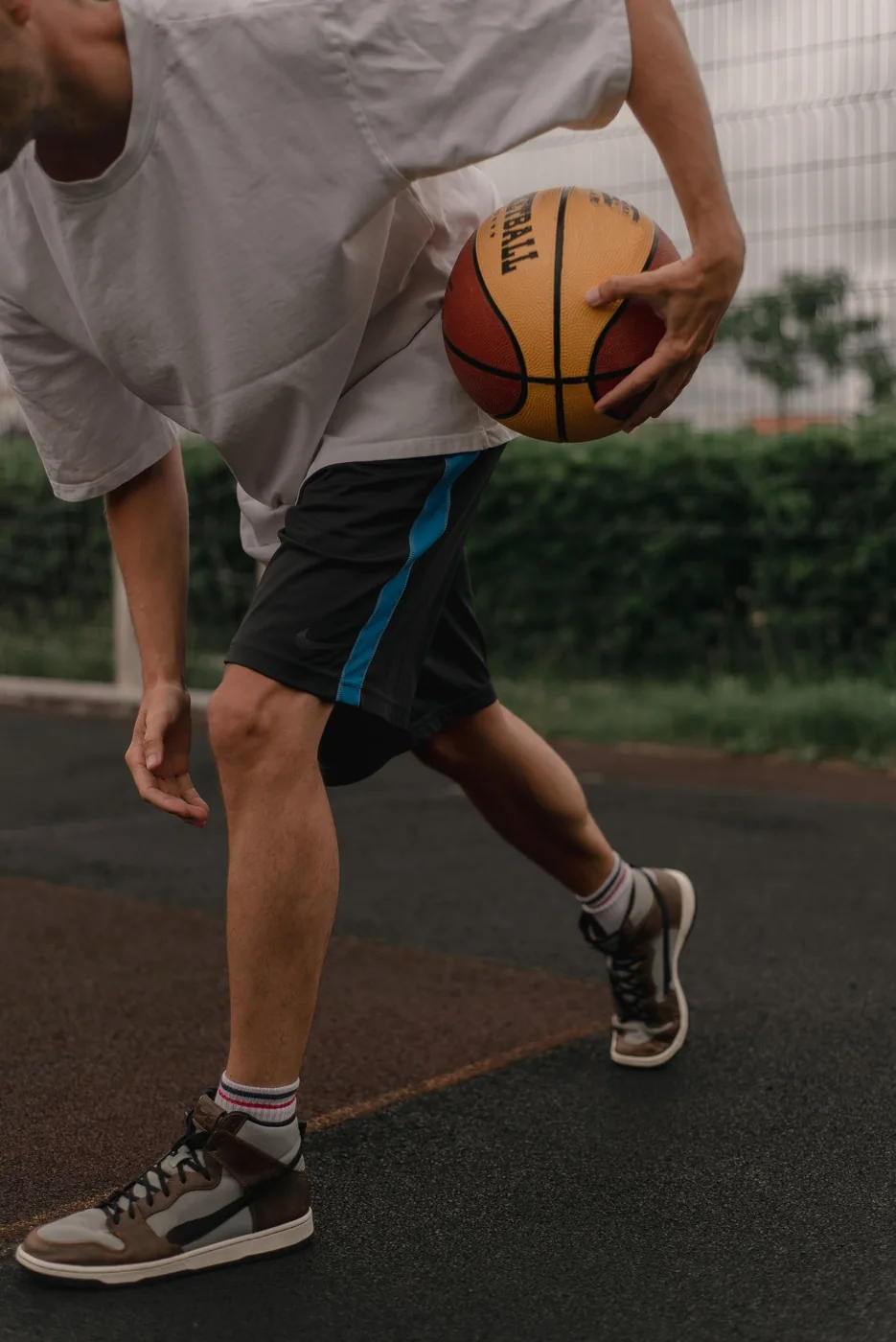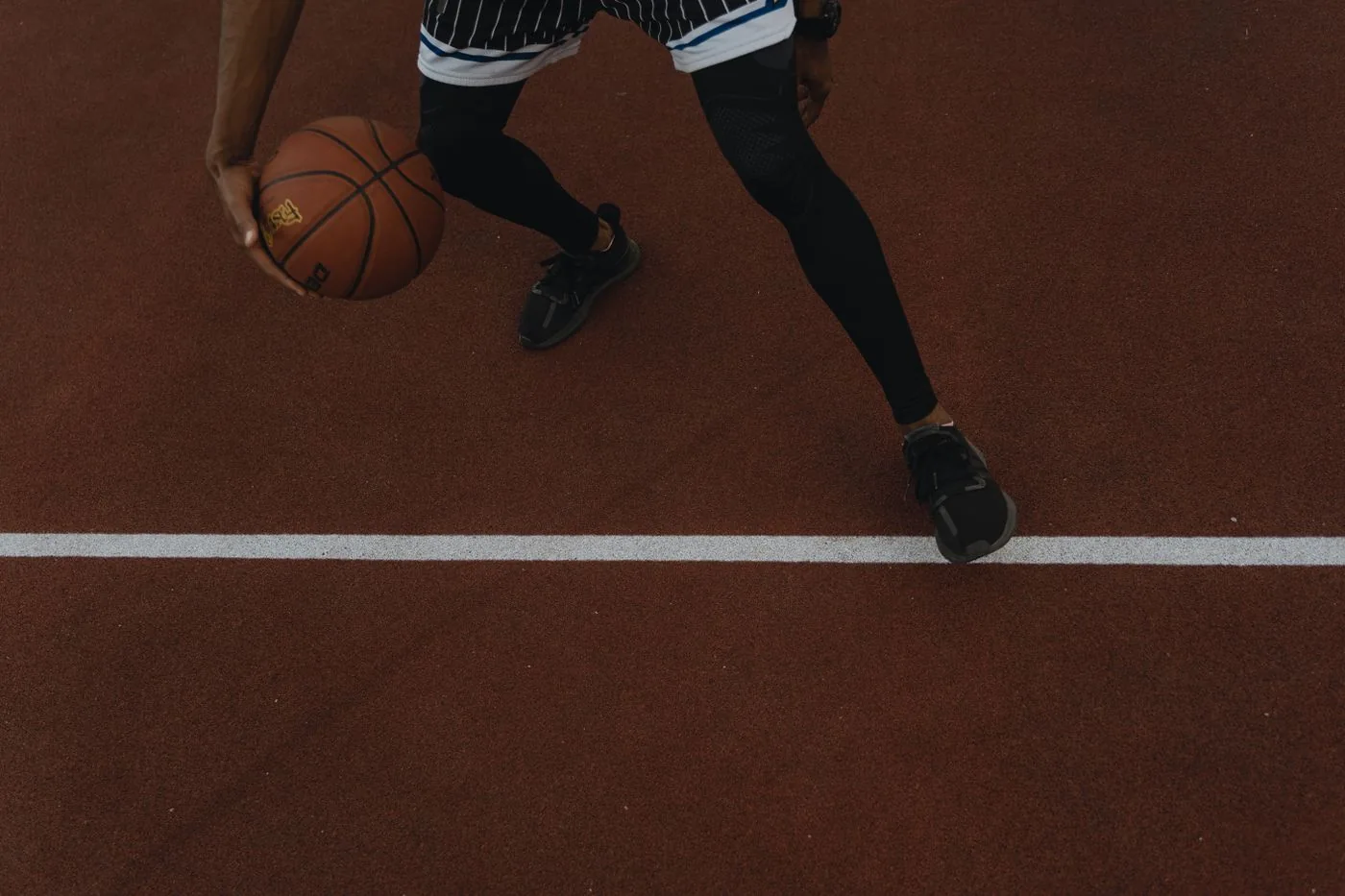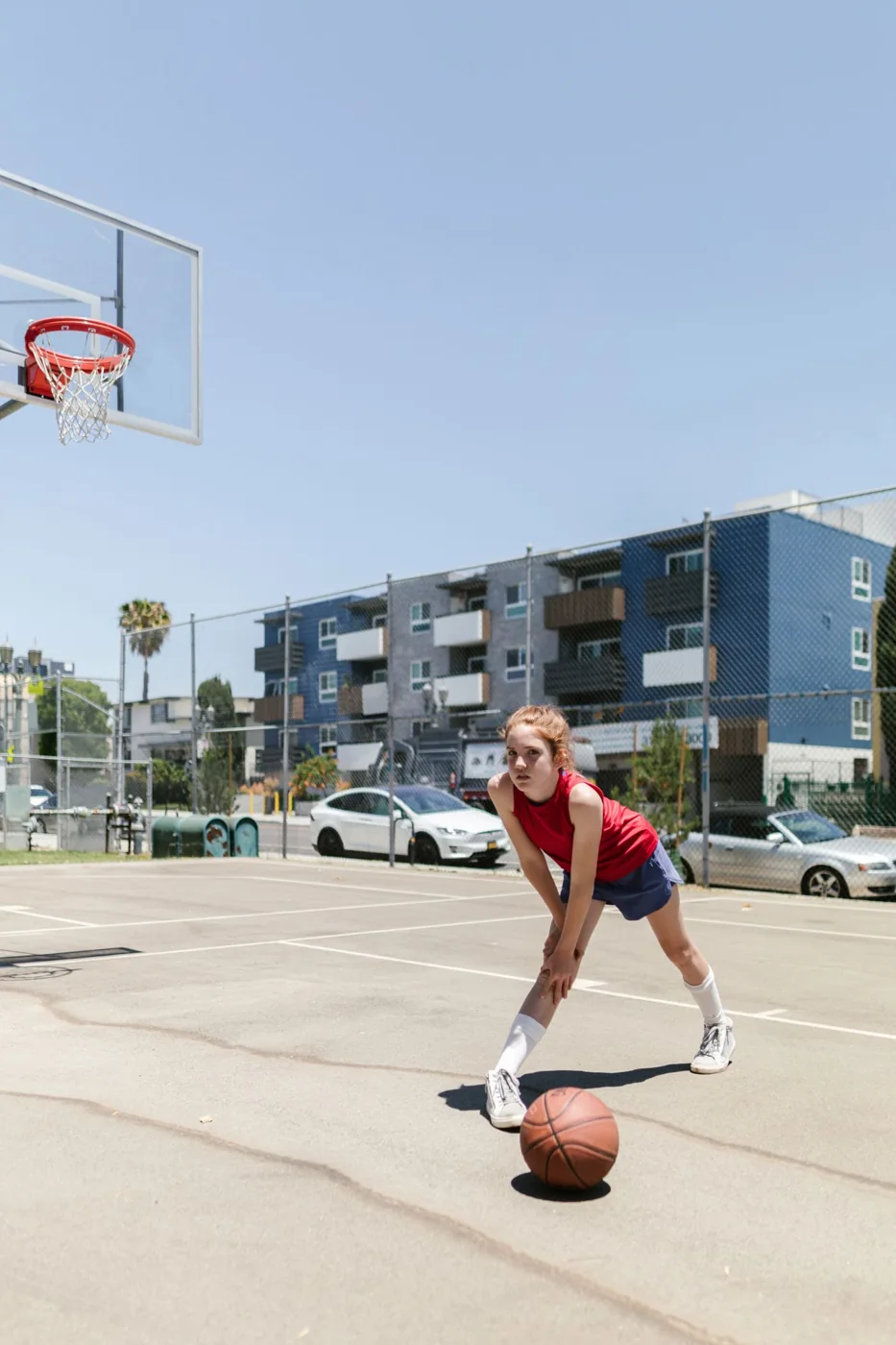
A retreat dribble moves you away from immediate pressure while keeping the ball live. It is particularly useful when a defender closes your forward route or a teammate is not ready to receive a pass. The backward movement is only the beginning. You also need a clear path behind you, a protected bounce and a plan to face the court again before the defense follows you into another crowded spot.
Check the space before moving
Start on a wing facing the basket, with a partner standing a few steps ahead. Identify the open area behind and diagonally beside you. Make a small forward approach, then take controlled backward steps into that area. Keep your eyes available to the court and use a quick look to confirm the route when necessary. Do not assume the space behind you is empty during a game. Sidelines, teammates and a second defender can turn an automatic backward retreat into a more difficult position than the original pressure.
Keep the ball on the protected side
Let the defender's position determine which hand keeps the bounce. Angle your body slightly between them and the ball, with the bounce beside you instead of directly in front of their reaching hand. Use short, manageable backward steps and maintain a comfortable base. If your heels cross or you lean far away from your feet, reduce the pace. Have your partner walk forward at first without trying to steal. Learn the coordination before adding active hands or a sudden change of direction from the defender.
Turn space into a new angle
After two or three retreating bounces, move diagonally toward a second marker and face the basket more fully. That diagonal shift helps you avoid repeating the same closed approach. Put a receiver near the top of the court so you can practice passing from the new angle. You can also re-attack if the defender follows too far and leaves an open side. Keep the options simple. The drill should teach you to see one useful next action, rather than retreat indefinitely while searching for a perfect opening.
Add a clear limit
Play short possessions in which the defender closes the first lane and the ball handler must escape, then pass or advance within the next few dribbles. Use an agreed practice limit, not a claim about game rules. Review possessions where the retreat ended near the boundary or where you stopped seeing the receiver. Move the starting position inward or scan earlier on the next attempt. A successful repetition creates room for the team to continue; the number of backward bounces matters much less than the quality of the position they produce.
Practice retreating from both wings and require a pass or a fresh forward angle after each escape, while checking the route behind you first.
Something unclear? Send a correction or question.