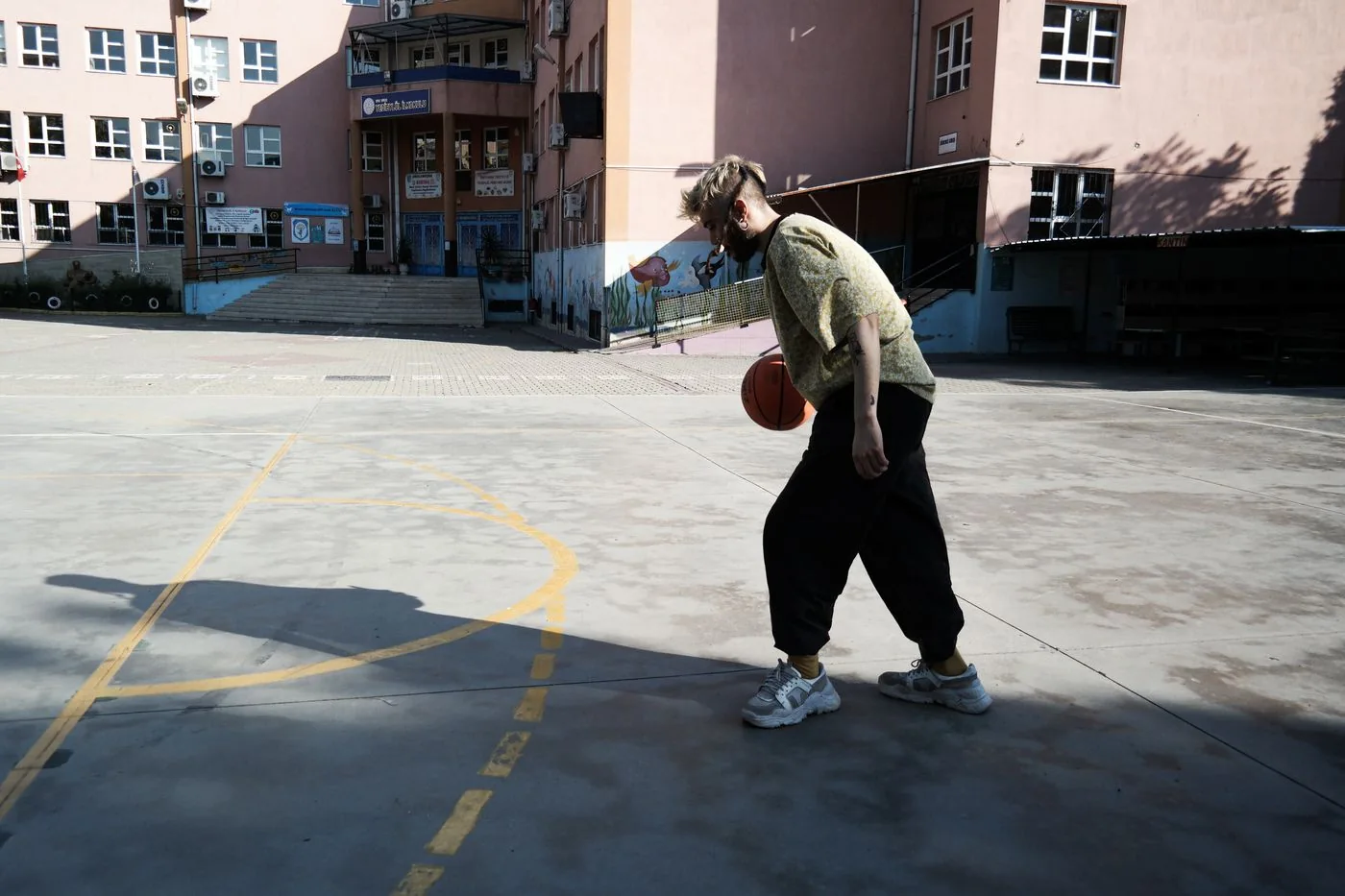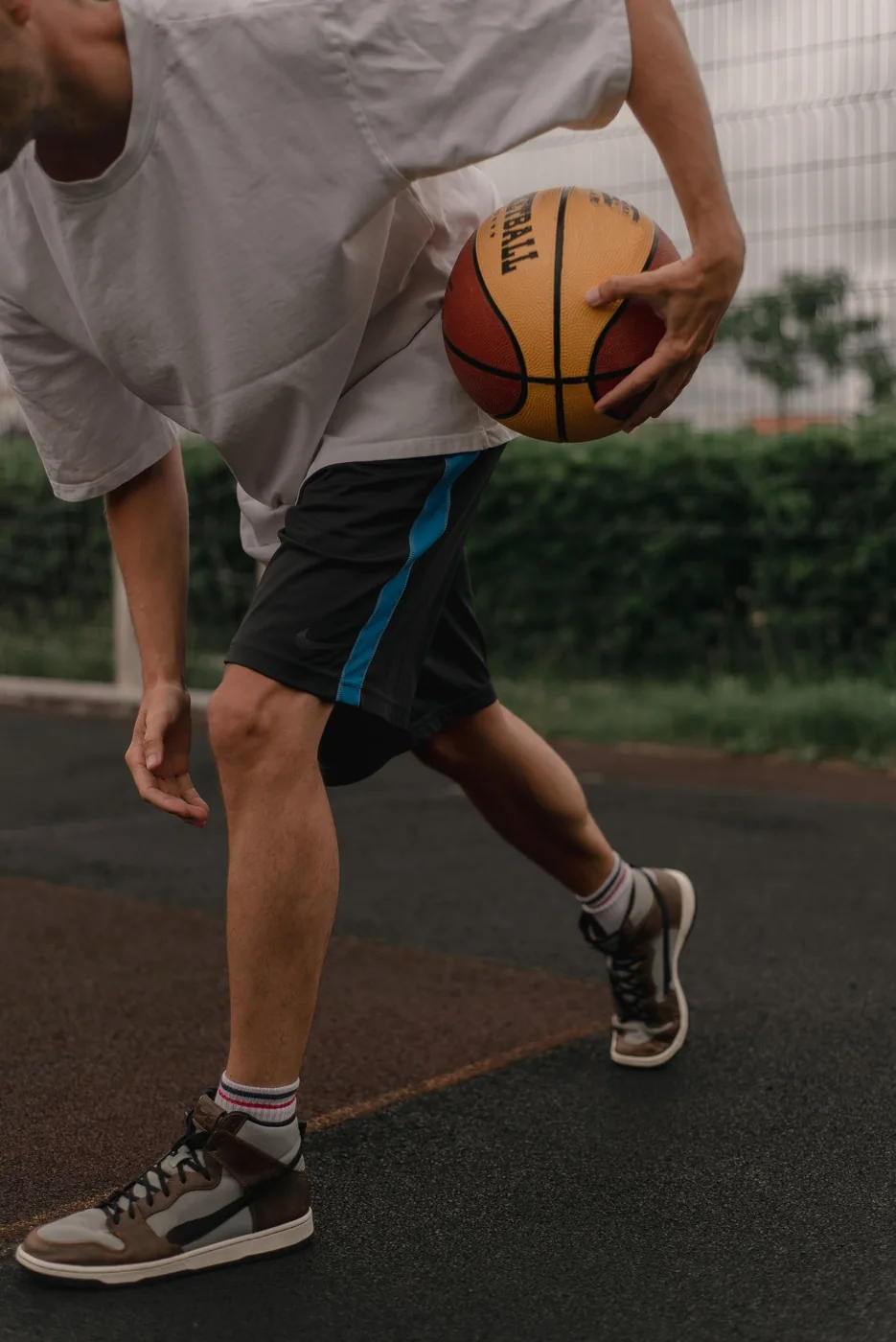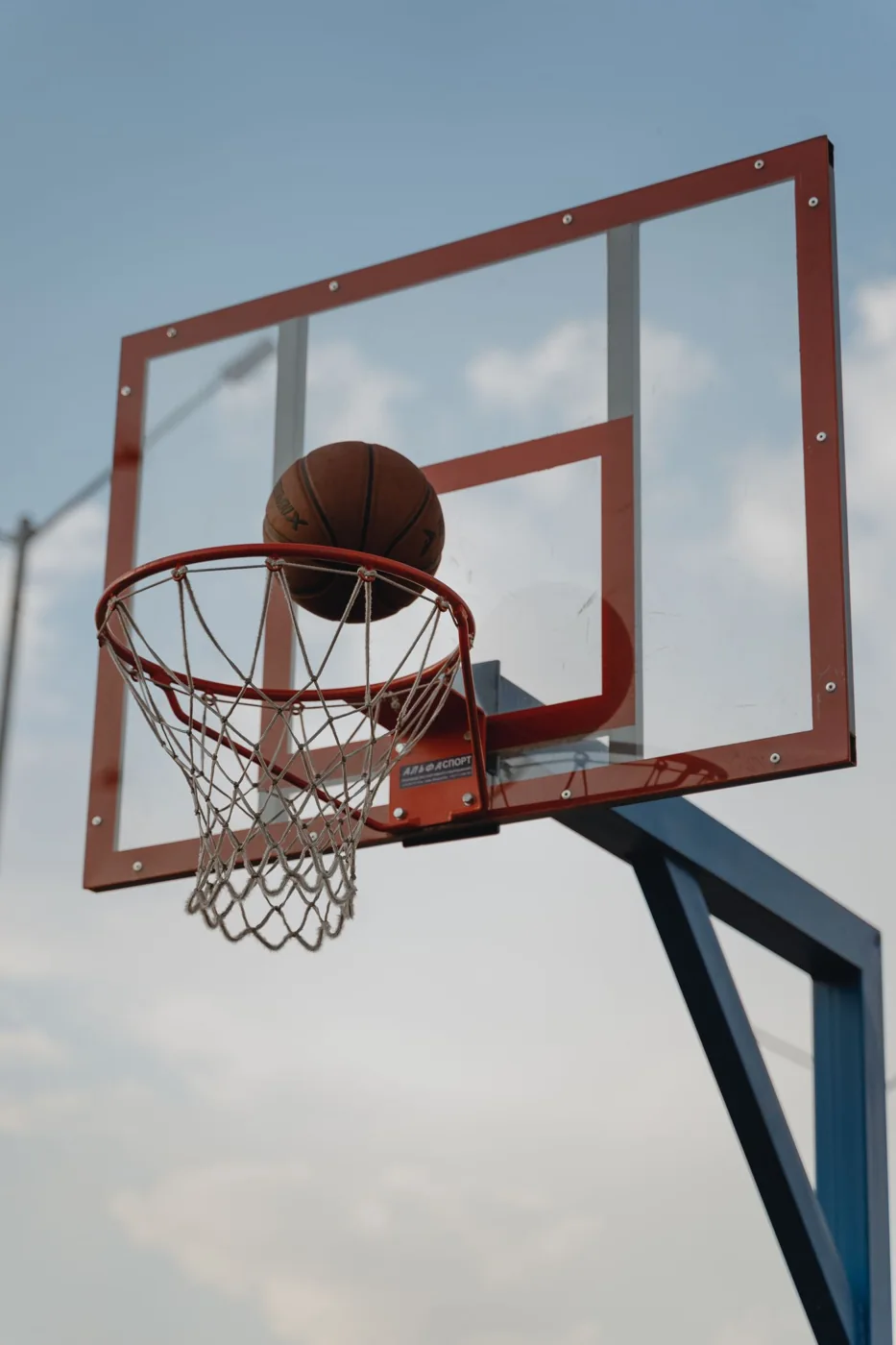
The backboard gives an angled finish another route to the basket. It is useful when you can see a clear section of the board and deliver the ball there with control. The painted rectangle can help you orient yourself, but one fixed point does not suit every distance or angle. Learn the relationship between your position, the first board contact and the ball's path to the rim through short, deliberate experiments.
Begin from a familiar angle
Choose a close position on the right side where you can see the backboard face clearly. Before each attempt, identify the small area you intend to hit. Make a gentle bank shot and watch the first contact, not just whether the ball goes in. Repeat from the same spot several times. If the ball crosses the rim too strongly after contacting the board, try a softer arrival. If it fails to reach the basket, consider both the contact location and the force rather than simply throwing harder on the next attempt.
Change one location at a time
Move one step wider and make another small set, then move one step closer to the baseline if there is room. Notice that the available board area changes as the angle becomes sharper. A very narrow view may leave a direct finish or a different shot more practical. Keep a simple record of your starting location and useful target area. The exercise is about seeing options, so do not force a bank from every position. A made shot that comes from an accidental edge contact does not provide the same information as the path you intended.
Compare release height and touch
From the original spot, try a comfortable higher release with a soft touch, then compare it with your normal finish. Keep the variation modest and avoid forcing your arm into an unfamiliar position. Watch how much space the ball needs between the board and rim. If you repeatedly hit the front of the rim, review the whole path rather than assuming the backboard target alone is wrong. A partner watching from the side can describe where the ball first contacts and whether it arrives flat or with room to descend.
Carry the target into a moving finish
Add a short approach with organized layup footwork. Choose the target before the final steps and keep the pace manageable. Repeat on the left side using the left hand where that finish fits. The moving approach may add forward force, so a touch that worked while standing can become too strong. Reduce the approach speed before making large changes to your release. Finish with a partner showing a passive nearby presence, and choose between a bank and a direct attempt according to the space available rather than following a fixed script.
Map two comfortable bank-shot angles on each side, recording the intended contact area and whether the ball arrives with enough softness to settle toward the hoop.
Something unclear? Send a correction or question.